Disruptive Trump, healthy nation
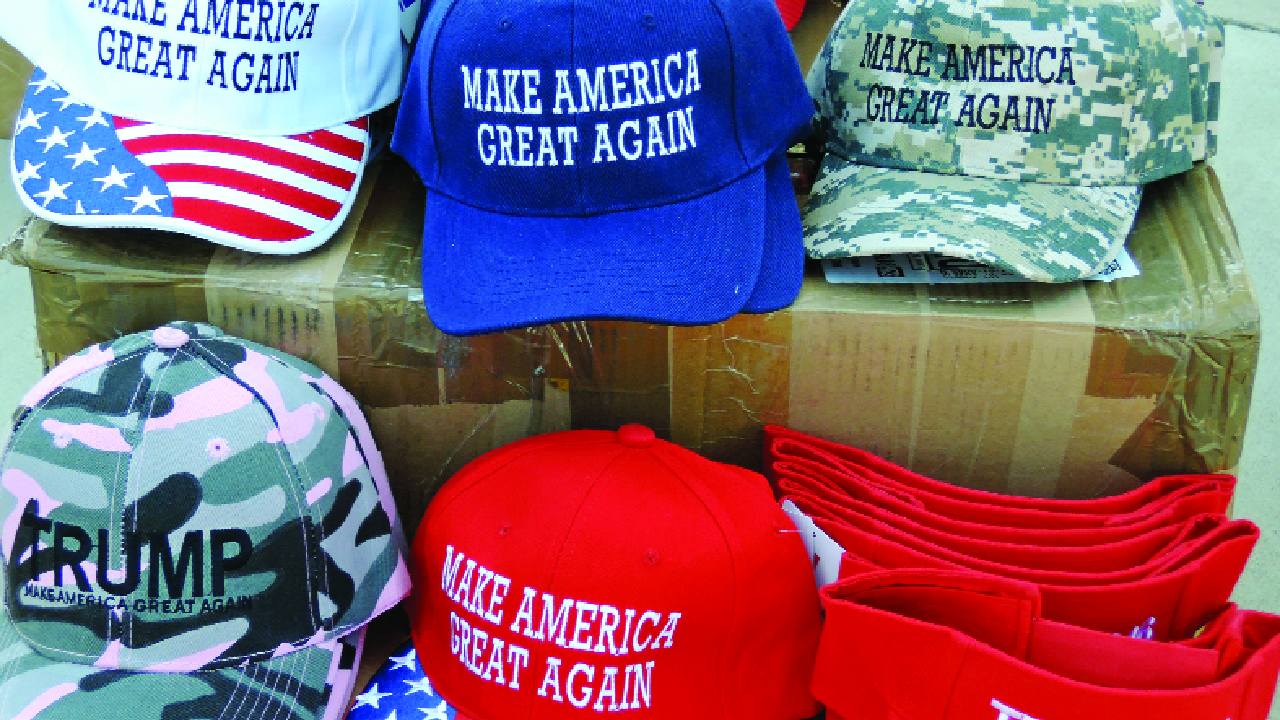
A leopard, of course, cannot change its spots. But can a Mad Hatter-like person change his hat? Across the world, analysts, policy-makers, politicians, industry pundits, even psychologists ponder this question in sometimes agitated, sometimes flustered, and sometimes solemn manner. This is especially so as we complete one year of Donald Trump taking over as the forty-seventh president of the United States of America. It was 12 months of absolute madness, disruptions, randomness, chaos, violence, verbal threats, tariff-and-trade warnings and actions, and mayhem. This is possibly how Trump’s first year appeared to the outside world.
Back at home, there was a paradox. A large section was flustered, and astounded by how Trump sacked officials, including his friends like Tesla’s Elon Musk, ransacked departments like USAID, threatened to fire thousands of workers in pro-Democrat states and agencies, and publicly warned the judiciary, media, executive, legislature, opposition, and critics. Many took the president to task, and dragged him to the courts of law. However, his supporters and loyalists, though a bit floundered, loved him. The domestic economy performed well in some areas, and did not do too badly in others.
Trump’s first term can only be described as tumultuous. The first year of his second term was nothing short of being wildly-disruptive. Some may even call it destructive. Almost each of his actions and decisions since he took oath on January 20, 2025, can be dubbed as being classically-unruly. It was 12 months of contradictions in policies, bilateral and regional deals, agreements, and global alliances. Nothing seemed sacrosanct for him as he chased his dream (some may say mirage) to ‘Make America Great Again.’ Some of his loyalists were taken aback, even though they knew Trump was a mercurial egomaniac who wishes to hog the headlines.
I cannot recall any American president since the last century, who was so brutally-disruptive. Trump shook the foundations of not just the social order in the US, but the pillars on which the global world order, including the international economic order, stands. Tomes were written about his egoistic, and maniacal pursuit to take over Greenland, the way he invaded Venezuela, and captured and arrested the former president, Nicolas Maduro, and his dreams of turning the Gaza strip into a French Rivera-like region. Psychoanalysts have explanations. But common sense indicates that the president is desperate to leave a legacy behind.
Despite disbeliefs, and despite critique, Trump may leave behind a legacy, at least on the economic front. For, contrary to the pessimists, the US economy seems to be doing spectacularly well. In the second quarter of 2025, it grew at a healthy pace of 3.8 per cent, and followed it up with a higher, blistering rate of 4.2 per cent in the subsequent quarter. For an economy that is $30 trillion, this is nothing short of a miracle. Inflation has not been tamed the way Trump wanted, and hovers between three per cent and four per cent. For this, he blames the Federal Reserve, and Jerome Powell.
For the first time since 2009, when America was getting out of the aftermath of the great financial meltdown, the country’s trade deficit is down. This is because of Trump’s pet passion and obsession, bilateral tariffs. For the president, the world economic order, and America’s ability to become great again, lies in tariffs. Since he used the threat of punitive duties, and imposed them too on occasions, American exports grew, and imports came down, which reduced the trade deficit. It implies a huge victory for the president, when one couples it with the fact that domestic investments by both Americans, and foreigners have increased rapidly.
Somehow, both inexplicably and mysteriously, American tariffs, punitive and otherwise, have either not harmed the other large economies, or helped them. Germany and Japan, which grew at tepid rates for the past few years, continue to grow at similar rates. But China and India, the two drivers of global growth in the recent past, have done well despite the high tariffs imposed by Trump. India is expected to grow at 7.4 per cent in this fiscal year (2025-26). For the past three years, including this one, China will grow at five per cent, the lower-than-expected growth that it consciously aimed for.
Indian exports have mostly gone up if one considers the monthly data, although the trade deficit fluctuated wildly because of the higher imports. For the first time in history, the trade surplus of China exceeded $1 trillion, although exports to the US fell by more than 20 per cent. Clearly, although the tariff regimes are yet to play and pan out, in the short run, Trump’s tariffs have domestically pleased the MAGA crowd, and have had minimal impact on the global economy. This leaves us with the consequences in the long run, on the global world order, over the next decade or two.
According to the economist John Maynard Keynes, we may be dead in the long term. But we need to examine the implications. Perhaps, the most visible and consequential impact of Trump’s second term will be a complete loss of trust and faith in the global institutions. If the US, the most powerful economy, can break the existing rules, exit global agreements and agencies, and do as it wishes to, no other nation will hesitate to do the same with America. For the latter, a deal with the US will not be worth its value on paper.
In such a scenario, the major economies will look at the alternatives to the existing global institutions. In any case, many experts feel that the importance and criticality of institutions such as the IMF, United Nations, World Bank, ADB, and many others has diminished. They are obsolete, and need serious reforms. The bull-in-a-China-shop behaviour of Trump will push them to take urgent steps to revamp existing institutions, or create new ones, with minimal or nil role granted to America. While the US becomes more isolated, and deals with the world order either bilaterally or regionally, the rest of the world will opt for a new multilateral era.
The US will remain powerful for decades, but this author is convinced that nations such as China, Brazil, India, Japan, Indonesia, Nigeria, and South Africa will subdue their differences, and come together at various fora to create a new order. China set the trend as it refused to be cowed down by the US. India behaved in a similar manner initially. Sooner or later, other nations will follow the same path. In the long run, the loser will be the US.
The author has worked for leading media houses, authored two books, and is now Executive Director, C Voter Foundation; views are personal