Digital Push Meets Traditional Wisdom: India's Holistic Healthcare Vision Takes Centre Stage at ITW Summit
As India grapples with a rising burden of lifestyle diseases and evolving healthcare needs, policymakers and health experts are increasingly turning toward a blended model-one that combines cutting-edge technology with the country's deep-rooted traditional knowledge systems. This vision took centre stage at the 4th Annual Summit on "Advancing Holistic Health through Innovation, Technology, and Tradition," organised by the Illness to Wellness Foundation, where leaders across government and healthcare outlined a roadmap for shifting India's healthcare focus from treatment to prevention.
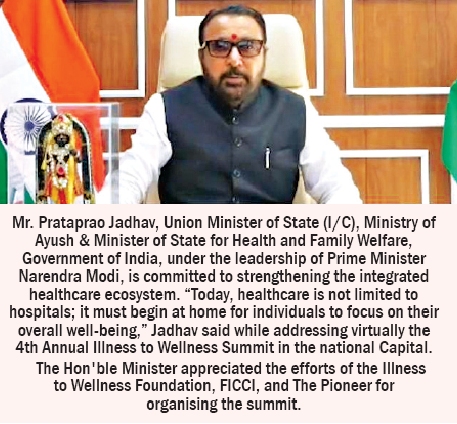
Setting the tone for the summit, Prataprao Ganpatrao Jadhav, Union Minister of State (Independent Charge) for the Ministry of AYUSH, Government of India, emphasised that India's traditional systems-such as Ayurveda, Yoga, Unani, Siddha, and Homeopathy-have long promoted a balance between mind, body, and soul. He noted that when these systems are combined with modern medicine, they can help move healthcare beyond treatment toward complete well-being. Highlighting the growing prevalence of lifestyle diseases like diabetes and hypertension, he underlined that healthcare must begin at home, through daily habits and preventive practices, while also leveraging technology to scientifically validate and globalise India's traditional knowledge.
Building on this perspective, Rajesh Bhushan, Former Secretary, Ministry of Health & Family Welfare, Government of India and Chairperson, Governing Council, Illness to Wellness Foundation, stressed the need to redefine healthcare beyond curative approaches. He noted that healthcare must include preventive, promotive, palliative, and rehabilitative aspects-many of which are rooted in community settings. With India's vast and diverse population, he highlighted the importance of strengthening health-seeking behaviour and integrating public and private healthcare systems with traditional AYUSH practices. Bhushan also pointed to the growing role of digital infrastructure, including initiatives like ABDM and ABHA, along with artificial intelligence, in improving efficiency, interoperability, and access to healthcare services.
Reinforcing the importance of convergence, Anil Rajput, Chairperson, Advisory Council, Illness to Wellness Foundation, said that integrating traditional knowledge with modern medicine and emerging technologies is key to building an evidence-based and scalable healthcare model. He emphasised that policy alignment alone is not enough, and that community-level awareness and behavioural change are critical to driving the shift from illness to wellness.
Adding a deeper perspective on holistic health, Dr Manoj Nesari, Senior Chief Medical Officer (SAG), CGHS, Ministry of Health & Family Welfare, Government of India and Former Advisor, Ministry of AYUSH, highlighted traditional Indian concepts such as aarogya and swasth, explaining that true health goes beyond the absence of disease. He noted that a healthy individual is one who is physically fit, mentally balanced, well-nourished, and aligned with their natural state, while also contributing meaningfully to society and the environment.
Further emphasising the need for integrated care, Dr T S Kler, Chairman & HOD - BLK-Max Heart & Vascular Institute, said that healthcare systems must not only treat diseases but also build awareness around prevention, noting that many premature deaths today are linked to lifestyle and environmental risks.
Echoing the call for a systemic shift, Dr Ravi Gaur, Co-Chair, FICCI Digital Health Task Force & Healthcare Awards and Founder - DRG Path Lab, highlighted the importance of creating a culture of health ownership, stressing that stakeholders must focus on awareness and belief in preventive, person-centric healthcare.
Engaging Young Minds: Drawing Competition Highlights
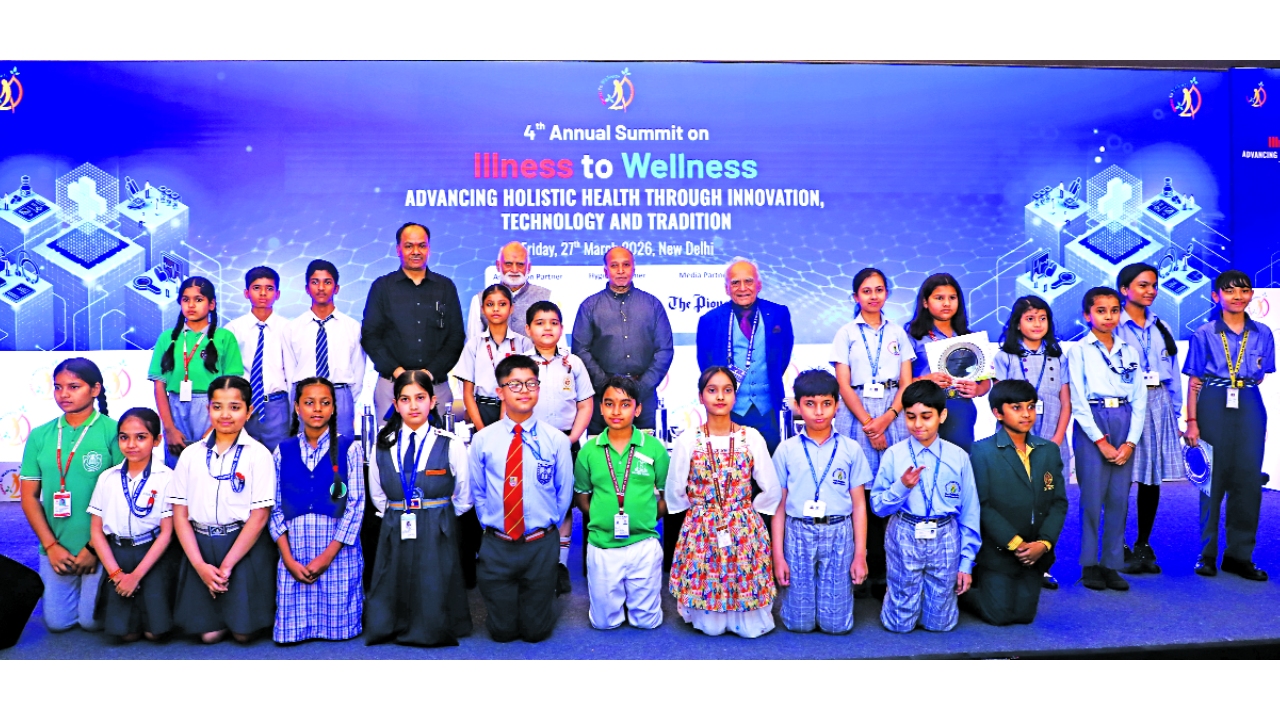
A key highlight of the summit was the student drawing competition organised by the Illness to Wellness Foundation, reflecting its ongoing commitment to grassroots engagement. The initiative, which has reached over 150 schools and nearly 40,000 students across the NCR region over the past three years, aims to instil awareness about health, hygiene, and environmental responsibility among young minds.
This year's competition saw participation from more than 50 schools across Delhi-NCR, with students presenting creative interpretations of themes such as health and hygiene, air pollution, and environmental sustainability. Notably, the event also encouraged participation from specially abled children, reinforcing inclusivity in public health awareness efforts. The summit featured a dedicated award ceremony recognising the winning entries, alongside a showcase of selected artworks that highlighted both creativity and consciousness around wellness.
Deep-Dive Discussions: From Mental Health to Digital Care
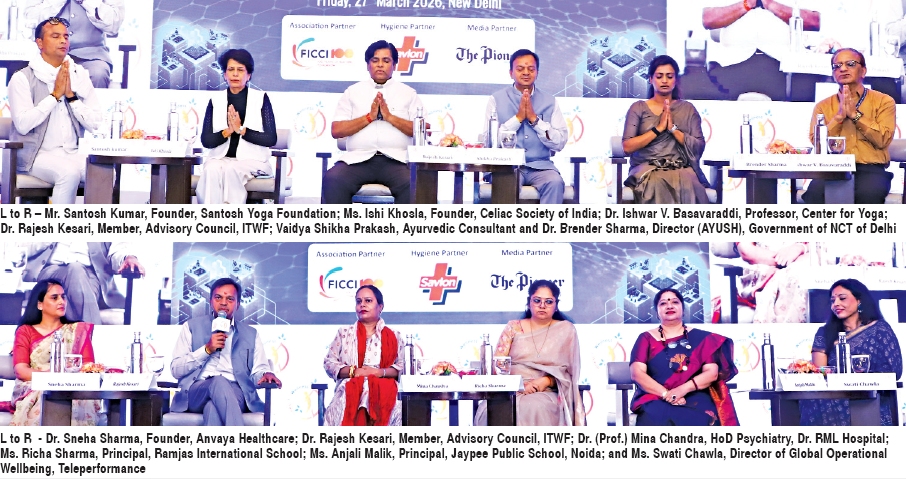
Beyond keynote addresses and ceremonial segments, the summit hosted a series of thematic sessions exploring critical dimensions of holistic health.
One of the central discussions, titled "Mindful Living: Mental Health for Work, Learning, and Life," focused on the growing importance of mental well-being in an increasingly high-pressure world. Experts highlighted the need to address stress, burnout, and emotional resilience across workplaces and educational institutions. The conversation underscored the importance of building supportive environments and normalising mental health discussions as part of everyday life.
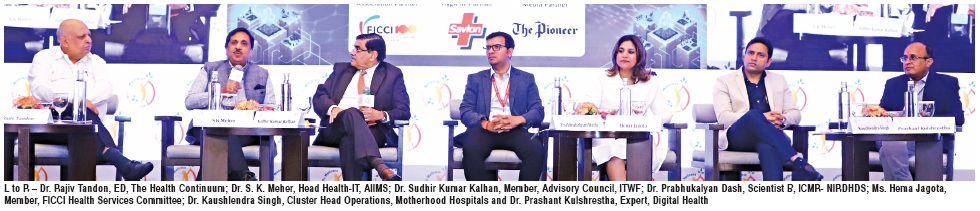
Another key session on "Digital Health for Prevention and Well-being" examined how technology is reshaping healthcare delivery. Panellists discussed the role of telemedicine, digital health infrastructure, and AI-driven systems in enabling early diagnosis, improving accessibility, and making healthcare more efficient and patient-centric. The discussion reinforced that digital tools are not just enablers of treatment but critical drivers of preventive care.
The third major session, "Integrating Traditional Practices for a Healthy Lifestyle," brought the spotlight back to India's rich heritage of wellness practices. Experts explored how yoga, meditation, Ayurveda, and nutrition can be seamlessly integrated into modern healthcare systems. The panel also discussed how digital platforms can help revive and scale these traditional practices, making them more accessible to contemporary audiences.
A Converging Vision for India's Health Future
Across sessions and speeches, a common thread emerged-the urgent need to redefine healthcare in India. Rapid urbanisation, changing lifestyles, and rising stress levels are contributing to an increased burden of chronic diseases, making preventive and holistic approaches more critical than ever.
The summit highlighted that the future of healthcare lies in convergence: combining cutting-edge technology with time-tested traditional knowledge, supported by strong policy frameworks and community participation. From digital health ecosystems to lifestyle interventions, from institutional reforms to grassroots awareness, the discussions pointed toward a multi-layered approach to building a healthier nation. Equally important was the emphasis on shifting mindsets-moving from reactive treatment to proactive wellness, from hospital-centric care to community-driven health, and from isolated interventions to integrated systems.
As stakeholders across government, healthcare, academia, and industry came together, the 4th ITW Summit reinforced a powerful message: India's path to a healthier future will not lie in choosing between tradition and technology, but in harmonising both to create a more inclusive, preventive, and sustainable healthcare ecosystem.