Dhaka’s post-poll economic test
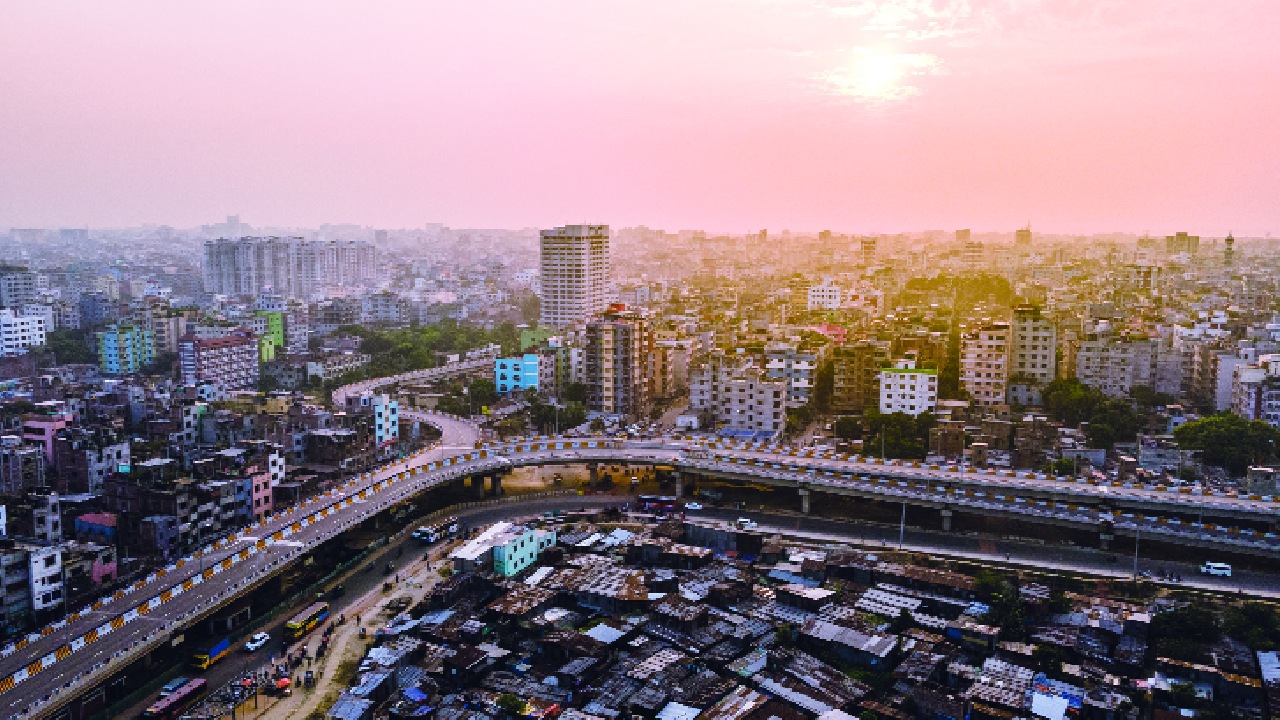
Bangladesh is ready for a political change. But what the nation needs is a set of solutions to tide over the current economic crisis. Once a new regime assumes office after the general elections on February 12, it will need to prioritise to address the ongoing volatility not just in politics, but in the crucial areas related to the economy. For India, a stable Bangladesh is critical as bilateral ties entered a period of heightened strain since 2024, which were driven by political upheavals, rising anti-India sentiments, and economic troubles. They disrupted diplomatic relations, as well as bilateral links in areas such as travel, trade, investments, and cooperation by late 2025.
Growing domestic nationalism translated into anti-India rhetoric and protests. High-profile incidents involved attacks on minorities, and protests outside diplomatic missions, which inflamed public opinion and prompted both the capitals to take retaliatory steps. The diplomatic fallout included suspensions of visa and consular services, and temporary closures or restrictions at missions on both sides, which led to issues related to travel, medical visits. and business ties. These tit-for-tat measures signaled a sharp downgrade in day-to-day cooperation, and created practical hardships for citizens and firms that rely on cross-border movements of people, goods, and money.
Internal politics may stabilise after the elections. Bilateral links may recover after a while. What is of significance is Bangladesh’s economic strains, which compound investor uncertainty, and complicate bilateral trade and connectivity projects. The future of the economy may decide a return to cross-border cooperation on security, counterterrorism, and border management, which was tested by mutual distrust. Economics may decide the fate of bilateral infrastructure and energy projects, which face delays or scrutiny. The economy weakened after the 2024 political change, although it avoided a collapse by late 2025. Growth slowed, and inflation rose. Although external balances stabilised, a full recovery hinges on fiscal reforms, banking sector repairs, and renewed private investments.
GDP growth fell to 4-4.8 per cent in FY-2025 depending on the sources, and reflected weaker domestic demand, export headwinds, and energy constraints. Inflation rose to double digits during some months in 2025, and was driven by food and fuel prices, and currency adjustments. By December 2025, Bangladesh stabilised macro indicators but remained on a fragile footing. Reports suggest that the possibility of a recovery is contingent on decisive fiscal, financial, and structural reforms to revive private investments, and create jobs. International partners like the International Monetary Fund (IMF), World Bank, and United Nations uniformly stress that the speed reforms, and policy credibility are the decisive factors.
The IMF reduced the GDP growth forecast for the nation to 4.9 per cent in FY-2026, down from previous estimates of 5.4 per cent in July 2025, and an earlier 6.5 per cent in April 2025. This downgrade comes due to the slower growth in 2024-25, when the GDP rose by a mere 3.69 per cent, the lowest figure since the pandemic. However, the IMF anticipates a decline in inflation, and projects it to average 8.4 per cent during the current fiscal year, compared to 10 per cent in the previous year. The latter was the highest inflation in 14 years.
Asian Development Bank (ADB) states that Bangladesh’s GDP growth fell under Sheikh Hasina’s regime from 7.1 per cent in 2022 to 5.8 per cent the next year. It slid further to 4.2 per cent in 2024, which was the year of the fall of Hasina’s government. By September 2025, the figure was down to four per cent in September 2025. However, the ADB forecasts it to increase by one per cent this year. The outlook states that the nation’s inflation rate was 10 per cent in 2025, and will come down to eight per cent in 2026.
These assessments underscore the economic complexities that Dhaka faces. However, the IMF is optimistic about the recovery provided that structural reforms are effectively implemented. In June last year, the IMF Executive Board concluded the combined third and fourth reviews of Bangladesh’s arrangements under the Extended Credit Facility (ECF) and Extended Fund Facility (EFF). It approved an extension, augmentation, and rephasing of access. Hence, the nation could access $1.33 billion, with “immediate access” to $884 million under ECF and EEF, and an additional $453 million under the Resilience and Sustainability Facility.
“Bangladesh’s macroeconomic challenges have increased since the popular uprising in the summer of 2024, which led to the ouster of the previous government. The timely formation of an interim government has helped stabilise political and security conditions, fostering a gradual return to economic stability. However, the economic outlook has worsened due to persistent political uncertainty, continuation of tighter policy mix, rising trade barriers, and increasing stress in the banking sector,” observes the IMF. Some reports do indicate that the nation’s external position improved in late 2025, as remittances and exports recovered, and foreign exchange reserves were rebuilt after the earlier pressures.
Public finances came under strain, as revenue mobilisation weakened, and fiscal deficit widened. This enhanced the reliance on domestic financing, which raised concerns about public debt. The banking sector is stressed, with nonperforming loans and weak capital buffers limiting credit to the private sector, and slowing domestic investments. Hence, a World Bank report highlights the need for urgent and transformative policy, and institutional reforms to help the firms to expand domestically and compete globally. The report emphasises the importance of a more conducive business environment, and supports the expansion of emerging industries to create jobs for the youth entering the labour market every year.
According to the World Bank, Bangladesh needs targeted policy actions to remove barriers to private investments across four critical sectors, which include ‘green’ ready-made garments, housing for middle-income families, paint and dyes, and digital financial services. Bangladesh's garments sector has transformed remarkably over the past decade, and emerged as a global leader in sustainable manufacturing. The nation has the highest number of green factories in the world. The current interim administration reiterated a desire to revive the South Asian Association for Regional Cooperation (SAARC). Despite the problems with India, this indicates a realisation to enhance regional cooperation.
If the economy takes off this year, Bangladesh may seek to resolve the problems with India. This may revive the stuck bilateral projects with huge Indian investments at stake. Several Indian firms use the neighbour as a base to produce quality garments at cheaper costs, and export them. A revival may lead to better diplomatic ties.
(The author has more than three decades of experience across print, TV, and digital media); views are personal