Delhi power subsidy fails to reach the needy
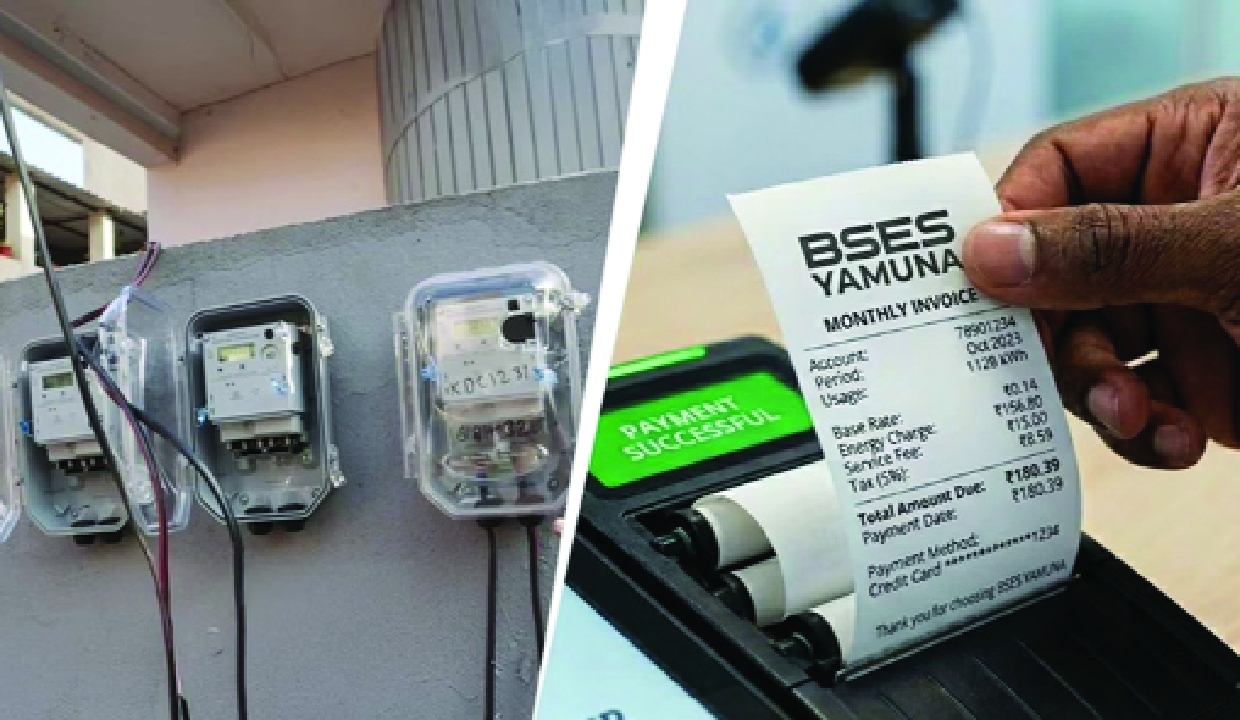
Delhi’s electricity subsidy policy has failed to target the deserving and disadvantaged section of the population and instead its benefits are reaped by higher-consumption-bracket consumers.
With an outgo of Rs 3,161 crore in 2022-23, more than 30 lakh consumers, within the 0 to 200 unit consumption bracket, received an average per connection subsidy of Rs 6,000 per annum, whereas approximately 16.60 lakh consumers, with consumption of more than 200 units, received approximately 70 per cent higher average subsidy per connection of over Rs 10,000 per annum, according to the Comptroller and Auditor General (CAG) report tabled by the Chief Minister Rekha Gupta in the Delhi Assembly on Friday.
The report said the rationale for having a high threshold value of 400 units of consumption, which covered approximately 80 per cent of domestic consumers, was not found on record.
Audit observed that the subsidy policy of GNCTD for the power sector did not target the deserving and disadvantaged section of the population and paid it to nearly the entire domestic consumer base. Audit observed that the actual subsidy outgo per consumer was much higher for higher consumption bracket consumers. The audit report covered a period of four fiscal years from 2019-20 to 2022-23 when AAP was in power.
The report said subsidies constituted nearly 10 per cent of Delhi Government’s total revenue expenditure.
According to CAG report, more than 50,000 consumers had continuously zero consumption for more than 12 months and were provided a subsidy of Rs 17.81 crore, more than 90,000 thousand consumers received a subsidy of Rs 11.88 crore for continuously zero consumption for 6 to 11 months and more than 1 lakh 70 thousand consumers had continuous zero consumption for periods between 3 and 5 months and received subsidy of Rs 12.57 crore. Subsidies constituted nearly 10 per cent of GNCTD’s total revenue expenditure.
Power subsidy alone accounted for 66.96 to 70.39 per cent of the total subsidy during 2019-20 to 2022-23, emphasising the need to assess the process of providing electricity subsidy to consumers and its effectiveness. Tariffs have not been increased after 2014-15 and so the present tariff has not reflected the actual cost of power procurement and distribution. This mismatch between cost and recovery led to continuous accumulation of unrecovered expenses, which have been trued-up as “Regulatory Assets” year after year, appearing in the balance sheet of the DISCOMs as an asset. It represents costs incurred by the DISCOMs that are recoverable from customers in the future through regulated rates or tariffs. The Regulatory Assets of Delhi DISCOMs, which stood at Rs 9,063 crore in 2019-20, has arrived at Rs 27,200.37 crore as of 31 March 2021,” it said.
Audit analysis of consumer billing data of the three private DISCOMS revealed that the subsidy constituted roughly 50 per cent of the electricity bill for consumers in the 1 to 2 KW SL category, whereas it was able to defray less than 25 per cent of the bill amount for consumers in the 3 KW to 4 KW SL category, which was progressively even less for higher loads.
“For the 3-4KW SL, the Government spent, on average, a subsidy of less than Rs 500 for a gross bill amount of more than Rs 2,100. It was further noticed that as the subsidy outgo up to 200 units was independent of sanctioned load and subsidised 100 per cent of the bill amount, subsidy outgo even for meagre consumption at high sanctioned loads could be astronomical. For example, a consumption of 50 kWh per month at 1 KW SL would attract a subsidy of approximately Rs 200 whereas the same energy consumption at SL of 5 KW, 10 KW and 20 KW would result in a subsidy outgo of approximately Rs 500, Rs 1,500 and Rs 5,000 respectively,” the CAG said.
In 2019-20, an amount of Rs 2,405.59 crore was given as power subsidy, which subsequently increased to Rs 3,161 crore in 2022-23, the report said. Subsidies under different schemes constituted nearly 10 per cent of Delhi Government’s revenue expenditure. Power subsidy alone accounted for 66.96 to 70.39 per cent of the total subsidy during 2019-20 to 2022-23, emphasising the need to assess the process of providing electricity subsidy to consumers and its effectiveness, the report said.