Delhi, Moscow prepare high-stakes agenda
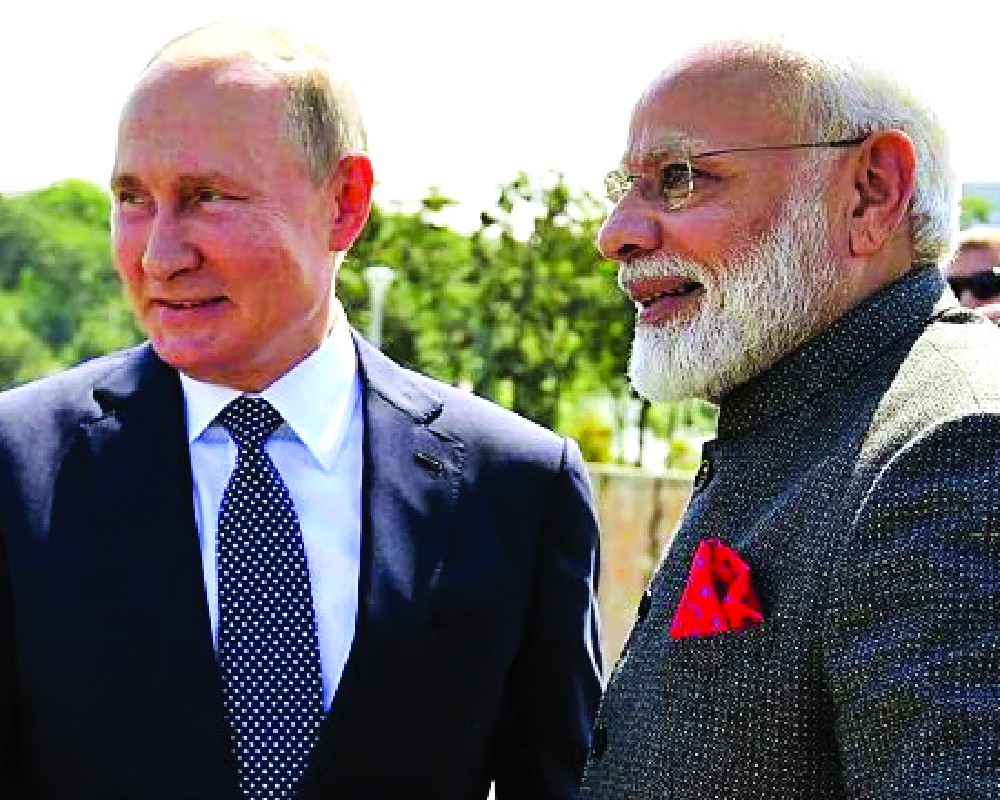
Russian President Vladimir Putin’s forthcoming visit to India is shaping up to be one of the most consequential diplomatic engagements in the Indo-Pacific this year, with Moscow signalling an ambitious agenda spanning defence modernisation, energy security, nuclear cooperation and trade expansion. Kremlin spokesperson Dmitry Peskov,Speaking during an online media briefing organised by Sputnik News in New Delhi, Peskov indicated that the trip is likely to produce “significant outcomes” and further anchor a relationship built on trust and mutual respect.
Peskov underscored the political depth of the India-Russia relationship, calling it a partnership forged “shoulder to shoulder” through decades of geopolitical change. The visit, he said, will consolidate a shared approach to global affairs, one that both capitals frame as rooted in sovereignty, stability and the rule of law.
At the core of the talks will be defence cooperation, still the anchor of bilateral ties, even as India diversifies its military suppliers. Peskov said Moscow is ready to deepen high-technology defence collaboration, reaffirming that discussions are expected on advanced systems including the S-400 long-range air-defence system and the Su-57 fifth-generation fighter jet. Despite India’s expanding procurement from Western suppliers, Russia-built platforms continue to account for roughly a third of India’s arsenal, a figure Moscow sees as a base for renewed cooperation rather than a peak.
Energy and nuclear engagement are set to feature prominently in the Modi-Putin dialogue. Peskov said Russia continues to offer India competitively priced oil, which has become a central pillar of bilateral economic ties since 2022. He also confirmed ongoing and future nuclear projects, noting that Russian involvement has already helped build “a separate sectoral ecosystem” within India’s civil nuclear programme-particularly at the Kudankulam Nuclear Power Plant.
On the economic front, trade will be a major priority. Bilateral commerce touched $ 63 billion this year, and both sides aim to cross $ 100 billion before 2030. Peskov acknowledged foreign attempts to impede the expanding trade relationship-an unmistakable reference to the United States-and said Moscow plans to increase imports from India to correct the current imbalance. A business congress preceding Putin’s arrival will focus on unlocking new export channels for Indian industry.
Addressing global geopolitical tensions, Peskov welcomed India’s calibrated approach to the Ukraine conflict, reiterating Moscow’s appreciation for New Delhi’s willingness to engage even as communication channels with Europe narrow. He said Russia remains open to dialogue, including with US interlocutors, though progress remains limited.
On China, Peskov emphasised that Russia’s growing partnership with Beijing does not dilute its engagement with India. Cooperation with both Asian powers, he said, is expanding “in every field as far as India allows,” but the relationships remain independent of one another.
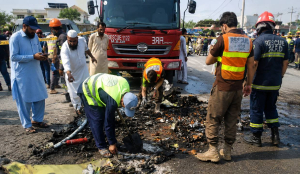
Counter-terrorism will also feature in the agenda. Peskov condemned the recent blast in Delhi and reaffirmed Russia’s long-standing security coordination with India, stressing that global terrorism can be countered only through unified international efforts.
Connectivity and currency issues will round out the discussions, with fresh momentum expected on the Chennai-Vladivostok maritime corridor and cooperation at Iran’s Chabahar port. Peskov also highlighted accelerating global interest in de-dollarisation amid growing volatility in the international financial system.
As Moscow seeks to rebalance its strategic footprint and New Delhi consolidates its multi-aligned global posture, Putin’s visit is primed to shape the trajectory of Eurasian geopolitics-strengthening a relationship that remains central to both nations’ long-term strategic calculations.
India eyes s-500, Su-57
New Delhi: Russian President Vladimir Putin’s December 4-5 visit to India will focus on expanding high-end defence cooperation, new nuclear energy initiatives and counter-terrorism coordination. Kremlin spokesperson Dmitry Peskov said talks will include India’s possible acquisition of an additional S-400 air-defence system and exploration of the Su-57 fifth-generation fighter jet. He noted Russia’s readiness for deeper military collaboration, citing the BrahMos joint missile programme as a model for co-development and advanced technology sharing.
Russia is also expected to propose new projects in civilian nuclear energy, including small, flexible reactors, while seeking to build on ongoing work at the Kudankulam Nuclear Power Plant.