Delhi marks Bihar Day with cultural showcase
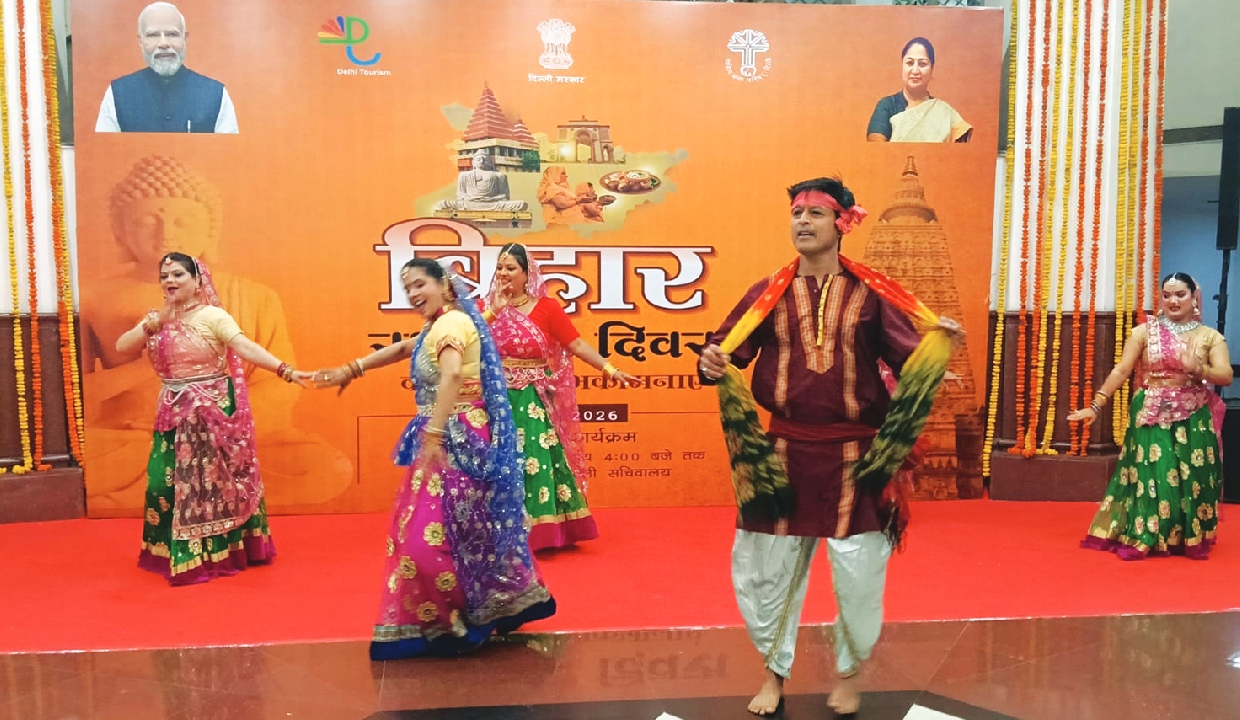
The Delhi Government organised a grand cultural programme at the Delhi Secretariat to mark Bihar Foundation Day. On the occasion, Minister of Art, Culture, and Languages Kapil Mishra extended greetings and highlighted efforts to promote cultural unity.
The event, held to commemorate the formation of Bihar on March 22, 1912, was organised by the Sahitya Kala Parishad under the Department of Art, Culture, and Languages. The event also featured traditional performances of Bihar. Addressing the gathering, Mishra said the celebrations align with the Centre’s “Ek Bharat, Shreshtha Bharat” vision and aim to bring India’s diverse cultural traditions onto a common platform. He said the Delhi Government has been organising foundation day events of different states to strengthen national unity.
The programme showcased Bihar’s cultural heritage through Jhijhiya folk dance and musical performances in Bhojpuri and Maithili. Around 20 artists participated in the event. Mishra described Bihar as a land known for knowledge, spirituality, and historical significance. He stated that the State has contributed significantly to India’s cultural and intellectual legacy and continues to hold an important place in the country’s identity.
He referred to Bihar as the land associated with Lord Buddha and Lord Mahavira, and said it has historically conveyed messages of peace and good governance. He added that languages such as Bhojpuri, Maithili, and Magahi form an integral part of India’s cultural heritage.
The minister also highlighted the significance of festivals like Chhath Puja, calling them a reflection of discipline, devotion, and respect for nature. He said the Delhi Government has taken steps to expand and support such cultural practices in the Capital.
Mishra said large-scale Chhath Puja celebrations were organised in Delhi last year, including the development of model ghats. He also said that cases registered against devotees for performing Chhath Puja at the Yamuna ghats during the previous Government were withdrawn. He added that the scale of Chhath celebrations in Delhi will continue to increase in the coming years.
The cultural programme remained the highlight of the event. The Jhijhiya dance performance drew attention for its traditional style and devotional theme. The dance form is usually performed during Navratri and is associated with the worship of Goddess Durga.
Performances in Bhojpuri and Maithili music and dance added to the festive atmosphere. Artists depicted themes of rural life, nature, social relationships, and everyday experiences through their acts. Officials said such events aim to preserve and promote regional traditions while encouraging cultural exchange among communities living in Delhi.
The audience response remained positive, with attendees appreciating the efforts to showcase Bihar’s heritage in the national Capital. The event is part of a broader push by the Delhi Government to promote cultural programmes and celebrate the diversity of different states.
Officials said similar initiatives will continue in the future to strengthen cultural engagement and awareness among citizens. The programme concluded with performances highlighting the simplicity and richness of Mithila’s traditions, reinforcing the role of cultural events in fostering unity and shared identity.