Delhi court summons Congress leaders in defamation case by Rajat Sharma
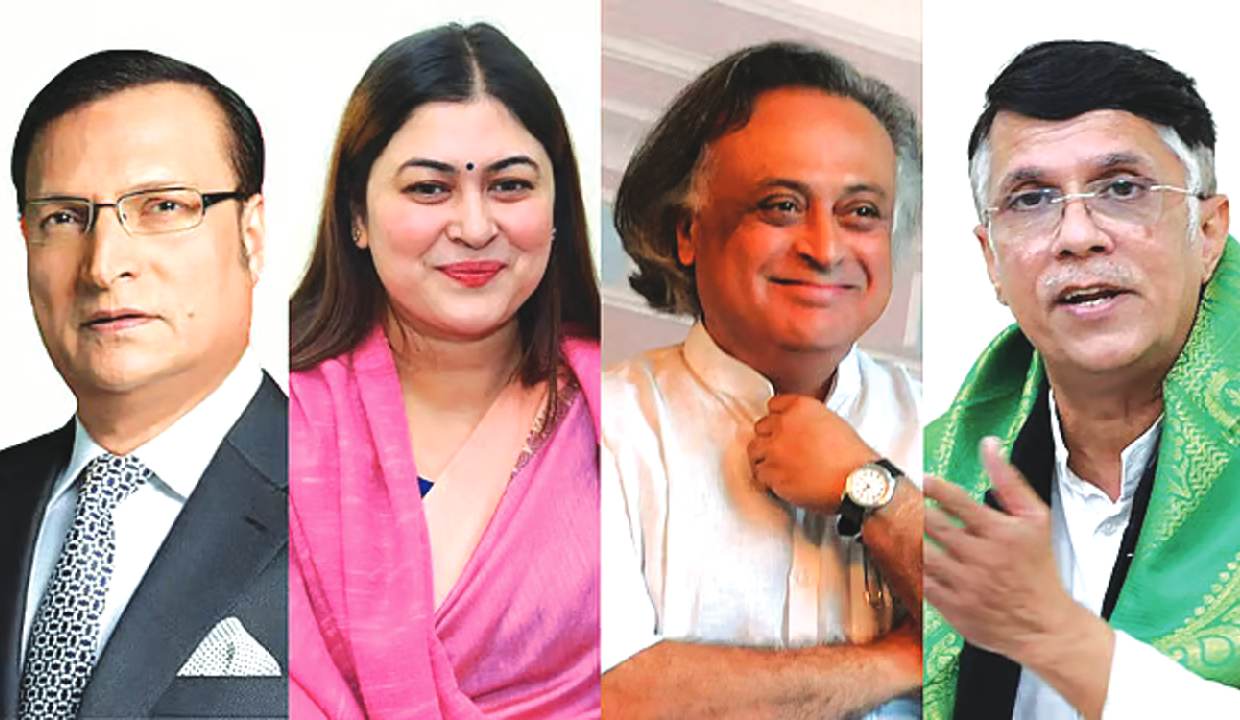
A Delhi court has summoned Congress leaders Ragini Nayak, Pawan Khera, and Jairam Ramesh in a criminal defamation and forgery complaint filed by senior journalist and India TV editor-in-chief Rajat Sharma over the alleged circulation of a “tampered” video clip on social media.
Judicial Magistrate First Class Devanshi Janmeja held that a prima facie case was made out against the three accused under sections 465 (forgery), 469 (forgery for the purpose of harming reputation), 471 (fraudulent or dishonest use of a forged document or electronic record), 499 (criminal defamation) and 500 of the IPC and directed that they be summoned on July 27, 2026.
“The complainant has prima facie demonstrated that the accused persons have made publications that the complainant hurled an objectionable invective against accused number 1 (Ragini Nayak), who happens to be a lady spokesperson of the Congress party,” the court said in its order dated February 2.
“The natural corollary of which was that the complainant was perceived by his friends, acquaintances and public at large to be a male chauvinist, misogynist and someone irreverent to women. The backlash he faced via comments and posts on social media platforms where he was called denigrating names, prima facie establishes that his reputation took a falling,” said the court.
Sharma alleged that Nayak falsely accused him of using an abusive word against her during a live television debate on June 4, 2024, and uploaded a “modified and tampered” video with a superimposed caption to support the claim. He further alleged that Khera and Ramesh re-posted the video despite knowing it to be forged.
The judicial magistrate noted that a Forensic Science Laboratory (FSL) report obtained during inquiry under Section 202 CrPC (postponement of issue of process) indicated “visible alteration” in the videos uploaded by the accused, observing that the presence of titles and captions suggested post-production editing.
“The offence of forgery and creation of false document, and use thereof for purpose of defaming complainant is also established since complainant has established that the raw footage of the incident was never given to the accused persons, therefore the video posted by them on X has been created by recording of the live or otherwise telecasted footage of the show by India TV,” said the court.
The court added, “Complainant has sufficiently also established that the accused persons had obtained the telecasted footage of the TV show on June 4, 2024, and superimposed the invective as a caption, stating through an explanatory text, along with that the same was uttered by the complainant against her,” the order said.
The court also took note of a Delhi High Court order dated June 14, 2024, which had directed the accused to take down the impugned social media posts, observing that the High Court had found that no abusive language was used by Sharma during the debate.
Clarifying the limited scope of scrutiny at the summoning stage, the magistrate said the court was not required to conduct a mini-trial and that the burden would lie on the accused to establish any statutory defence during trial.
“It appears that the accused persons, by their spoken and publications made on X, which were intended to be read, have made defamatory imputations against the complainant, knowing and intending to harm the reputation of the complainant.
Needless to say, nothing in this order shall be tantamount to an expression on the final merits of this case, as the same is a matter of trial,” the court said.