‘Deal’ with protected nationalism
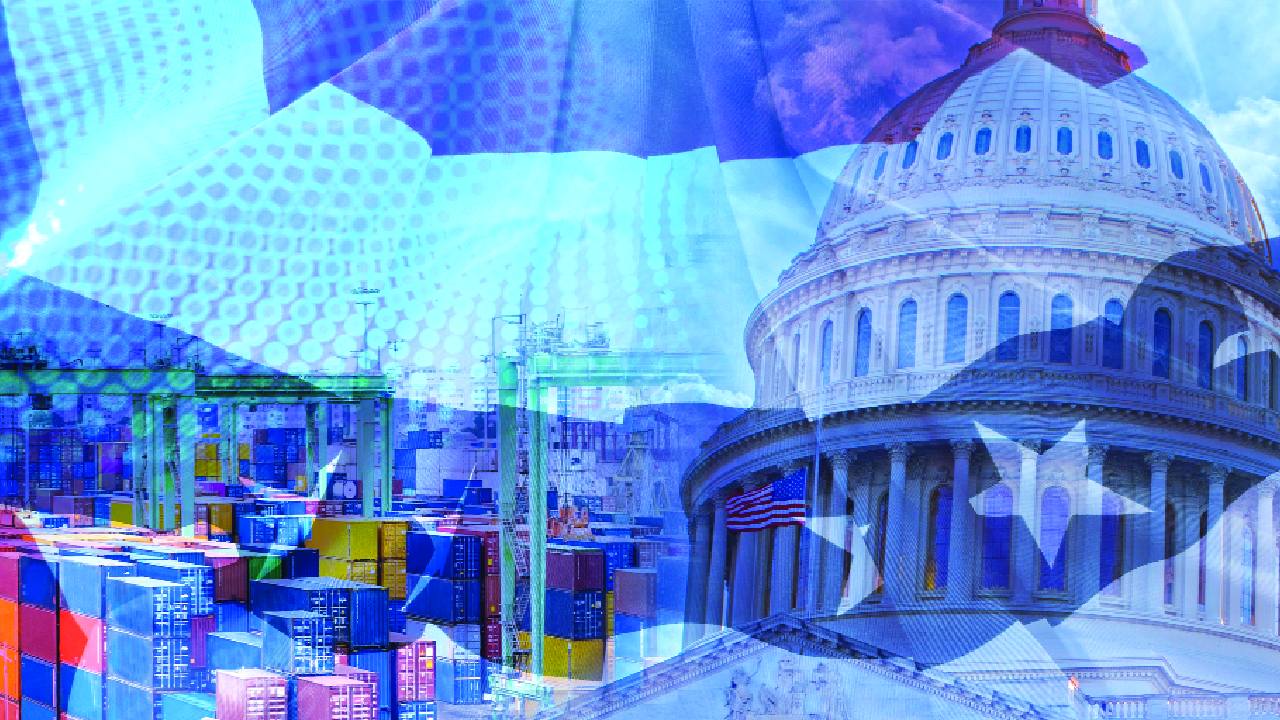
There is much confusion over global trade, bilateral deals, and cross-border investment flows, even as there is a buzz about nationalism, protectionism, atma-nirbharta, and self-reliance. Experts appear befuddled and bedazzled. Despite the bluster and rhetoric of making their respective nations great again, a slogan that reverberates across the globe in Russia, China, Europe, America, India, Brazil, and elsewhere, the global economy witnessed a resurgence of bilateral trade deals. Yes, not many talk about the World Trade Organisation, and there is a tussle on how to save the multilateral entities, including the United Nations, or regional ones like BRICS and Quad.
Obviously, the logical predictions were that the new post-Trump 2.0 trends will dent global trade, make nations and leaders look inwards and deeper, and reverse the global patterns related to investments, supply chain linkages, and over-dependence. However, the results seem the opposite, although clearcut trends are still not visible, and the global economies are in a constant flux. For example, India’s exports did not suffer much due to the American high tariffs, even as it darted here and there to seek new, alternative markets, and increase exposures in non-US ones. Import sources changed, especially in sensitive items.
In retrospect, one can safely contend that India played out a waiting game, and focused on non-US bilateral agreements with the UK, Australia, European Union (EU). Indeed, some experts say that the ‘Mother-of-all-deals’ with the EU pressured the US president, Donald Trump, to come to the table, and announce the India-US pact within a few days. Others feel that India signed the EU agreement under duress after nearly two decades because it wanted to force the American hands. One can get a whiff if one believes Trump’s claim that he agreed to it because of the desire of India’s Narendra Modi.
Whatever may be the truth, despite the bluff and bluster, the India-EU deal triggered a chain of moves, discussions, negotiations, bargaining, and a final phone call between a president and a prime minister, which resulted in the announcement of a historic bilateral trade between the two nations. If one ignores the usual theatrics of Trump, the trade deal is no doubt encouraging for the longer-term benefits. But the two agreements, with the US and EU, even as other nations, especially China and Russia ink similar arrangements, raises questions about the coming era of bilateral trade, amidst higher and fearful decibel levels related to nationalism, jingoism, hyper patriotism, even protectionism.
Trump, when he talks about his pet theme to ‘Make America Great Again’, is basically talking about protectionism. It implies restricted imports, allowing local businesses to thrive and, if possible, export more, even as there is pressure on American giants to invest at home. Make a nation self-sufficient to reduce external dependencies. In the process, stall, ban, or stop the inflow of migrants, who ‘steal’ local jobs. Most leaders across the world, as mentioned earlier, from Latin America to North America, Europe to Asia, Africa to Australia, talk in the same language that is laced with nationalism and national interests.
But, beyond the hype and signals to the domestic political stakeholders, and potential voters, the real intentions are to improve global trade bilaterally, and woo cross-border investments bilaterally. Data confirms this. In 2024, the value of total global trade was a shade below $33 trillion. Then came Trump with his tariff threats, trade tantrums, and investment invokes. There was a growing fear that the disruptive moves would lead to not just a decline in global trade, but trigger another, and more long-lasting ‘Great Recession.’ In 2025, global trade, at more than $35 trillion¸ was higher than in 2024. It went up.
Similar was the trend in global investment flows. In the era of growing, and more-acceptable bilateral pacts, MNCs have rotated money faster than ever before. Yes, it is true that geographies and geopolitics influence them more than ever, but this process started with the pandemic, and China+1 strategy. America has put out an official list of the hundreds of trillions of dollars that will be invested by American giants, and foreign investors in new factories, and expansion. India has seen high gross inflows, although they were dented by outflows through repatriation by MNCs, and outward investments by Indian MNCs. China’s investments in Asia, Africa, and Europe are up.
Capital will seek high returns, and some economies will offer them if they incentivise investors with infrastructure, and less red tape. This is why East Asia outperformed India. But India is catching up. But there is, as usual, a sting in the tail. Despite the increase in trade flows, both values and volumes, and hikes in reciprocal investments across continents and economies due to the bilateral deals being inked by everyone and anyone, specific sectors and industries within specific economies will get hurt. This will happen, like it or not, believe it or not.
Consider agriculture and dairy access. There is a bit of a haze about whether India will allow access to American farm products. In the case of Australia, and the EU, the segments were protected, although Indian farmers protested about the possible imports of apples from Australia, and processed food, and wine, among others from the EU. But several manufacturing sectors may face the heat as cheaper imports enter the Indian markets. Exports may improve, but one is not sure about the shifts in bilateral trade surpluses. What is of concern is that while India may continue to export what it does today, the reciprocating partners will sell new, premium, modern, and high-tech products.
However, let us give the devil his (or her) due. Let us commend Trump despite his disruptions. The US president proved two contradictory, and related things. Even behemoths, powerful and superpower-like ones, have limits. But these behemoths, including the lesser-ones like Russia’s Vladimir Putin, can exercise power that leads to long-lasting and radical consequences. In my opinion, Trump inadvertently pushed the global economy towards bilateral trade agreements, even as his theatrics and threats failed to deliver concrete benefits for the US. The final gainers may be some other nations, including hitherto sleeping giants like Japan, Germany, and the UK. In Asia, as of now, the shining examples of China and India, apart from Vietnam, stand out. In the future, India needs to ensure that the investment environment is attractive. If this happens, the adverse implications of bilateral trade pacts can be written off as collateral damage. Survival of the fittest, or rather the survival of the meekest, who accepted the world as it is.