Court can’t order GST cut on air purifiers: Govt to Delhi HC
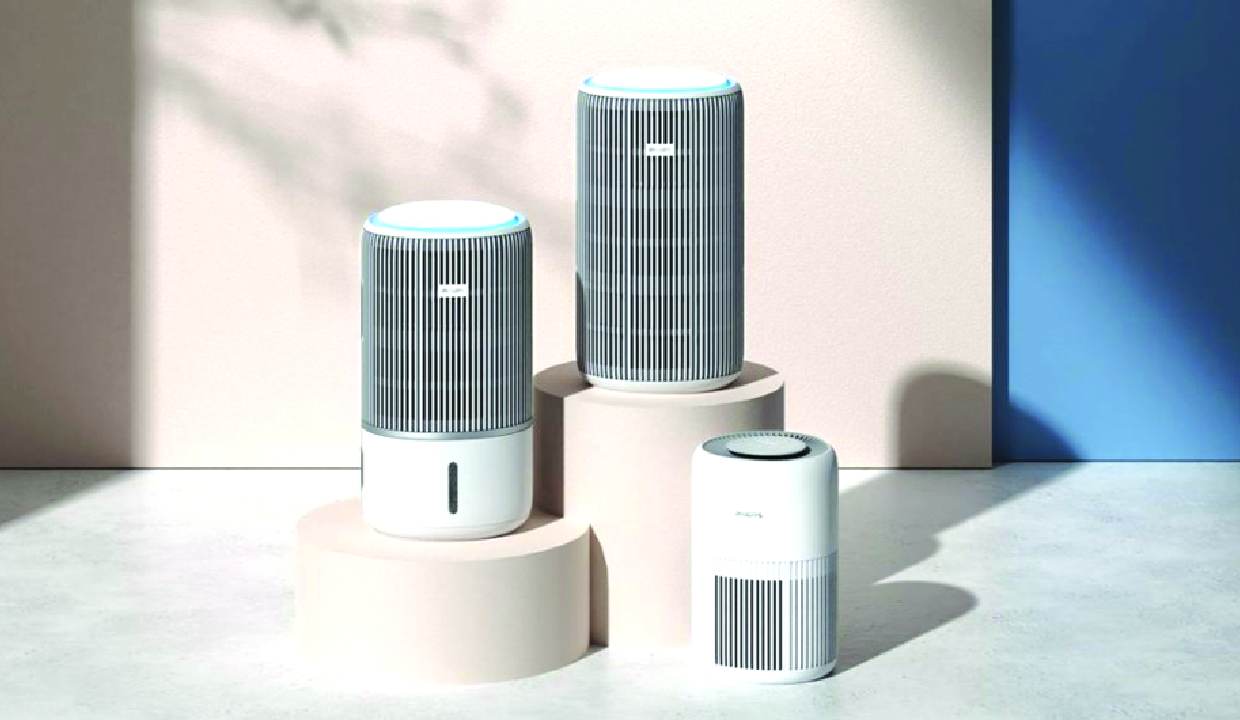
The Central Government has told the Delhi High Court that judicial directions to reduce Goods and Services Tax (GST) on air purifiers would be unconstitutional and violate the doctrine of separation of powers. Terming the Public Interest Litigation (PIL) as motivated one, the Government said that any judicial interference in the matter would bypass this constitutionally mandated process.
In an affidavit, the Government argued that under Article 279A of the Constitution, the GST Council is the sole body empowered to make decisions on GST. It stated that the determination of tax rates emerges from a complex process of cooperative federalism, requiring consensus-building between the Union and the states, while balancing competing fiscal interests.
“Any direction by this Hon’ble Court to modify GST rates, convene a meeting of the GST Council, or to compel the GST Council to consider or adopt a particular outcome, would amount to the Hon’ble Court stepping into the shoes of the GST Council, thereby, exercising functions that the Constitution has consciously and exclusively entrusted to the GST Council.
Such an exercise would violate the doctrine of separation of powers and render the elaborate and well-defined constitutional role of the GST Council otiose,” said the affidavit dated January 4.
The Government was responding to the PIL to categorise air-purifiers as ‘medical devices’ and slash the GST on them from 18 to 5 per cent. As per the petition filed by Advocate Kapil Madan, air-purifiers cannot be treated as a luxury considering the “extreme emergency crisis” caused by dire air pollution in Delhi. While hearing the case on December 24, the HC had said that an urgent meeting of the GST Council should be convened to consider the issue of classifying air-purifiers as ‘medical devices' and slash GST on them. It had asked the government counsel to seek instructions about how soon the GST Council can meet.
On December 26, during arguments, the Government opposed the PIL and said that passing directions to the GST Council will open a Pandora’s Box.
The case will be heard by the High Court again on January 9. In its counter-affidavit, the Government has argued that the petitioner’s reliance on the notification under the Drugs and Cosmetics Act, 1940, to seek a reduction in GST on air-purifiers is misplaced.
Further, the Central Government has said that classification of air-purifiers as medical devices would subject their import, manufacture, sale, stocking and distribution to the Drugs and Cosmetics Act, 1940 and the Medical Device Rules, 2017, making their availability in the market regulated.
“Such a regulatory shift would have the effect of favouring a limited class of entities possessing the requisite licences, registrations, and approvals, thereby creating conditions for monopoly rather than advancing public access. Thereby, in turn, raising serious concerns as to who is really behind the institution of the present petition,” said the Government.