Convenience or compulsion? The rising cost of cabs at Delhi airport
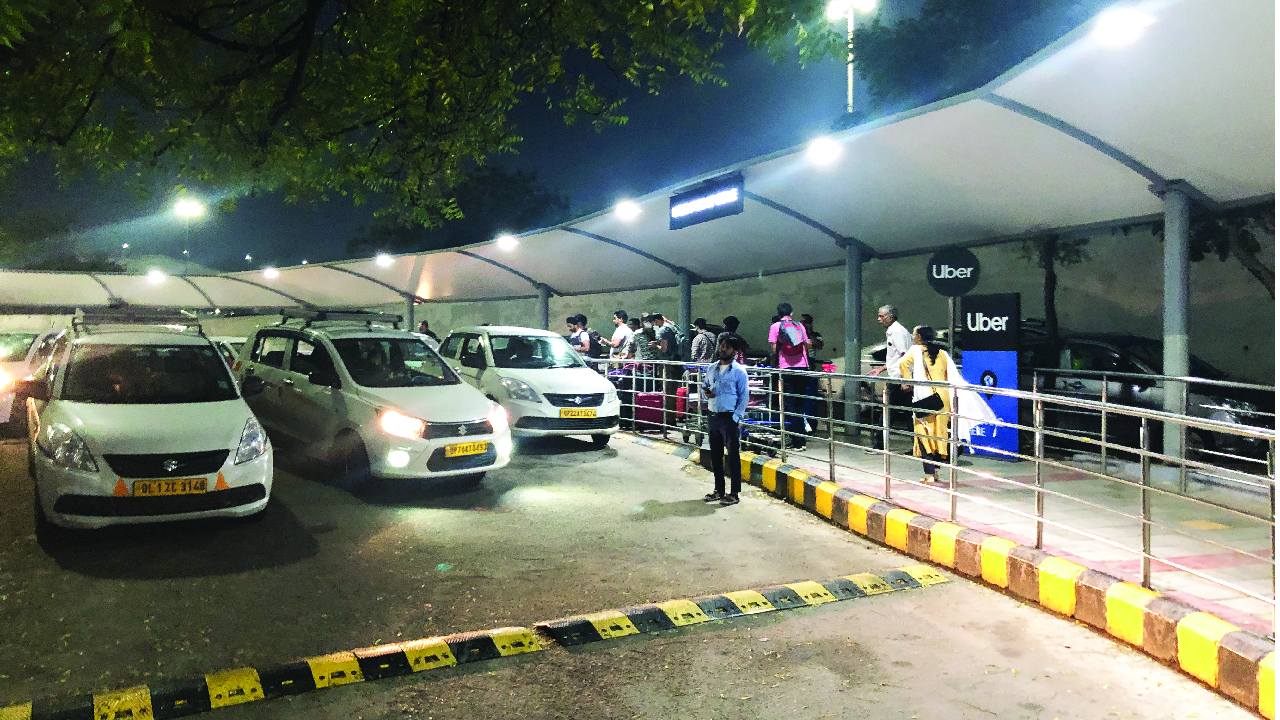
Hiring app-based cabs from the Indira Gandhi International Airport in the national Capital has become a costly affair. Passengers availing cabs from the airport are charged a mandatory INR 290 pick-up charge, which accounts for nearly half the total fare on short-distance rides.
While passengers and drivers alike are questioning the transparency, the value and the infrastructure that accompanies the charge, cab aggregators such as Uber and Ola claim the charge is part of contractual parking arrangements with the airport authorities,. The flat INR 290 fee is charged on every app-based airport pick-up, regardless of vehicle size or trip distance. Drivers say aggregators deduct this amount upfront as a parking fee, leaving the remaining fare to be split between the driver and aggregator.
Cab drivers claim that the system is driven by long-term contracts signed between app-based cab companies and Delhi International Airport Limited (DIAL), operated by GMR. Under these arrangements, designated ground-floor parking space at the arrival terminals is reserved for Ola and Uber vehicles. “Every cab entering the arrival area is charged INR 290. It is compulsory,” said Vimlesh, an airport cab driver. “Earlier, we had to pay parking charges ourselves. If a passenger cancelled the ride, our money was wasted. Now the charge is fixed and included, so at least we don’t lose money on cancellations.” According to a driver the companies pay the airport authorities in crores for parking annually. “That money doesn’t come from the companies’ pockets. It comes from passengers,” a driver added.
Drivers, however, argue that the fee has sharply reduced their earnings. “Our income is now very limited,” said Rajneesh, another driver. “The cab companies already take more than 50 per cent of the total fare. This INR 290 cut leaves very little for us, adding that even though the charge is passed on to passengers, it often leads to arguments and low ratings.
Passengers, meanwhile, say the steep fee is not matched by a smooth or comfortable experience. Complaints about congestion, poor design, and lack of crowd management are particularly frequent at Terminal 2. “Terminal 2 has the worst, design-challenged pick-up point,” said a frequent flyer. “There’s a sharp turn on approach, people crossing everywhere, cars parked in the middle of the road, and hardly any manpower. Half the road gets blocked. It turns into chaos, and fights break out regularly.” Another passenger, who recently travelled from Terminal 2 to Chandigarh, criticised the terminal’s basic infrastructure. “Gate 25’s waiting area looks like a dharamshala,” he said. “People were standing all over the place. It’s overcrowded and uncomfortable. GMR or the Government should dismantle it and rebuild it like the new Terminal 1.”
Drivers echoed these concerns, saying high parking charges have not translated into better facilities or smoother operations. “Despite taking so much money, services are poor,” said Raju Yadav, an airport cab driver. “Sometimes guards make us take unnecessary rounds inside the terminal area. Customers get irritated and blame us, even though it’s not our fault.”
Industry experts say the airport cab model highlights a larger issue of cost-shifting in urban transport hubs, where convenience fees are steadily rising without proportional improvements in infrastructure or service quality. With the pick-up fee rising by nearly 40 per cent since last year and passenger complaints mounting, the debate is intensifying over who should bear the cost of airport operations and whether India’s busiest airport is delivering value for the premium it now demands.For now, travellers arriving at Delhi airport have few alternatives if they want the ease of app-based cabs.