Condemnation mounts over Maduro's capture
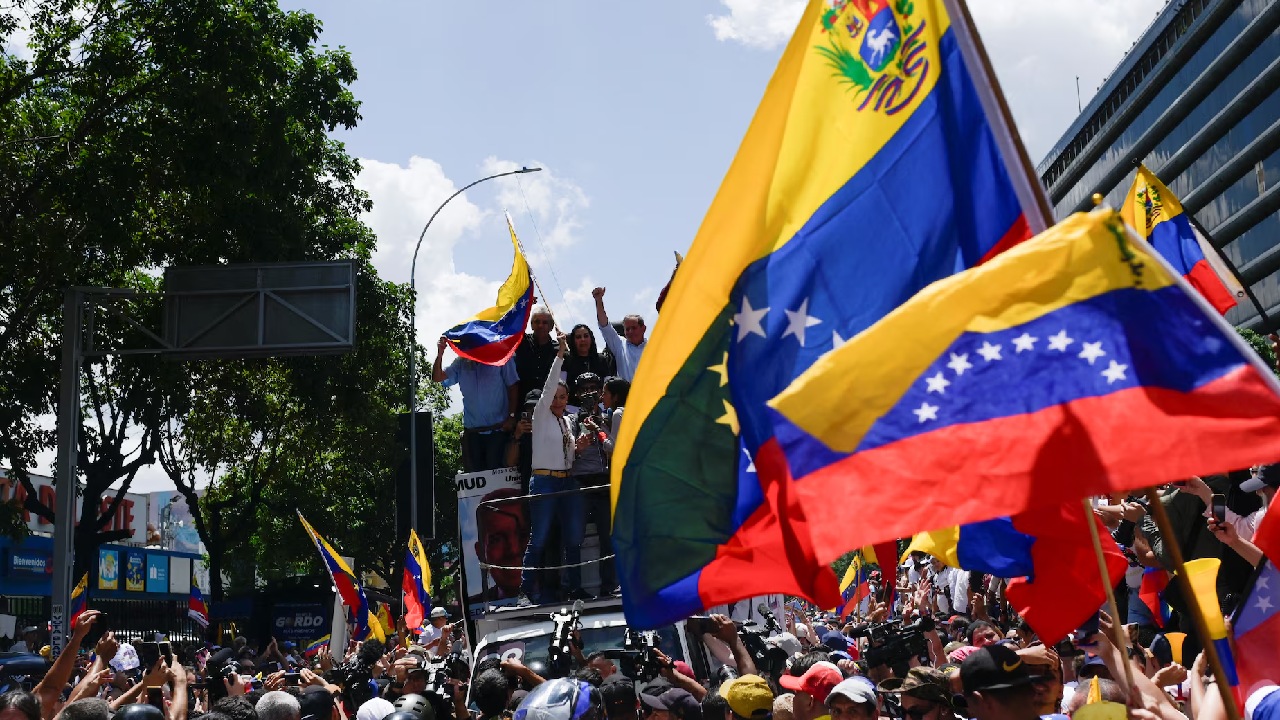
Governments across the world reacted sharply on Saturday after the United States said it had carried out military strikes in Venezuela and captured President Nicolás Maduro and his wife, Cilia Flores, triggering widespread condemnation and urgent calls for restraint.
Russia said it was "extremely concerned" by reports that Venezuela's president and first lady had been forcibly removed during what Moscow described as aggressive U.S. actions. The Russian Foreign Ministry said there was no justification for the operation, adding that "ideological hostility has prevailed over diplomacy." Venezuela remains Russia's most important ally in South America, though Moscow stopped short of offering direct assistance.
Brazilian President Luiz Inácio Lula da Silva strongly condemned the U.S. operation, calling it an unacceptable act of intervention. Writing on X, Lula said, "Bombing its territory and capturing President Nicolás Maduro is inconceivable. This action is a remnant of the worst moments of intervention in Latin America. The international community must respond."
China said it was "deeply shocked and strongly condemns" what it described as Washington's blatant use of force against a sovereign State. The Chinese Foreign Ministry said the action "seriously violates international law and Venezuela's sovereignty" and threatens peace and security in Latin America and the Caribbean. Beijing called on the U.S. to abide by international law and the principles of the UN Charter.
France also criticised the operation, saying it undermined international law. Foreign Minister Jean-Noël Barrot said Maduro had "gravely violated" the rights of Venezuelans but stressed that the military action leading to his capture "contravenes the principle of non-use of force." He warned that repeated violations of this principle by permanent members of the UN Security Council could have "serious consequences for global security."
Germany's Foreign Ministry said Berlin was following developments "with great concern," adding that it was coordinating closely with international partners and that the Government's crisis team was in session. Spain called for de-escalation and restraint, offering to mediate. "Spain calls for calm and is prepared to offer its good offices to achieve a peaceful, negotiated solution to the current crisis," the Foreign Ministry said.
Colombian President Gustavo Petro called for an emergency meeting of the United Nations and announced the deployment of troops to Colombia's border with Venezuela amid fears of regional spillover. Mexico condemned the U.S. strikes, warning that unilateral military action "seriously jeopardises regional stability." The Mexican Foreign Ministry said it "strongly condemns and rejects" the U.S. military actions carried out against Venezuelan territory.
Chile's President Gabriel Boric also condemned the strikes, urging dialogue. "We express our concern and condemnation of the military actions by the United States in Venezuela and call for a peaceful solution to the serious crisis affecting the country," he said in a post on X.
Cuba called for an international response, with President Miguel Díaz-Canel describing the strikes as a "criminal attack" and saying that Latin America's "zone of peace is being brutally assaulted."
Iran's Foreign Ministry said it "strongly condemns the American military attack on Venezuela and the flagrant violation of its national sovereignty and territorial integrity." Bolivia's former president Evo Morales said he "forcefully rejected" what he described as the U.S. "bombardment" of Venezuela.
Italy said Prime Minister Giorgia Meloni was closely monitoring the situation and was in constant contact with the Foreign Ministry to assess developments, including the safety of Italian nationals in the region. In contrast, Argentina's President Javier Milei welcomed U.S. President Donald Trump's claim that Maduro had been captured, posting on social media: "Long live freedom, dammit!"
Venezuela's Government accused the United States of attacking both civilian and military installations, calling the strikes an "imperialist attack." In a statement, it said it "rejects, repudiates and denounces before the international community the extremely serious military aggression" carried out by Washington.
Venezuela's Vice President Delcy Rodríguez said the Government did not know the whereabouts of President Maduro and First Lady Cilia Flores. "We demand proof of life," she said. Maduro was last seen on Venezuelan state television on Friday, when he met a delegation of Chinese officials at the presidential palace in Caracas.