CM Rekha launches amphibious excavators for city drain cleaning
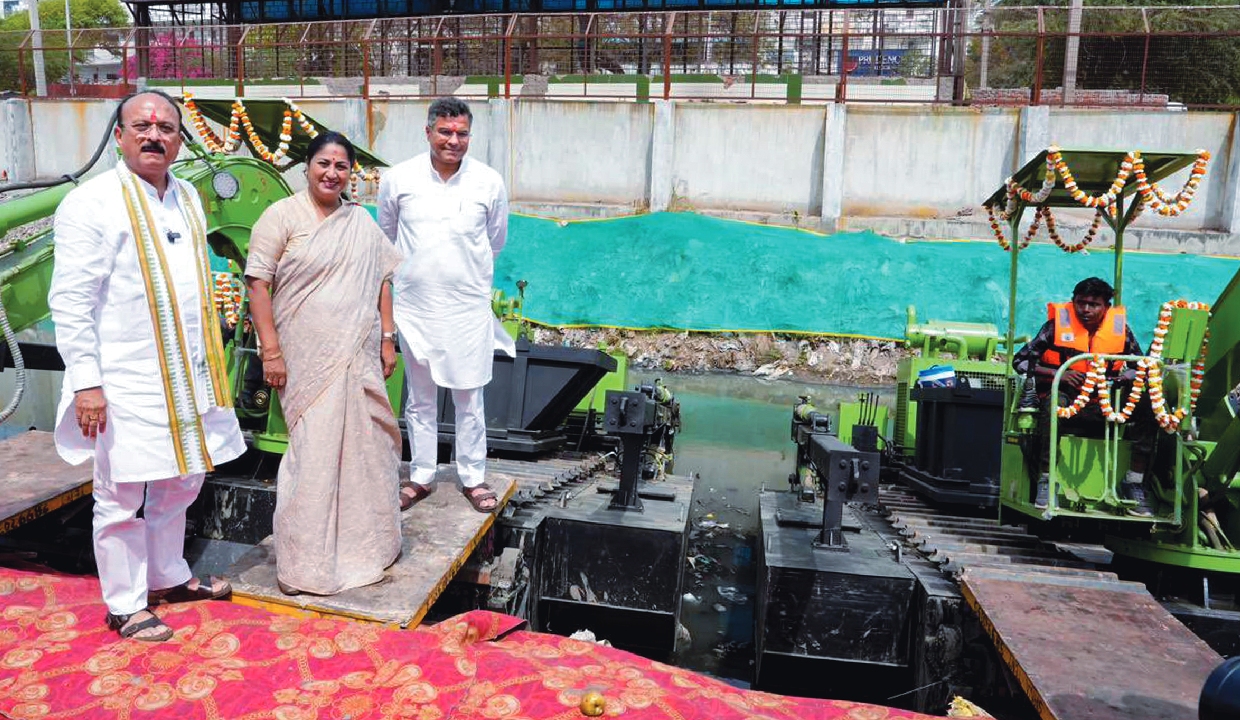
Delhi Chief Minister Rekha Gupta on Friday launched new state-of-the-art amphibious excavator machines (long boom and short boom) at Badusarai Bridge, Najafgarh Drain and Pankha Road Drain for cleaning the city’s drainage network. These machines will significantly speed up and improve desilting operations, removal of garbage, and clearing of water hyacinth from the drains.
The move is expected to improve water drainage capacity and help reduce waterlogging during the monsoon season.
The chief minister, who visited the Badusarai area for ground inspection, said that the new machines procured by the Irrigation and Flood Control department is a step towards a cleaner Yamuna. Delhi Cabinet Ministers Parvesh Sahib Singh and Ashish Sood, along with senior officials of the concerned departments.
“These machines will speed up the removal of silt and garbage and improve the drainage system, which is a step towards cleaning the Yamuna River,” she told reporters after the launch of the machines. The Najafgarh drain is one of the biggest contributors to Yamuna pollution. According to estimates, more than 10 million metric tonnes of silt have accumulated in the Najafgarh Drain.
The newly deployed amphibious machines will be used to remove this massive buildup. The Delhi government has also decided to procure more amphibious machines. One machine had already been brought earlier, while four new machines were flagged off on Friday. The remaining machines will be handed over to the department soon.
The machines have been deployed by the Irrigation and Flood Control (I&FC) Department at several key locations, including Badusarai Bridge, Kakrola, Dwarka and Uttam Nagar.
The Government aims to ensure that desilting of drains continues throughout the year, helping control waterlogging during the monsoon. The Chief Minister added that the Delhi government is now carrying out desilting work throughout the year, instead of limiting it to the period before the monsoon. This approach aims to more effectively prevent waterlogging during the rainy season.
The short-boom amphibious machine costs around `1.27 crore. It has a boom length of about 6 metres, a bucket capacity of 0.20 cubic metres, and is powered by a 65 HP engine.