CJI’s new mandate on timeline hearing to be tested
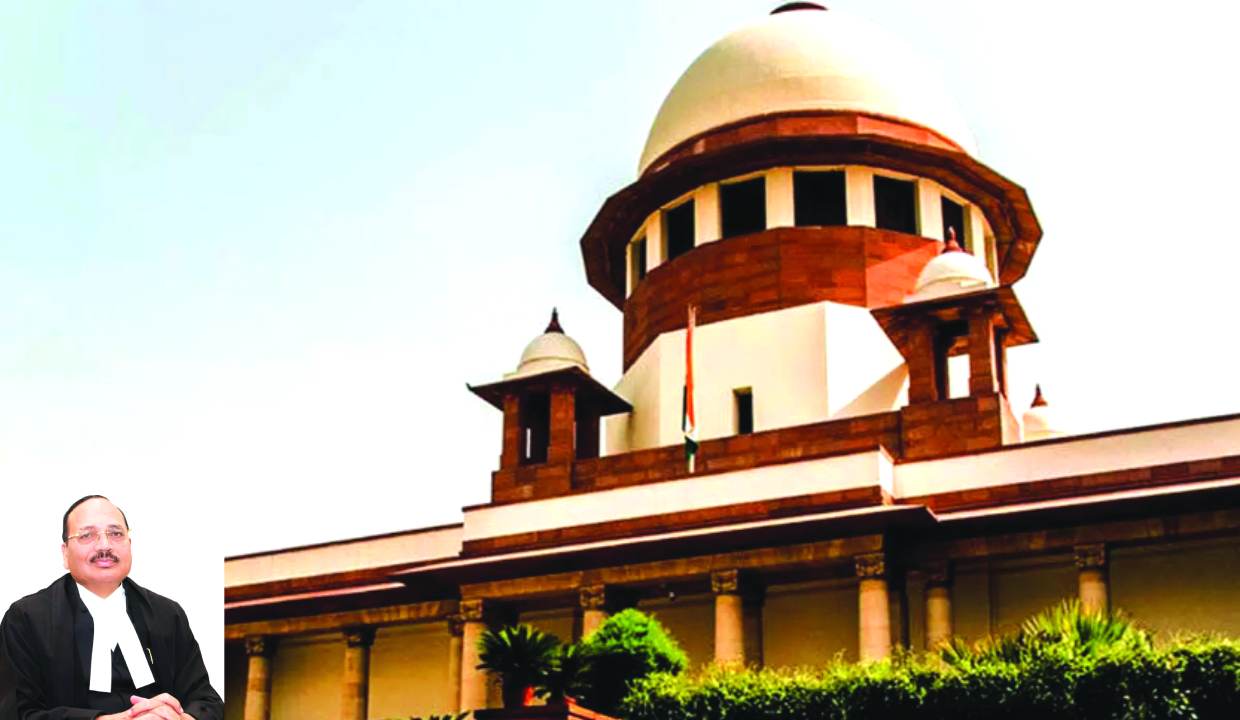
In a significant move to reduce judicial delays and manage court time more efficiently, the Supreme Court recently issued a formal Standard Operating Procedure (SOP) regarding timelines for oral arguments and written submissions.
The new rules, directed by Chief Justice of India Surya Kant, take effect immediately for all post-notice and regular hearing matters. “In order to facilitate effective Court Management and equitable distribution of Court working hours and to ensure speedy and proper administration of justice, as directed by Hon’ble the Chief Justice of India and all the Judges, there shall be a Standard Operating Procedure (SOP) for adhering to timelines for submission of oral arguments in all cases, with immediate effect,” read the December 29, 2025 circular.
It said Senior Advocates, Arguing counsel and/or Advocate-on-record, shall submit the timelines for making oral arguments in all post-notice and Regular Hearing matters, at least a day prior to the commencement of the hearing of the case. The same shall be submitted to the Court through the online portal for submitting Appearance Slips already provided to the Advocate-on-record.
Further, Arguing counsel and/or Senior Advocates, through their Advocate-on-record or Nodal Counsel/s nominated by Court, if any, shall file a brief Note/ written submission not exceeding five (5) pages, after serving its copy on the other side, at least three (3) days prior to the date of hearing, in order to ensure compliance of such timeline.
Lastly, the circular stated that all counsel shall strictly adhere to the timelines fixed and conclude their oral arguments. The core objectives of the new SOP are to ensure an equitable distribution of court working hours across the heavy daily docket and to prevent endless hearings that delay outcomes for ordinary litigants. The CJI specifically noted in the past that prolonged arguments by senior counsel often deprive “poor and ordinary litigants” of their day in court.
Further, the SOP is likely to encourage crispness in thought and articulation and move away from the practice of reading long passages from books or voluminous pleadings. Till now, self-regulation has been the model where counsel honestly estimate their time needs. However, the Court reserves the right to intervene if requested durations are deemed excessive. The responsibility for compliance lies jointly with the Senior Advocate, the arguing counsel, and the Advocate-on-Record (AoR).
A separate circular issued on the same day prioritises cases for specially-abled persons, acid attack victims, senior citizens (over 80), and those below the poverty line to further streamline the cause list. This SOP marks a decisive shift toward the procedural discipline seen in many foreign jurisdictions, where time is strictly allocated before the hearing.
Another significant aspect concerning the justice delivery mechanism, according to recent media reports, is that the CJI has affirmed that citizens facing legal emergencies or the threat of arrest by probe agencies at “unearthly hours” may seek urgent hearings from constitutional courts. This ensures that protection for fundamental rights and personal liberties remains accessible even in the “dead of night.”
The bedrock of this proposition is Article 21 of the Constitution, which states: “No person shall be deprived of his life or personal liberty except according to procedure established by law.” The Supreme Court has interpreted this to mean that if a “procedure” (like an arrest) appears arbitrary or malicious, the court must be available to intervene immediately. Since an arrest can happen at any time, the remedy must also be available at any time.
While courts typically operate between fixed hours every day, a protocol exists for “after-hours” intervention. Even at night, a designated judicial officer (the Registrar) is reachable. If a lawyer can prove “extreme urgency,” the Registrar contacts the Chief Justice. The CJI (or the Chief Justice of a High Court) decides if the matter warrants waking up a bench. If approved, judges may hear the matter at their residence or via video conferencing. The CJI’s comment, as reported, specifically targets a tactic sometimes used by probe agencies, arresting a person late on a Friday night or a holiday eve. This is often done to ensure the person remains in custody for 24-48 hours before they can be produced before a Magistrate.
By allowing “dead of night” hearings, the court prevents agencies from using the “weekend gap” to bypass judicial scrutiny. The Court views a single night of “illegal” or “unjustified” detention as a permanent scar on a citizen’s rights.
India has a history of such emergency hearings. In the Yakub Memon Case (2015), the Supreme Court opened its doors at 3:00 am to hear a final plea against a death warrant. In the Karnataka Assembly Case (2018), a midnight hearing was held to decide on the formation of the State Government.
In the Arnab Goswami Case (2020), the Court emphasised that “High Courts must exercise their jurisdiction to protect personal liberty.” A large team of Mumbai Police officers arrived at his residence early in the morning without prior summons, which his lawyers argued was intended to intimidate and prevent him from seeking immediate legal counsel.
By publicly stating that courts are open 24/7, the CJI sends a clear message to investigating agencies (like the CBI, ED, or Police). It serves as a deterrent, signaling that any attempt to overstep legal bounds under the cover of darkness can be met with an immediate judicial stay or an order of protection.
The year-end circular on SOP regarding timelines for oral arguments and written submissions did not emerge in a vacuum. It was the culmination of a deliberate reform agenda led by the CJI Surya Kant, who has been speaking on different platforms to address a growing “crisis of time” in the judiciary.
By late 2025, according to the National Judicial Data Grid (NJDG) and confirmed in statements by CJI and the Union Ministry of Law and Justice, the Supreme Court was facing its highest-ever pendency, crossing 88,000 to 91,000 cases.
On December 4, 2025, Union Law Minister Arjun Ram Meghwal informed the Rajya Sabha (Upper House) in a written reply that the pendency in the Supreme Court stood at 90,694 cases as of December 1, 2025. This was highlighted as a significant jump from the 70,239 cases recorded in 2021.
This looming pendency crisis provided the immediate administrative justification for the December 29, 2025, Circular, as the Court realized that traditional “self-regulation” of argument timelines was no longer sufficient to keep pace with the 7,000-plus new cases being filed every month.
In the new year, it is hoped that the circular on timeline acts as a structural reset for how the Supreme Court utilises its most precious resource, “judicial time.” By moving from an unregulated model to a disciplined SOP, it is likely to improve the justice delivery system in several specific ways.
Historically, high-profile “luxury litigation” often consumed several days of a Bench’s schedule, leaving “ordinary” matters (like pension disputes, bail, or accident claims) unheard.
By fixing timelines for senior counsel, the Supreme Court ensures that a single case doesn’t hijack the day’s cause list. When lawyers commit to a timeline argument, the Court can accurately predict how many cases it will complete that day, reducing the frustrating outcome of adjournments due to a lack of time for later litigants.
Some of the Supreme Court advocates said the mandatory five-page cap on written submissions (filed 3 days in advance) transforms the quality of justice. Lawyers can no longer file voluminous “written notes” that judges struggle to digest. They must stick to the case in its absolute legal essence. Further, judges receive these concise notes 72 hours before the hearing, which will help them to enter the courtroom already briefed on the critical points. The SOP discourages the practice of reading long passages from books or case laws as “fillers” and prevents the repetition and tendency of lawyers to impress the clients by speaking more.
The timeline circular works in tandem with the Case Prioritisation Circular issued the same day. By saving time through stricter timelines, the Supreme Court creates “slots” in the schedule specifically for Senior citizens (80+) and BPL (Below Poverty Line) individuals, Specially-abled persons, and acid attack victims, and Legal aid matters that otherwise wait years for a hearing.
The SOP introduced by the Supreme Court will help the High Court to follow suit and overcome the shortcomings. This holds good for some High Courts where matters of civil liberty take months to reach the Board.
The December 29, 2025, circular and the CJI’s affirmations on emergency hearings represent more than just a change in rules; they signal a fundamental evolution in the judicial system. This ensures that the Court’s most finite resource, judicial time, is no longer monopolised by a few, but is distributed equitably among all seekers of justice, from the senior advocate in a corporate dispute to the victim of an acid attack, civil liberty or a pensioner waiting for their due.
Ultimately, the success of this reform hinges on its implementation. Whether the SOP can truly dismantle the culture of “luxury litigation” will be tested by the Bar’s discipline and the Bench’s resolve to enforce the new clock.
The writer is a senior journalist covering legal affairs