CJI urges young lawyers to be nation-builders
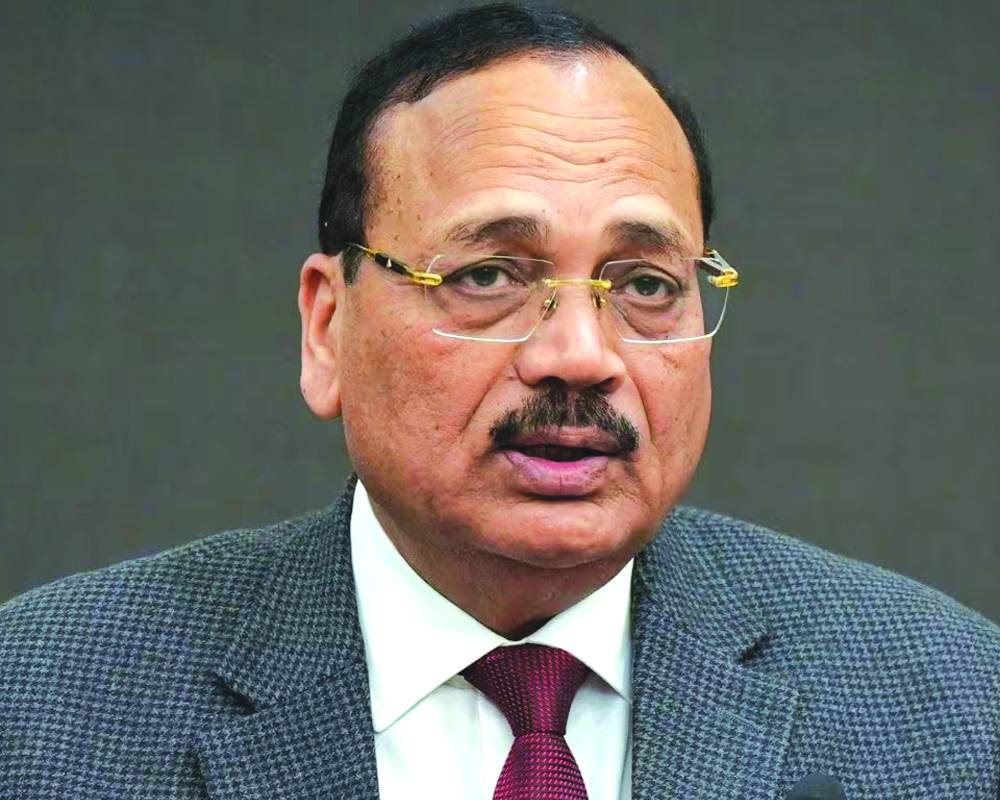
Chief Justice of India (CJI) Surya Kant told young lawyers on Tuesday to see themselves not merely as “case builders” but as “nation builders” and ask themselves a larger, more enduring question — what is the role of a lawyer in a country like India. Addressing the seventh convocation ceremony of the Rajiv Gandhi National University of Law (RGNUL) here, the CJI said every generation inherits the country in an unfinished form and bears the responsibility of shaping its future. He drew a distinction between “case builders” and “nation builders”.
“Watching all of you take your place in the world, I am reminded of a simple truth — every generation receives the republic unfinished. Our Constitution is not a monument cast in stone, it is an ingenious blueprint.
The courts give it interpretation, the institutions give it structure, but you, my dear young ones, must give it life. You must decide what India becomes next,” he told the graduating students.
The CJI said whenever he has the privilege of addressing such a young and dynamic audience, “I must confess that I assume most of you will join the bar.” “This is more of an earnest hope. And this also brings me to the central theme I want to share with you all today — that even as advocates, you are not merely case builders. You are, in fact, nation builders,” he said.
Justice Kant told the gathering that when many of the students chose to study law, they might have imagined themselves arguing landmark cases, drafting intricate contracts or perhaps, addressing constitutional benches one day, which he said are worthy ambitions and there is nothing wrong with those.
“But I would urge you to pause and ask a larger, more enduring question — what is the role of a lawyer in a nation like India at this moment in its history? I insist upon this, being well aware that too often, we reduce the legal profession to a narrow exercise — winning cases, billing hours, mastering procedure,” he said, adding that while this certainly produces competent practitioners, it does not necessarily create nation builders.
A case builder focuses on the dispute of the day, a nation builder concerns himself with the consequences of today’s dispute on tomorrow’s society, the CJI said. The distinction is fundamental — the former is transactional, the latter transformational, he added.
Underscoring a young lawyer’s role in a broader context, Justice Kant told the students that as they stand “at the beginning of your own apprenticeship, you are entering a world unlike that faced by any generation before you”.
“India is modernising faster than its institutions can comfortably adapt. Our disputes no longer fit neatly into familiar categories. Contracts now involve algorithms, property includes digital assets, families stretch across jurisdictions, and environmental cases are battles against time itself.
“And at the centre of this growing complexity stands the Indian lawyer — expected not merely to argue, but to interpret, to advise, to innovate and, above all, to humanise,” he said.
The CJI underlined that judicial reforms and modernisation efforts would achieve a real meaning only when young lawyers translate ideas into action at the grassroots level.
Addressing the young lawyers, he said, when he speaks about mediation, advocates for a unified national judicial policy, emphasises the need to modernise the country’s courts, he is not shouting into a void.
“I am speaking directly to you — our youth, our future and indeed, the very best of our human resources. And I am hoping that some among you will carry these ideas forward, refine them, challenge them and ultimately, make them work on the ground. Because it is an incontrovertible fact that words spoken from the bench acquire a meaning only when young minds convert them into action,” he said.
“I stress upon the discrepancy between a case builder and a nation builder. A case builder asks, ‘How do I win?’ A nation builder asks, ‘What kind of a system am I strengthening by the way I win?’ A case builder is satisfied with technical compliance, a nation builder is concerned with justice, fairness and legitimacy,” the CJI said.
He identified three essential pillars for a meaningful and enduring legal career — integrity, compassion and curiosity — and described integrity as the institutional backbone of the justice system.
On the occasion, the university conferred the Doctor of Laws (Honoris Causa) degree on Supreme Court judges Pankaj Mithal and Rajesh Bindal.
Chief Justice of the Punjab and Haryana High Court, Sheel Nagu, was also present. Vice Chancellor of the University, Jai Shankar Singh, welcomed the guests.