Children need support, not guilt when failing: Mohan Bhagwat
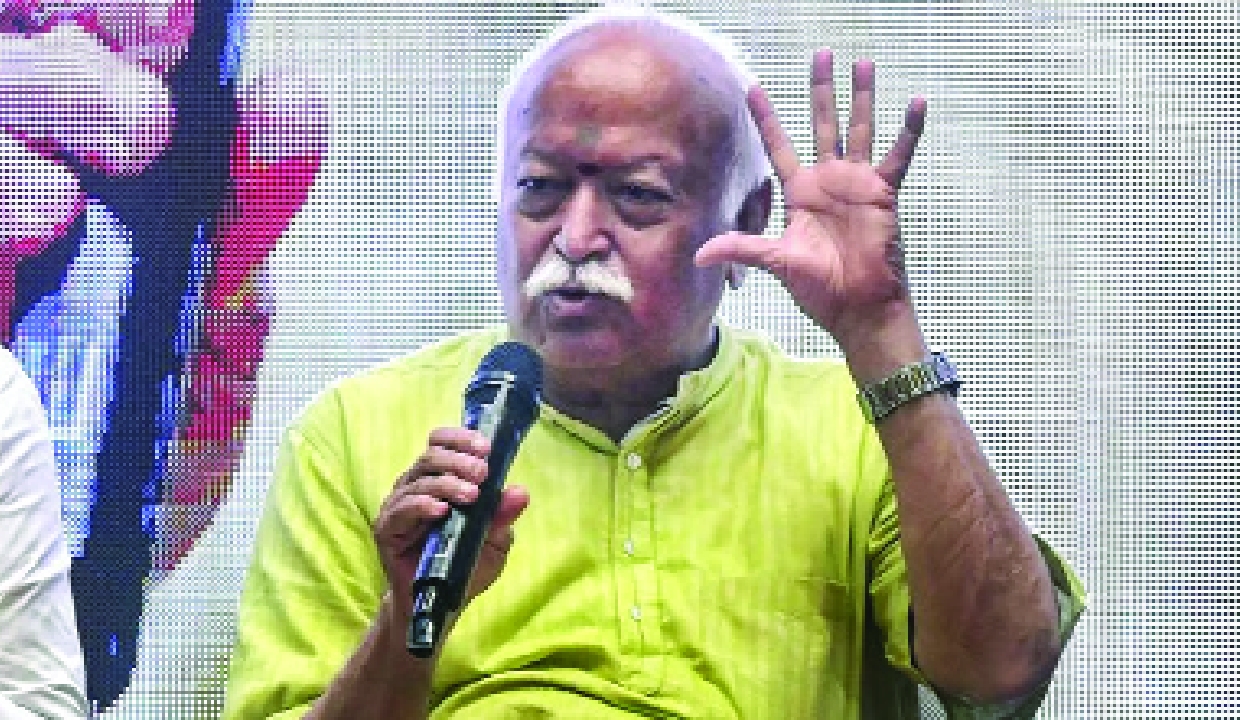
RSS chief Mohan Bhagwat emphasised that young people need emotional support rather than criticism when they fail. He stated that values are acquired by observing parents and elders, not through formal instruction.
“Today’s terminology refers to IQ and EQ. Emotional intelligence is of primary importance. Intellectual ability alone is insufficient. There are numerous instances of highly intelligent individuals who do not succeed in life because they are unable to cope with setbacks,” Bhagwat stated.
He also encouraged parents to model appropriate behaviour regarding social media use, noting that children tend to emulate what they see at home and learn from adults.
Following his lecture on Yuganukul Matrutva (Contemporary Motherhood) at a Vishwamangalya Sabha event on Friday, Bhagwat stated that parents should focus on developing their children’s character from an early age and gradually grant them increased autonomy as they mature.
“Values cannot be imposed. They are absorbed naturally by observing the conduct of elders. They are not accepted merely because someone says, ‘This is good, so do it.’ They become part of one’s character only through observation and practice,” he said.
Bhagwat referenced traditional Indian parenting practices, stating, “Our elders used to say that until the age of five, children should be treated like little kings and queens; between the ages of five and sixteen, they should be disciplined appropriately; after sixteen, they should be treated like friends. This is because, by that stage, youngsters have developed the ability to understand and think independently.”
He asserted that emotional intelligence matters more than intellectual ability when facing setbacks. Bhagwat said children need reassurance, not guilt, when they fail. “If a child fails an exam, they already know it. There is no need to keep repeating it. Instead, the child should feel supported. Parents should say, ‘Don’t worry. We are with you. Next time, you will succeed. Let us see what needs to be done.’ That is what children need,” he said.
Bhagwat emphasised that young people should be encouraged to persevere after failure. “Every child should be taught that even if you fall, you must get up and move forward. That confidence should come from the family. If families provide such support, children will naturally become strong and capable,” he stated. Responding to questions about protecting children from social media and maintaining emotional closeness, Bhagwat noted that mothers especially have a natural ability to foster emotional bonds. “The only thing required is to keep communication alive. Through constant dialogue, parents understand their children’s minds.” He added, “Children should feel so connected that they can speak to their parents without reservation.”
Bhagwat spoke about the growing influence of social media, saying its harmful effects are clear in society, but not everyone is affected.
“However, it is also evident that some individuals remain unaffected by it. It is inaccurate to claim that everyone is influenced. While many are, some consciously choose to limit their consumption of such content and reduce their use of social media,” he said.
He suggested that parents should seek to understand the reasons why some young people are unaffected by social media, while others are influenced by it.
“The difference lies in a person’s disposition. As I mentioned earlier, that disposition is formed during the first stages of life through the influence of elders at home and by observing and imitating them,” Bhagwat said.
He stated that children should not be exposed to harmful content and noted that adults are also frequently influenced by the media they consume. “Today, films often carry the label ‘For Adults Only.’ That does not mean the content is bad for children but good for adults... In reality, even adults are often influenced by it... Therefore, we must develop this ability in them to discern,” he said.
“If you do not want your children to watch such content or hear abusive language, you should not watch or listen to it either. After all, what do we lose by avoiding it? Children imitate what they see. If we adopt the right way of living, they will naturally follow, and it will gradually become part of their character,” Bhagwat said.