Centre declares Naxalism history as no district remains violence-affected
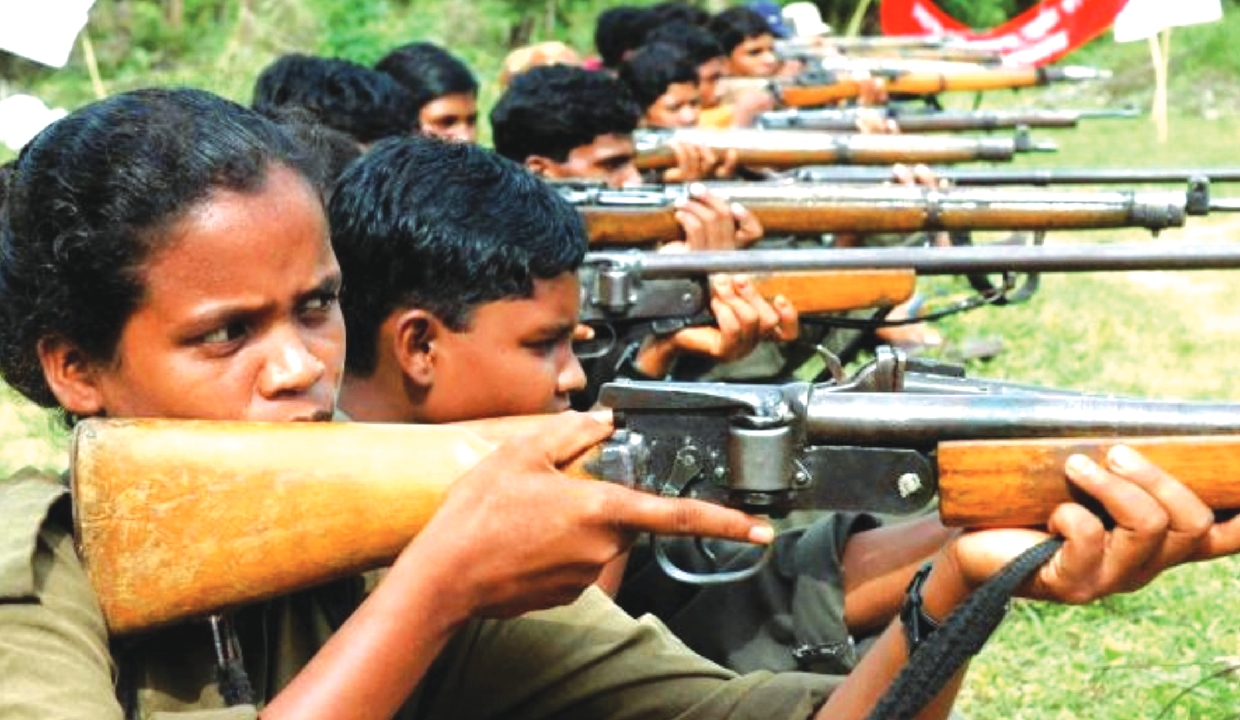
The Centre has formally declared that Naxalism, once called the biggest challenge to India’s internal security, is history now, and no district in India now falls under the category of Naxal violence-affected areas.
This announcement, issued by the Ministry of Home Affairs (MHA) to nine affected States, marks the end of more than five decades of Left Wing Extremism (LWE) that first erupted in the country in 1967.
The declaration follows an intensive high-level security review conducted by the MHA in early April under the National Policy and Action Plan to Address Left Wing Extremism, formulated in 2015. The review, completed after the March 31 deadline set by the Government to eradicate LWE, assessed the ground situation across all previously affected regions.
Officials confirmed that armed Naxal cadres have been neutralised, their capacity to carry out violence has been dismantled, “liberated zones” no longer exist, and the frequency of violent incidents has dropped to zero.
Union Home Minister Amit Shah had already informed Parliament on March 30 that India was free from Maoist influence. The latest landmark communication to Andhra Pradesh, Bihar, Chhattisgarh, Jharkhand, Madhya Pradesh, Maharashtra, Odisha, Telangana and West Bengal reiterates this achievement.
“India becoming free of Naxal violence is a historic achievement obtained through the continuous and coordinated efforts of the Central and various State Governments,” the MHA stated. Consequently, the earlier categorisation of districts as LWE-affected has been completely removed.
The last security review notified on March 27 had listed only two districts: Bijapur in Chhattisgarh and West Singhbhum in Jharkhand, under the LWE-affected category. Both have now been cleared of active insurgency. However, to ensure lasting peace, the MHA has introduced two new categories for 38 districts that were once severely impacted.
Thirty-seven districts have been designated as ‘Legacy and Thrust districts’, while one, West Singhbhum in Jharkhand, has been classified as a ‘District of Concern’. These districts will continue to receive focused security and development attention.
According to the National LWE Policy of the MHA, a Legacy and Thrust district is one that is now completely free of Naxal insurgency but requires sustained security measures and developmental initiatives to prevent any resurgence.
A District of Concern is an area where Naxal violence has been brought under control, and the organisational structure of insurgents has been decimated, yet continued monitoring is essential for the near future.
The Legacy and Thrust districts include: Alluri Sitharamaraju (Andhra Pradesh); Aurangabad, Gaya, Jamui and Lakhisarai (Bihar); Bastar, Bijapur, Kanker, Narayanpur, Dhamtari, Kabirdham, Khairagarh-Chhuikhadan-Gandai, Kondagaon, Rajnandgaon, Mohla-Manpur-Ambagarh Chowki, Gariyaband, Sukma and Dantewada (Chhattisgarh); Bokaro, Chatra and Latehar (Jharkhand); Mandla and Balaghat (Madhya Pradesh); Boudh, Sundergarh (Rourkela police district), Kalahandi, Koraput, Malkangiri, Nabarangpur, Nuapada, Rayagada and Kandhmal (Odisha); Bhadradri-Kothagudem and Mulugu (Telangana); and Jhargram (West Bengal).
It may be recalled that the Naxalite movement had originated in 1967 at Naxalbari village in West Bengal, at the tri-junction of India, Nepal and Bangladesh. It drew strength from deep-rooted social injustice, economic inequality and the failure of governance to address the grievances of indigenous tribals and forest-dwelling communities.
The insurgents had ambitiously sought to carve out a Red Corridor stretching from Pashupati in Nepal to Tirupati in Andhra Pradesh, aiming to establish liberated territories along India’s eastern flank. Over the decades, LWE violence claimed more than 17,000 lives, including civilians and security personnel, leaving behind a trail of destruction in some of India’s most backward regions.
Security experts view the current development as the culmination of years of coordinated counter-insurgency operations, development programmes and surrender policies. With the formal end of the LWE-affected district classification, the Government has signalled a shift from conflict management to consolidation of peace. Sustained efforts in the 38 identified districts will now focus on infrastructure, education, healthcare and livelihood generation to ensure that the roots of discontent never resurface. This declaration not only closes a painful chapter in India’s internal security history but also opens a new era of hope for thousands of families in the once-troubled heartlands of central and eastern India.