Haryana assures additional water supply to Delhi amid water crisis
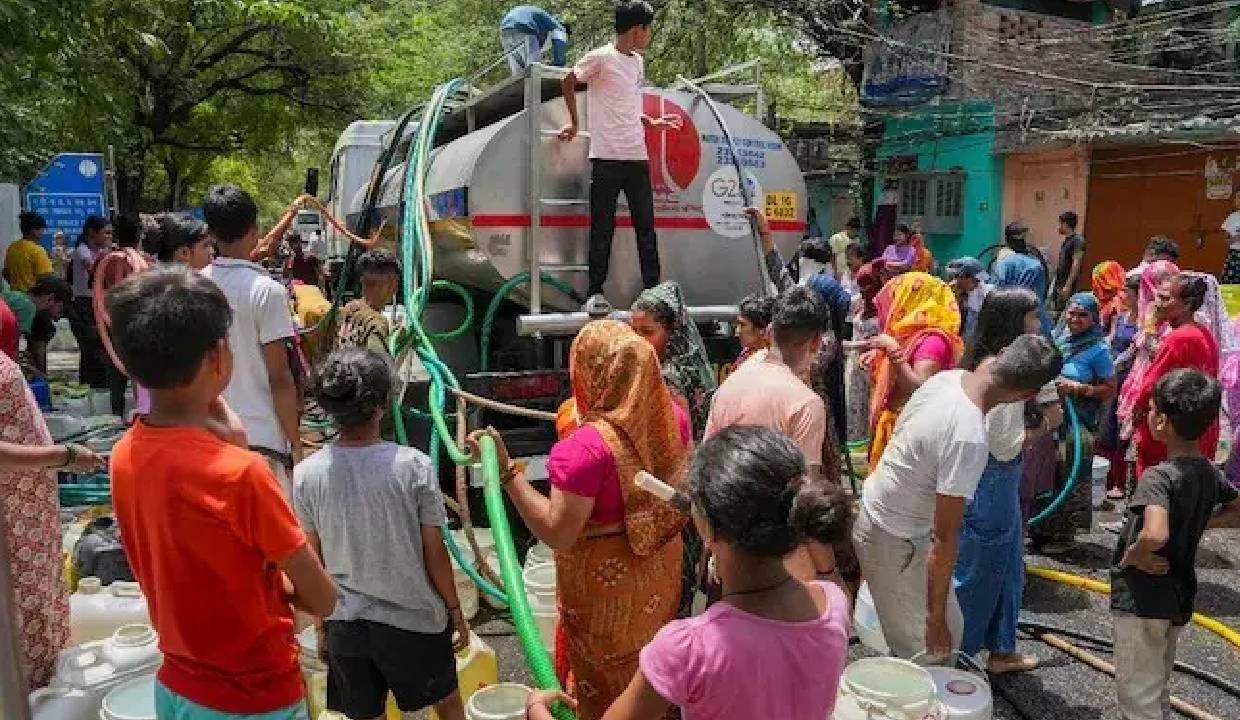
Delhi Chief Minister Rekha Gupta said that the Haryana government has assured the national capital of a minimum supply of 1,000 cusecs of water through the Munak Canal to help tackle the ongoing water crisis. The assurance came after Gupta held a detailed review meeting with Delhi Jal Board (DJB) officials and spoke with Haryana Chief Minister Nayab Singh Saini.
Delhi, which depends heavily on neighbouring states for raw water, has been facing supply challenges in recent days. According to officials, the city was receiving only 900 to 924 cusecs of water through the Munak Canal, leading to a significant drop in drinking water production. Haryana has now agreed to provide an additional 100 cusecs above the allocated quantity, offering much-needed relief to residents.
The Delhi Jal Board has also witnessed a decline in water production, with output falling by nearly 90 million gallons per day (MGD) from its target of 1,002 MGD. Water Minister Parvesh Sahib Singh said the water level at Wazirabad has dropped from the normal 674.5 feet to nearly 668 feet, reducing raw water availability and impacting production by 80-100 MGD. He attributed the situation partly to the prolonged dry spell in the upper reaches of the Yamuna.
To address the shortage, the Delhi government has deployed more than 980 water tankers, carrying out over 6,000 trips daily across the city. Officials said over 8,500 of the 11,055 complaints received by the DJB helpline in the past week have already been resolved.
The Chief Minister directed officials to treat every water leakage incident seriously, stressing that wastage of water would not be tolerated. She said the government is focusing on both immediate relief measures and long-term solutions to ensure sustainable water management in the future.
As part of these efforts, IIT Roorkee has been tasked with conducting a feasibility study on bringing water from Haryana through a dedicated pipeline. The project aims to reduce transmission losses and leakage while strengthening Delhi’s long-term water security. Additionally, water production capacity has been increased by 10.5 MGD through the installation of additional borewells in the Yamuna Khadar area.
The government is also stepping up water conservation initiatives. Plans are underway to construct 500 new rainwater harvesting structures, while work has begun to revive 1,000 existing structures across the city. The tender process for these projects has already been initiated.