Canada names Khalistanis for Kanishka bombing
Canadian intelligence publicly identifies the extremist movement for the country’s deadliest terrorist attack
Canada’s intelligence agency has, for the first time, publicly blamed Canada-based Khalistani extremists (CBKE) for the 1985 bombing of Air India Flight 182 in its 2025 Public Report. “This past year marked the 40th anniversary of the bombing of Air India Flight 182, whose suspects were members of Canada-based Khalistani extremist (CBKE) groups. It remains to this day the deadliest terrorist attack in Canadian history, with 329 people killed, most of them Canadians,” reads the Canadian Security Intelligence Service (CSIS) 2025 Public Report.
The language marks a clear break from decades of Canadian official statements that referred only to “Sikh extremists” without naming the Khalistan movement. The attack occurred when a bomb exploded aboard the Air India Boeing 747 Emperor Kanishka flying from Montréal-Mirabel International Airport to London Heathrow at 31,000 feet over the Atlantic Ocean off Ireland’s coast. All 329 passengers and crew died, including 268 Canadian citizens, many of Indian origin.
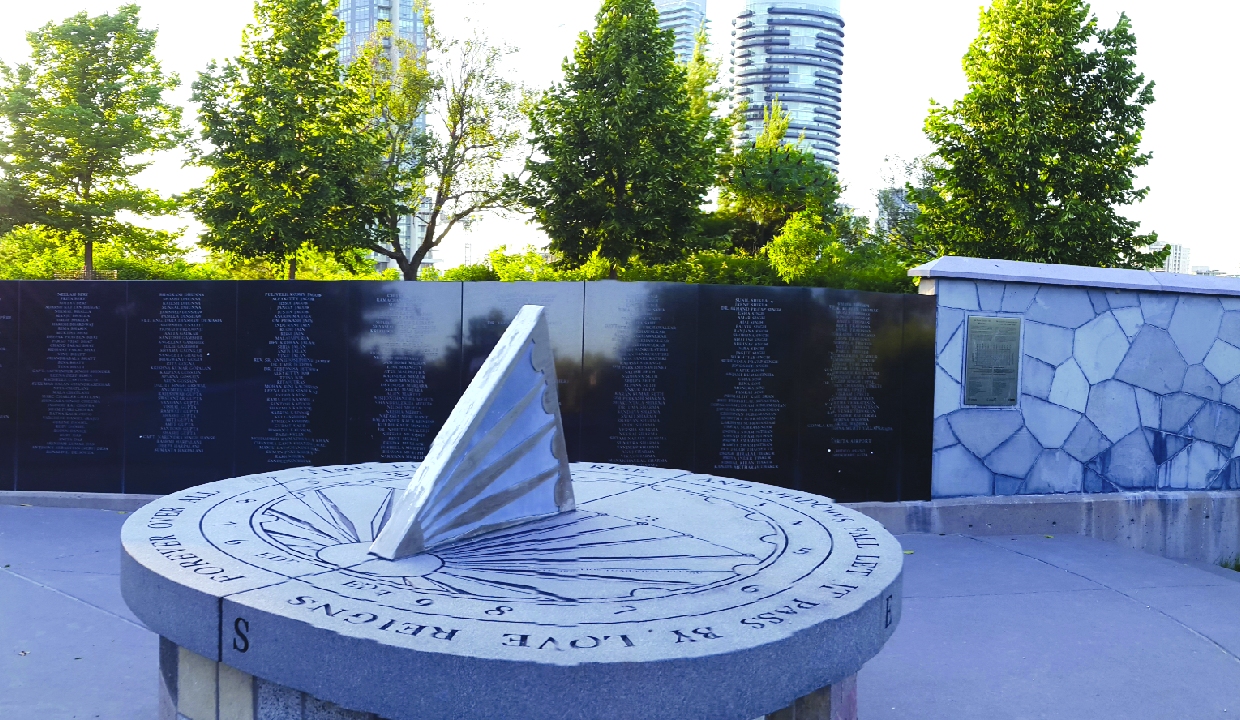
The Ahakista memorial in Ireland, near the crash site, honours the 329 victims. Memorials have been built in Toronto, Vancouver, and Ahakista, Ireland, near where the debris was found. Annual ceremonies continue, including on the National Day of Remembrance for Victims of Terrorism.
Investigations in Canada and other countries quickly pointed to Sikh militants seeking an independent Khalistan in India’s Punjab region. The plot was linked to Babbar Khalsa International, a designated terrorist group. Key accused included Talwinder Singh Parmar, a Babbar Khalsa leader based in Canada, who was widely seen as the mastermind. He was killed by Indian police in 1992. And Inderjit Singh Reyat, who assembled the bombs. He pleaded guilty to manslaughter in 2003 and was sentenced to 15 years in prison.
CSIS began watching Parmar in early 1985 and received warnings about threats to Air India. However, a 2010 Commission of Inquiry led by Justice John C Major found that a “cascading series of errors” by CSIS, the RCMP, and other agencies allowed the attack to happen.
Surveillance did not work well, intelligence was not shared or acted on properly, and chances to stop the plot were missed.
For many years, Indian authorities said the bombing was carried out by Khalistani terrorists based in Canada. Canadian governments and memorials usually referred to them as “Sikh extremists” or simply described the event as a terrorist attack, without mentioning the Khalistan movement in official statements.
The report also says that violent extremist activities by CBKEs continue to threaten Canada’s national security and Canadian interests abroad. It clearly separates peaceful advocacy for Khalistan, which is not considered extremism, from the actions of “a small group of individuals who use Canada as a base to promote, fundraise, or plan violence primarily in India.”