CAG flags massive delays in Yamuna dam projects, Delhi’s water worry continues
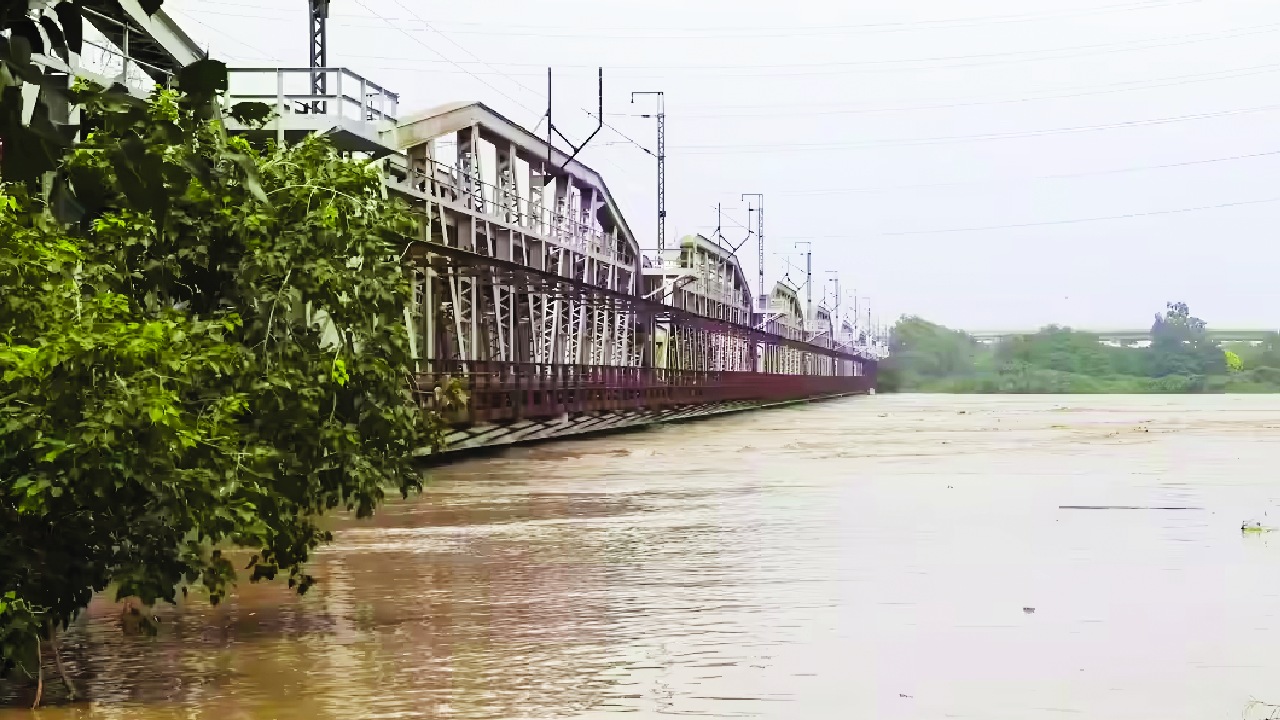
A Memorandum of Understanding (MoU) inked three decades ago between the Governments of Delhi, Himachal Pradesh, and Uttarakhand for the Renukaji, Kishau, and Lakhwar dams has come under the scanner of the Comptroller and Auditor General (CAG). The national auditor has flagged massive delays in its recent Delhi Jal Board (DJB) report, as no work has started to tap the untapped monsoon flows of the Yamuna and its tributaries, to ease Delhi’s chronic water shortage, and it remains only on paper.
CAG noted that despite their status as projects of national importance, construction has not begun nearly 29 years after the MoU, owing to pending approvals from the Upper Yamuna River Board and the National Green Tribunal (NGT).
Notably, the Delhi Government has already paid INR 230.73 crore for Renukaji, INR 8.10 crore for Kishau, and INR 7.79 crore for Lakhwar. Officials estimate the trio could meet the Capital’s drinking water needs for the next 25 years. Officials said, water from the three dams together could meet Delhi’s drinking water requirements for at least the next 25 years.
“To utilise the flow of the river during monsoon, an MoU was signed (November 1994) by the basin States to build two dams on the Yamuna River, one at Renukaji in Himachal Pradesh and another at Kishau in Uttarakhand. Delhi Jal Board (DJB) made payment of INR 230.73 crore for the construction of Renukaji Dam (INR 214.84 crore), Kishau Dam (INR 8.10 crore) and another dam at Lakhwar (INR 7.79 crore) to the HP and Uttarakhand (UK) Governments (March 2022).
These projects were declared as projects of national importance. However, work on the Renuka Dam, Lakhwar and Kishau Dams was under planning and approval stage with the Upper Yamuna River Commission (UYRC). The possibility of augmentation of raw water availability from the Yamuna River in the near future is thus remote,” according to the CAG report.
Once completed, the Lakhwar Dam is expected to supply around 135 MGD of water to Delhi. The Renukaji and Kishau projects could add another 275 MGD and 372 MGD, respectively, helping stabilise environmental flow (e-flow) in the river and reducing dependence on highly variable seasonal inflows.
The Kishau multipurpose project, planned on the Tons River, a major Yamuna tributary, envisages a 236-metre-high dam with a live storage capacity of 1,324 million cubic metres. The project has faced prolonged delays due to inter-State disputes and financial challenges.
Among the three, the Lakhwar project is the largest. It involves constructing a 204-metre-high concrete dam on the Yamuna near Lohari village in Uttarakhand’s Dehradun district. Conceived in 1976, construction began but was halted in 1992 due to funding constraints.
The Renukaji Dam, proposed on the Giri River in Himachal Pradesh’s Sirmour district, is planned as a 148-metre-high rock-filled structure. Apart from water storage, it is designed to generate 40 MW of hydropower during peak flow periods, with water to be shared among Delhi, Haryana, Rajasthan and Uttar Pradesh.
Officials said Lakhwar is partially constructed, with about 12.61 per cent of the work completed. Renukaji has entered the tendering stage, while Kishau remains at the inter-state agreement and approval phase.
The CAG report further said an agreement was signed between GNCTD/DJB and the Government of Himachal Pradesh (GoHP) in December 2019 for the regular supply of 368 cusecs (237 MGD) from November to February and 268 cusecs (173 MGD) from March to June every year. For this, GNCTD/DJB is required to pay to GoHP an advance amount of INR 4 crore every year.
Audit, however, observed that the agreement has not been implemented (June 2023) despite repeated requests by the Delhi Jal Board to GoHP for the implementation of the MoU. Engineer-in-Chief, Jal Shakti Vibhag Shimla, Himachal Pradesh, vide letters dated December 2020 (UYRC) and August 2021 (Member (WS), DJB), conveyed that there is no surplus water available with Himachal Pradesh during the period November to June.
Additionally, based on available data, the DJB presently utilises the entire quantity of raw water received daily and does not have a water reserve for even a single day’s consumption. This is not an ideal situation as any disruption of daily supply has the potential to throw the water supply to Delhi out of gear.
The present Performance Audit on the functioning of DJB was conducted from April 2022 to February 2023, covering a period of five years from 2017-18 to 2021-22. Apart from scrutiny of records and analysis of information available at DJB headquarters, field visits/Joint Inspections were also conducted to check functioning of WTPs/STPs, to assess the trapping status of various drains and to verify the physical progress of various sewerage and water projects.
Delhi requires 1260 MGD (Million Gallons per Day) of water, against which DJB supplies only 935 MGD of treated/potable water, to 93 per cent households in Delhi. DJB sources its raw water from Yamuna River, Bhakhra — Beas storages (610 MGD), Upper Ganga canal (253 MGD) and ground water from Ranney wells and tube wells (90 MGD).