Buried under plastics: Understanding gendered vulnerability in waste economies
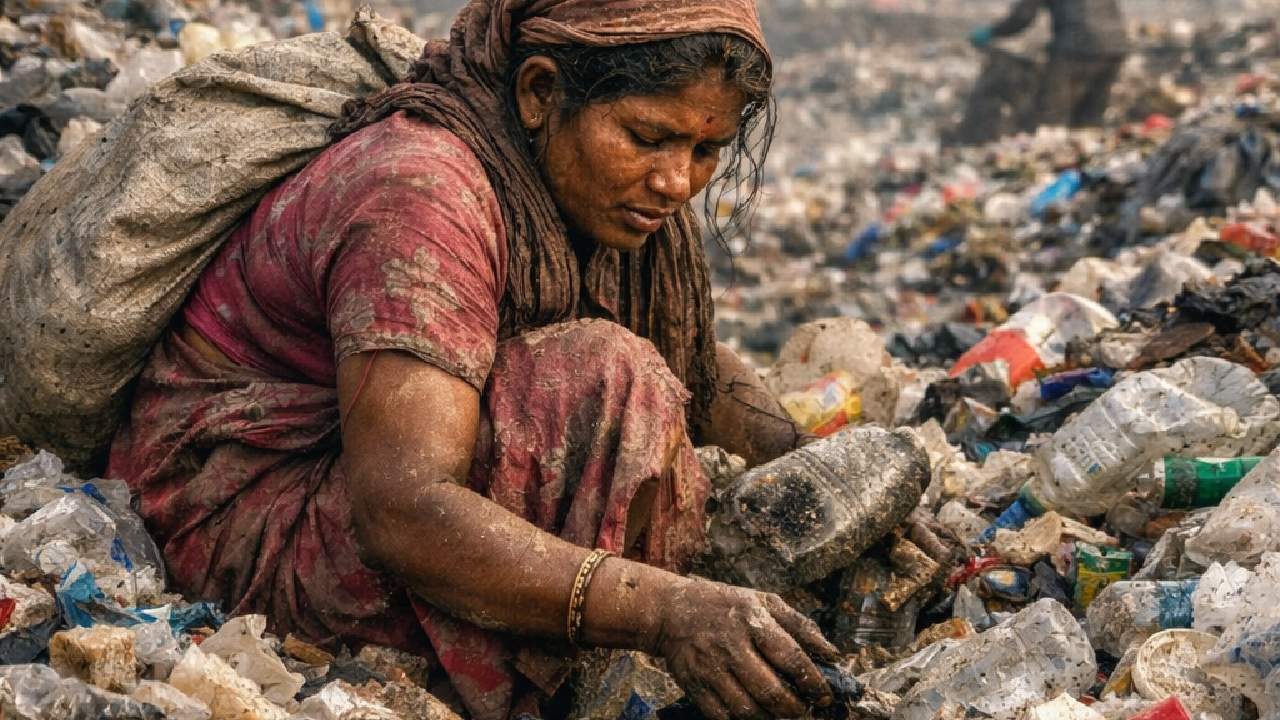
Plastic pollution is often framed as an environmental crisis, but it is equally a social and gendered one. As Governments make efforts to strengthen and enforceregulations on recycling and Extended Producer Responsibility (EPR), women in the informal waste sector continue to handle harmful plastic waste without propersafety gear, healthcare protections or adequate pay structures. Although measures like single-use plastic ban, recycling targets, and EPR exists, plastic production and use is expected to triple by 2040. These policy targets along with human vulnerabilities reveal an underlying weakness: plastic governance prioritise materials and markets over people; they do not adequately address the structural drivers of plastic pollution or its unequal social consequences.
Impact of plastic waste management on women’s health
The risks deepen in informal recycling. In Indian cities, women account for 30-50 per cent of waste pickers but earn 20-40 per cent less than men due to gendered task segregation that excludes them from higher-value recycling activities. Despite their significant contribution to waste recovery, their work remains largely invisible. Women from Dalit, migrant, and low-income communities are pushed into the most dangerous segments of the recycling chain.
Men operate machines and trucks; women pick, sort, wash, and clean. During the COVID-19 pandemic, women workers were the first to lose jobs and the last to regain them, with no savings, identification documents, or safety nets. The system relies on their precarity. A 2025 INOPOL studyshowed similar findings - many women who work in waste management did not have formal identification, stable incomes, or access to safety equipment. This makes them financiallyunstable and puts their health at risk.
Women manually handle mixed waste, inhale fumes from open burning, and work amid microplastics and dust. Unregulated e-waste recycling further exposes them to heavy metals and toxic compounds. Chemical exposure poses an even greater concern. Plastics contain additives such as phthalates, flame retardants, and persistent organic pollutants (POPs) that disrupt hormonal systems. As these chemicals are fat-loving, they bio-accumulate in the human body (women bodies store a higher proportion of fat than men), and are passed on from mothers to infants through breastfeeding.
They also have increased risks during pregnancy and their reproductive health impacts. These structural health risks intersect with poverty, caste hierarchy, migration, and geography. Ignoring these realities reduces plastic policy to a technical exercise. Protecting women’s health must be central to building waste systems that are efficient, just, and sustainable.
Making plastic policy work for women
Addressing the health and economic risks faced by women in plastic and chemical waste systems requires more than better collection infrastructure; it demands a fundamental shift in how plastic governance is designed and implemented. EPR, now central to waste policy in many countries, remains largely genderblind.
While producers are required to collect and recycle plastic waste, the systems they depend on continue to rely heavily on informal labour, much of it is performed by women, without guaranteeing fair wages, safety protections, or access to healthcare. In the absence of explicit social safeguards, the EPR frameworks externalize health and social costs risks onto women who are at the bottom of the recycling chain. It reinforces inequality by prioritising efficiency and recovery volumes over worker welfare.
Gender representation in waste governance across municipal bodies, EPR oversight mechanisms, and national policy forums must therefore be treated as essential safeguards, not optional inclusions. Encouragingly, participatory models led by women are already demonstrating what inclusive waste governance can achieve. Women’s self-help groups (SHGs) engaged in recycling, composting, and upcycling are not only reducing waste and emissions but also formalising livelihoods.
The Ambikapur Zero Waste Project in Chhattisgarh institutionalised women as municipal waste workers, while Mumbai’s Waste Management Utthaan initiative transformed informal waste work into dignified employment through skill training and formal support. These examples show that when women are integrated into the formal systems, waste governance becomes more effective, safer, and just.
Conclusion
Women play a vital role in plastics and chemical waste management but face significant vulnerabilities due to exposure to hazardous materials and limited access to safer jobs. Despite being the backbone of the waste ecosystem, women have almost no seat at the table-no voice in EPR design, no representation in chemical safety committees, no say in circular economy planning.
Structural barriers, often exacerbated by poverty and social exclusion, necessitate the integration of gender considerations into waste governance. Effective policies should acknowledge the daily realities of waste handling and prioritise women’s health and livelihoods in informal recycling. Ensuring access to safety measures, healthcare, and better roles within the recycling value chain can reduce economic disparities.
Furthermore, women’s involvement in planning and oversight is crucial, as their insights enhance policy effectiveness. Gender-inclusive approaches can improve recovery rates and align with sustainable development goals (SDGs) related to health, genderequality, and decent work, while preventing the circular economy from becoming yet another “take-make-dispose” model. Women have been holding up the waste system for decades. A plastics transition is circular and just only when it actively includeswomen. It’s time the system held them up. And the time to act is now!
Dr Kriti Akansha is an environmental biotechnologist working with Mu Gamma Consultants, specialising in wastewater management, water quality, and gender-responsive environmental research
Anagha is a plastic waste management expert working with Mu Gamma Consultants, specialising in plastic reduction, recycling, and reuse with a strong focus on gender economics and climate change