Budget Reactions
No vision: Cong slams Govt
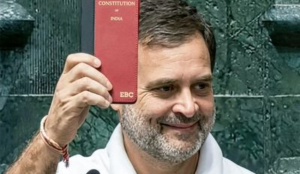
Congress president Mallikarjun Kharge on Sunday said the Modi Government has run out of ideas, and the Union Budget for 2026-27 does not provide any single solution to India’s many economic, social and political challenges.In a post on X, he said there is no policy vision or political will, and this Budget offers no solutions and not even slogans to hide the absence of policy. “The Modi Government has run out of ideas. #Budget2026 does not provide a single solution to India’s many economic, social, and political challenges,” he wrote. “’Mission Mode’ is now ‘Challenge Route’. Reform Express rarely stops at any “Reform” Junction. Net result: NO policy vision, NO political will,” he said in his post.
Kharge said farmers still await meaningful welfare support or an income security plan. “Inequality has surpassed the levels seen under the British Raj, but the Budget does not even mention it or provide any support to SC, ST, OBC, EWS, and Minority communities.“The Finance Commission’s recommendations will have to be studied more, but they do not appear to provide any relief to State Governments which are under severe financial stress. Federalism has become a casualty,” he said.
“This Budget offers no solutions, NOT even slogans to hide the absence of policy!,” the Congress chief said.In her speech, Sitharaman announced that the target for capex will be raised to Rs 12.2 lakh crore for FY27 from Rs 11.2 lakh crore earmarked for the current fiscal year. She also announced a slew of measures to boost infrastructure in the country, including in tier-2 and tier-3 cities.The budget came in the backdrop of global uncertainties, trade frictions and US tariffs and slowdown in exports.With Union Budget 2026, Nirmala Sitharaman created history as she presented her ninth consecutive Budget and became the longest-serving finance minister.
India Inc hails continuity
India Inc on Sunday termed Union Budget 2026-27 as a budget for the real economy that focuses on enhancing India’s competitiveness in the world, while underscoring the country’s commitment to a structural reform-led economic roadmap. Uday Kotak, Kotak Mahindra Bank, Founder & Director, termed it as “a budget for the real economy.In a post on X, he wrote, “Welcome increase in defence spend. Broad fiscal discipline continues. Works on balancing between financialisation of the economy, and focused development of diverse, deep India in the long term.”
Industry leaders welcomed steps announced by Finance Minister Nirmala Sitharaman, such as raising capital expenditure to Rs 12.2 lakh crore for FY27, establishing a dedicated INR 10,000 crore SME growth fund and launching Biopharma Shakti with an outlay of INR 10,000 crore over five years, among several other steps that would help the country towards self-reliance and inclusive growth.
Terming it as “a budget for the real economy”, Kotak Mahindra Bank, Founder & Director Uday Kotak, in a post on X said, “Welcome increase in defence spend. Broad fiscal discipline continues. Works on balancing between financialisation of the economy, and focused development of diverse, deep India in the long term.”
Similarly, Vedanta Group Chairman Anil Agarwal said it is a growth-oriented Budget, with a clear focus on increasing public capital expenditure and boosting manufacturing.Mahindra Group CEO & MD Anish Shah said the Budget focuses on enhancing India’s competitiveness in the world, takes meaningful steps towards Atma Nirbharata and enables a wider participation in the benefits of economic growth.
Overall, he said, “Budget 2026 signals continuity in policy direction, a firm commitment to sustainable and inclusive growth, and efforts to unlock India’s economic potential at scale. We believe these measures can accelerate innovation, enhance value-added manufacturing and strengthen India’s standing in the world.” Using cricket parlance, RPG Enterprises Chairman Harsh Goenka described it as a ‘Test-match Budget ahead of the T20 World Cup’. “No flashy sixes, just smart singles all around to keep the scoreboard ticking. Steady, disciplined, very Ro-Ko in temperament. #Budget2026,” Goenka said in a post on X.
SIAM President and Tata Motors Passenger Vehicles Ltd MD & CEO Shailesh Chandra welcomed the decision to raise the capital expenditure target to INR 12.2 lakh crore for FY 2026-27 from INR 11.2 lakh crore in the current year, saying it will provide a strong impetus to demand creation and industrial activity.
Biocon Ltd Executive Chairperson Kiran Mazumdar-Shaw, in a post on X, said, “By placing biopharma among the seven strategic frontier sectors and launching Biopharma Shakti with an outlay of INR 10,000 crore over five years, the Union Budget makes a decisive investment in India’s health and innovation future.”
Industry body FICCI President Anant Goenka said the Budget strikes a balanced and credible note, “with a clear focus on growth, inclusivity and yuva-shakti” and ensures continuity and stability through sustained reforms, a strong public capex push, ease of doing business and a decisive emphasis on manufacturing, MSMEs, agriculture and services.
Similarly, another industry chamber, ASSOCHAM President Nirmal K Minda said the Budget delivers a strong push to domestic manufacturing through targeted sectoral schemes spanning biopharma, electronics, textiles, semiconductors, chemicals, defence and infrastructure equipment.
“Measures such as Indian Semiconductor Mission 2.0, revival of legacy clusters, duty rationalisation, trusted importer frameworks and export facilitation will strengthen value chains, reduce logistics frictions and accelerate India’s transition towards globally competitive, high-value manufacturing,” he noted.
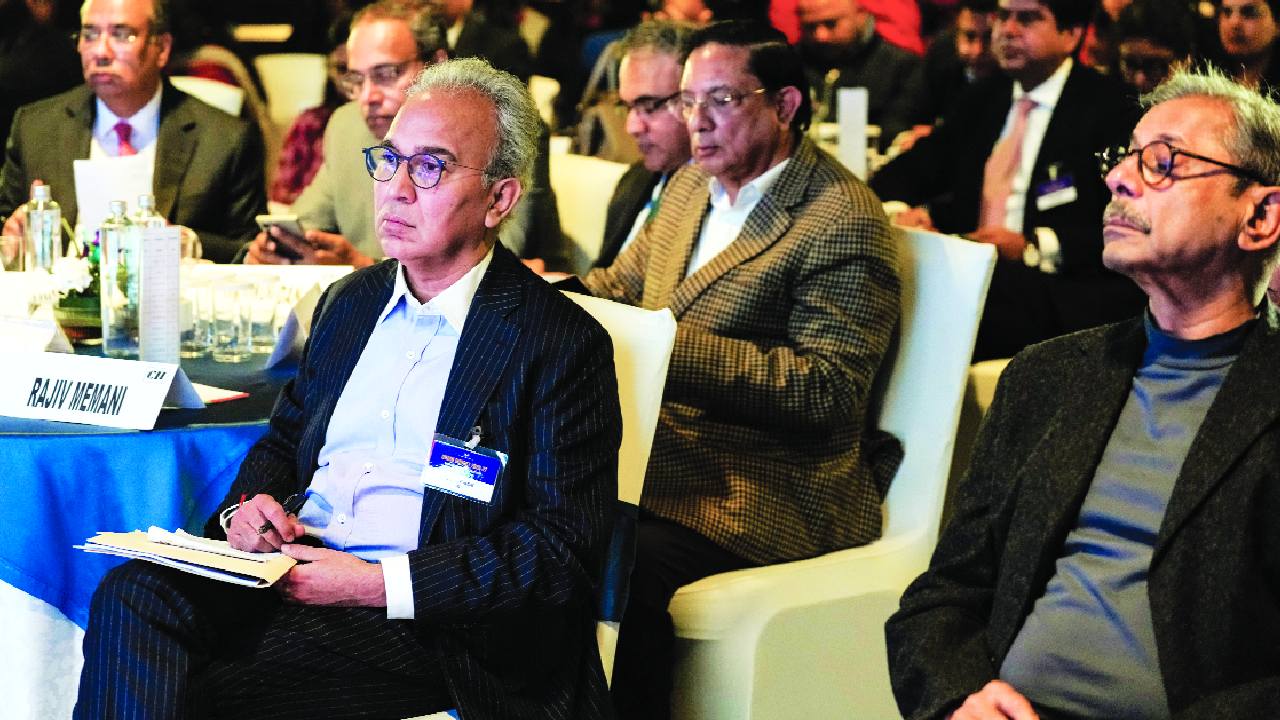
Rajiv Memani, President, CII, said the Union Budget 2026-27 presents a strong and credible roadmap for strengthening India’s competitiveness through a balanced mix of fiscal discipline, structural reforms and targeted interventions to stimulate private investment.
The Budget reinforces confidence in India’s growth story at a time when global economic conditions remain uncertain, and investment decisions are increasingly driven by policy clarity and long-term predictability.