Budget 2026, execution is the elephant in the room
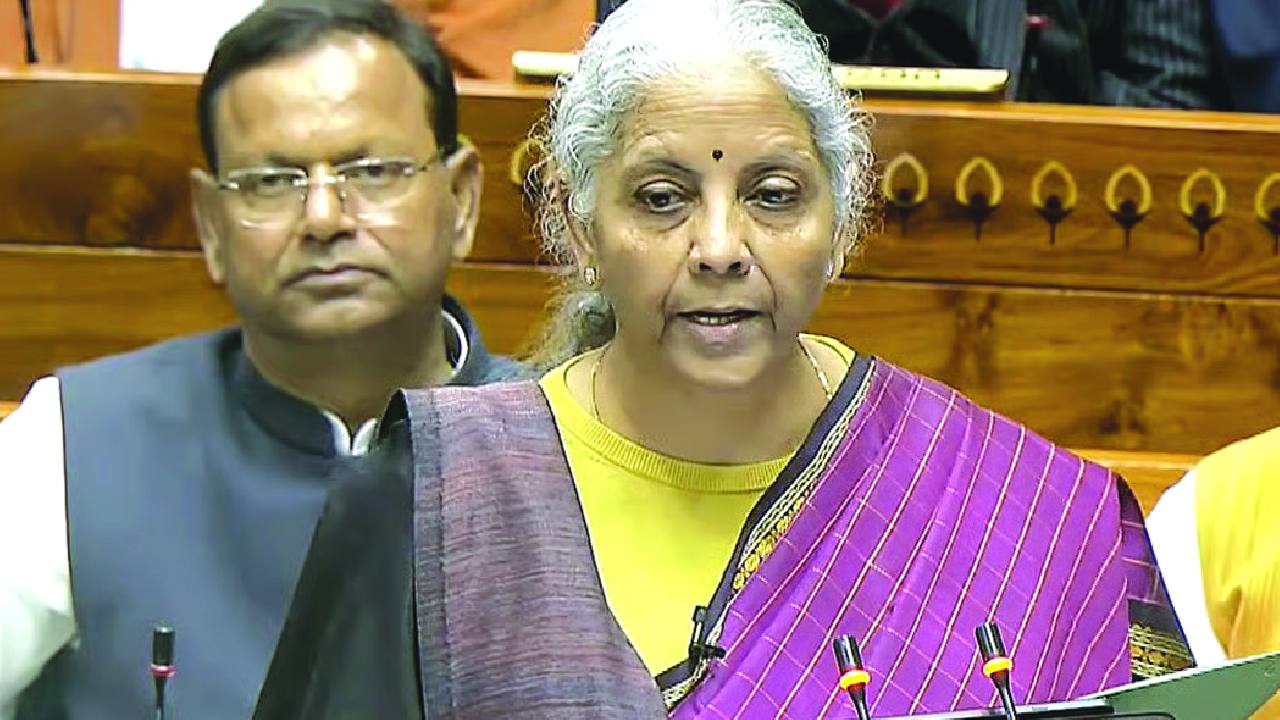
The 1 hour 25 minutes the FM took to finish her budget speech for a record ninth consecutive time did little justice to the content of the budget. But not having too many points is reassuring in one way — it demonstrates the Government’s confidence in the continuance of its economic trajectory.
Yes, there are quite a few things the Government can take credit for — not speaking about the Indo-EU FTA and the post-budget trade deal with the USA that had sent the Sensex soaring sky-high. The macroeconomic situation has rarely been better ever — the growth is stable at around 7 per cent which seems to have become the new normal, inflation has been benign for quite some time and banks have their balance sheets cleaner than ever.
Fiscal consolidation has not been derailed since the Covid and despite the gross tax revenue collection falling short of estimates by almost INR 2 lakh crore due to short collections from personal income tax and GST, the fiscal deficit target has been achieved by cutting down revenue expenditure and also some capex — and all this in the backdrop of the global tumult caused by Trump and his unpredictable policies. As in the past, the FM abstained from populist giveaways andcontinued with her infrastructure push, but perhaps to sound inclusive, announced too many small schemes and projects which are unlikely to alter the economic landscape in a big way.
She would done well to have announced a few bigbold reforms — the next general elections being far away, this was the most opportune moment. State elections anyway are not much impacted by the Union budget. The budget size has increased by about 8 per cent, from INR 49.65 lakh crore (Revised estimates for FY 2026, against the BE of INR 50.65 crore) to INR 53.47 lakh crore for FY 2027. The increases have come mainly from capex (INR 1.26 lakh crore) and interest payments (INR 1.30 lakh crore), which at INR 14 lakh crore, alone consume more than a quarter of the budget.
For other departments, increments have been modest. The plethora of schemes the FM has announced will be rolledout over the next few years, and their impact on the current budget is difficult to estimate. Many of the schemes announced in the past budgets have not worked as intended, andin the current fiscal, the Government spent only about 5 per cent of the funds earmarked for major job and skill development schemes — despite sizeable budget allocations — signalling deep execution problems in matching resources with outcomes.
The ambitious schemes announced in the 2024 budget with a 5-year time horizon to boost employment, like the internship programme to train one crore youth, for skilling of 20 lakh youth and employment-linked incentives — all have practically failed to take off, and did little to address unemployment. Funds for manyother schemes, like housing, nutrition and health infrastructure, regional connectivity, etc have been slashed drastically.
Projects that would have boosted our capacity to compete in high technology, especially the AI-focused initiatives such as the IndiaAI Mission announced in 2024, or the Centre of Excellence in AI for Education announced last year, have shown little progress on the ground. Likewise, performance of many other programmes remains underwhelming, like the ambitious National Urban Challenge Fund and Urban Programsannounced last year to help turn Indian cities into “growth hubs” by incentivising projects that would transform urban spaces into economic engines. Even the much-hyped PLI scheme has so far failed to boost domestic manufacturing and value addition, with 80 per cent of the incentives have been cornered by a few large mobile manufacturers with little value addition, while funds remain heavily underutilised in sectors like IT hardware, telecom, solar, auto components, and white goods, etc.
The ambitious schemes aimed at growth, social welfare, skilling, connectivity, and high-tech transformation introduced in the last two budgets have shown uneven and, in several cases, suboptimalresults.
Under-utilisation of funds and steep cuts in revised estimates, slow roll-out of connectivity or digital initiatives have marked many schemes, and Government has been unable to negotiate the complex execution environments for advanced manufacturing and urban projects. Clearly there isa case to prepare the projects more carefully, smooth administrative and bureaucratic bottlenecks, identify weak spots, ensure better state-centre coordination, and align all stakeholders to improve implementation and output.
This budget also a has a few ambitious schemes, like the INR 40000 crore India Semiconductor Mission (ISM 2.0). The earlier version of ISM launched in 2021for comprehensive development of the semiconductor ecosystem has achieved some success in translating concept to commitments, with over 80 per cent of the outlay of INR 76000 crore already being allocated to projects, of which ten have been approved. Industry had committed double that amount for investment-which has probably encouraged the FM to expand the semiconductor incentives under ISM 2.0 over the next five years.
The crux again would be implementation. The disinvestment target of INR 80000 crore to finance infrastructure is unlikely to be fulfilled, given past experience and last year’s realisation of less than INR 34000 crore. FM announced her intent to reform thebanking sector, but should have given banks a level playing field by treating interest on fixed deposits as capital gain, to prevent their increasing shift to equity markets.
In keeping with the Government’s continued priority for asset creation and connectivity integration, the budget announced a slew of projects from high-speed rail corridors and 20 new national waterways to freight and logistics corridors across regions, aiming to reduce logistical costs and expand the physical backbone of the economy.
The ISM 2.0, Biopharma SHAKTI, and rare earth corridors in mineral-rich states signal a deliberate shift towards high-value sectors and supply chain resilienceto reduce import dependence on critical inputs, foster frontier technology ecosystems, and enhance export competitiveness through technology-aided manufacturing. But much of thiscapital intensity wouldcome at the cost of labour-intensive sectorssuch as agriculture, rural enterprises and informal sector employment; the very modest increases in their allocationsreinforces this imbalance.
A deeper structural issue is the continued neglect of our R&D ecosystem which is seriously undermining our AI-competitiveness which has serious implications not only for the economy but also for national security. The 20-year tax holidaysfor data centre operations and incentives for cloud services announced in the budget cannot address this structural weakness — much more budget is needed for AI-R&D.
To improve the infrastructure for Tier-2 and Tier-3 cities to make themengines of growth and innovation, FM allocated INR 5000 crore for each City Economic Region, which is welcome. But without significant budgetary incentives for fundamental research and grassroots innovation outside metropolitan hubs, the digital dynamism may remain unevenly distributed, privileging urban elites and exacerbating regional divides.The budget disappoints in refusing to rationalise the Centrally Sponsored Schemes (CSS) whose numbers have increased from 75 in FY 2026 to 86 now (Statement 4-A).
Though the Centre has replaced the wasteful MNREGA, which consumed INR 88000 crore in the current fiscaland more than INR 8 lakh crore so far, with a more disciplined VB-G-RAM-G, there are many CSS which do not serve any economic purpose. Every CSS needsobjective evaluation before their numbers could be drastically reduced through merger, convergence or closure - an issue every finance commission has red-flagged, including 16thFC, whose report was placed before Parliament by the FM before she began her budget speech.
The writer is a former Director General of the CAG of India; views are personal