Bricks without blueprints: The cost of India’s silicon dependency
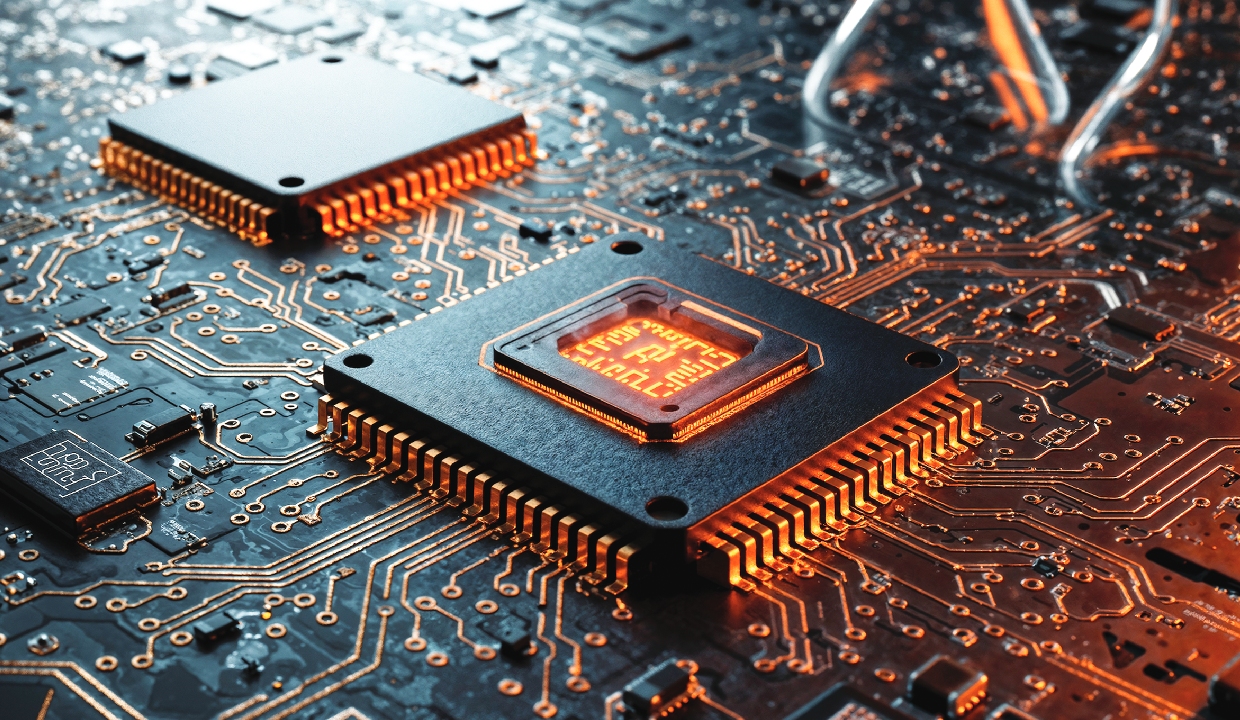
While India is pouring concrete in Odisha but the rules for what goes inside those factories are redrafted here in Washington.
From Gujarat to Odisha, new semiconductor packaging plants, assembly lines, and data centers are rising across the country. Every inauguration is presented as evidence that India has entered the front rank of technological powers. In New Delhi, with a message that the India’s age of silicon has arrived.
This optimism has value. Manufacturing creates jobs, builds technical discipline, and reduces pressure from India’s vast electronics import bill. But a dangerous confusion has entered the national conversation. We are mistaking infrastructure for control. There is a major difference between hosting technology and owning it. A country can build factories, consume huge subsidies, and still remain dependent on systems designed, licensed, and governed elsewhere.
While bilateral frameworks like the Initiative on Critical and Emerging Technology (iCET) are sold to Indian institutional investors as a triumph, the numbers tell a harsher story.
In February, Washington imposed a uniform 10 per cent tariff. In March, the USTR launched aggressive Section 301 investigations into industrial capacities across 16 economies. These are not accidents of diplomacy. They are the new baseline of American trade policy, which is growing highly protectionist. India is building the physical hardware for the future, but the United States holds the rules for how that hardware can be used. We are building a house on a rented foundation.
The Fallacy of Linear Progress
New Delhi suffers from the assumption of linear progress. Policymakers believe geopolitical alignment with the U.S. guarantees technology transfers, which fuels manufacturing, ending in export dominance.
This ignores how modern supply chains actually work. Trade policy today is a highly volatile market. If a domestic facility’s viability can be erased overnight by a sudden pivot in foreign export controls, it is not an independent Indian asset. It is a leveraged project dependent on external permission.
The Packaging Trap and the Margin Deficit
Washington’s playbook in the Indo-Pacific is economically rational: onshore the high-margin, intellectually rigorous work of chip design and AI research, while outsourcing the lower-margin, ecologically demanding labor of assembly, testing, and packaging (ATP) to partner nations.
Look at the underlying economics. In the global semiconductor value chain, fabless design and core intellectual property capture nearly 50 per cent of the industry’s total profit. Assembly and packaging yield less than 10 per cent. By focusing state incentives primarily on ATP and legacy manufacturing, India walks into a high-investment, low-yield trap. A fab without design capability is a factory with rent to pay. The 3D Glass Solutions partnership in Odisha creates vital employment, but it cannot be the final destination. Without a corresponding surge in indigenous chip design and intellectual property ownership, India will remain a highly capable subcontractor.
This is the Silicon Shackle: achieving the status of being physically indispensable to the global supply chain, while remaining fundamentally dependent on the original architect. If India owns the building but not the operating system, sovereignty is cosmetic.
The Token Tax and the USD 120 Billion Ledger
This dependency extends into the digital sphere. A new zone of influence is being drawn by the U.S. Department of Commerce that prioritizes American technological hegemony over global market access.
Under these rules, acquiring the compute-dense GPUs necessary for India’s 10,000-chip National AI Mission requires navigating National Validated End-User (NVEU) authorizations. For Indian data centers, these mandatory audits act as a silent embargo. They delay time-to-market by months. India subsidizes the power and constructs the data centers, but the computing power humming inside them remains audited and overseen by a foreign capital.
Compute dependence is the new oil dependence. Furthermore, we must confront the hidden economic drain of our current AI ecosystem. Over 80 per cent of Indian AI startups today build their applications on top of U.S.-hosted, proprietary foundational models. This creates a perpetual Token Tax. Every time an Indian enterprise utilizes an American API to process a prompt or analyze data, a micro-payment of capital—and crucially, behavioral data—flows outward.
India’s electronics import bill is already projected to cross a staggering $120 billion by the end of this fiscal cycle. Now, factor in the cost of artificial intelligence. A single cluster of top-tier Nvidia GPUs costs tens of millions of dollars, and Indian enterprises are currently forced to rent this compute power by the hour from American hyperscalers. If we do not cultivate our own foundational model weights, we will add a crippling digital trade deficit to that ledger. We risk becoming a vast workforce of diligent, prompt engineers rather than the architects of original systems.
The Closing Window on Data Leverage
Historically, India’s greatest leverage in technology negotiations has been its demographic scale. We represent the largest open data market in the world, processing over 13 billion digital public infrastructure transactions every single month. Global AI giants have extracted this Indian data to train their models for free.
This is where India should worry. The frontier of artificial intelligence is moving away from scraping raw human data. The next generation of models increasingly relies on synthetic data—data autonomously generated by algorithms training themselves. As this happens, our demographic advantage will precipitously diminish. Once algorithms no longer need our data to become smarter, our primary bargaining chip disappears.
We must urgently enforce a Data-for-Tech framework. If foreign entities wish to utilize the high-quality datasets generated by the Indian populace, they must be compelled to provide more than localized software services. They must share the underlying blueprints: the model weights and the source code. Access to our digital market must be priced as a high-value geopolitical trade.
A Hard-Headed Policy Blueprint
If India wants to transition from diplomatic optimism to hard-headed execution, it must adopt an uncompromising approach:
1. A Sovereign GPU Reserve: India must establish a state-backed stockpile of high-end compute. This requires unlocking institutional capital to secure long-term, non-revocable licenses for cutting-edge hardware, insulating domestic startups from sudden export control shocks.
2. IP Co-Development Mandates: Any foreign firm receiving taxpayer-funded incentives under the India Semiconductor Mission must be legally required to enter into binding IP co-development agreements with Indian entities. We need the design blueprints, not just the assembly instructions.
3. Targeted Chip Design Scaling: India must aggressively scale up its Design Linked Incentives (DLI), offering massive R&D tax credits specifically for fabless chip design firms. The objective is clear: own the intellectual architecture of the chips we are currently paying to package.
4. The “Indi-LLM” Initiative: We require a heavily funded national mission to build foundational models trained explicitly on Indian languages and legal frameworks, with the core weights stored domestically. This guarantees that if external APIs are ever restricted, India’s digital nervous system continues to function.
The global technological order is currently being recalibrated. The margin for error is zero. Ribbon cuttings are easy. Technological leverage is harder.
To move beyond the role of a diligent subcontractor, India must recognise that true autonomy is the product of calculated hedging and aggressive IP ownership. We must ensure that when we build for the future, we are building on ground that we unquestionably control.
Author is a physicist at the University of North Carolina at Chapel Hill and a columnist on AI, infrastructure, and global systems; Views presented are personal.