Blasé Capital Welfare Politics
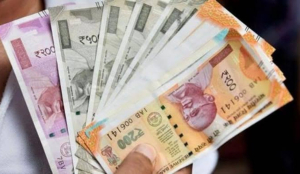
It was a different form of a political-electoral race. To woo women voters, the Tamil Nadu ruling regime announced a cash deposit of INR5,000 in the bank accounts of the beneficiaries, and promised to increase the “monthly assistance to INR2,000 in the next… regime.” In effect, more cash if the ruling-DMK was voted to power in the forthcoming assembly elections. Nothing new about the trend.
As we have noted in several columns in these pages, welfare has graduated from freebies (free power, free water, free food) to straightforward cash in the beneficiaries’ bank accounts. Several states, and the central regime did this in the recent past, and the pre-electoral pattern is unlikely to change in the future.
Most political parties understand that such cash transfers can be game-changers. So, even the opposition one promise them before the elections, and in their manifestos. However, the politics of welfare has expanded its tentacles.
In Tamil Nadu, for example, the beneficiaries were not sure if the Rs 5,000 that they received would remain in their accounts. They feared that in the guise of election code of conduct, which kicks in after the announcement of election dates, and prevents ruling regimes from doling out freebies, the Centre or courts may reverse the DMK decision.
The ruling regime had similar worries. Hence, the state Government lost no time in quickly transferring the money. Those who received it were even faster to withdraw it from the banks through ATMs. In the words of Chief Minister MK Stalin, the moves thwarted the “conspiracy” to “cripple” the INR5,000-scheme in the garb of election code of conduct. Thus, the politics of electoral freebies extended from a promised scheme to immediate implementation by the regime, and
withdrawal by the beneficiaries so that no one could take it back.
More importantly, for Stalin, the electoral politics steeped further. He told the DMK election booth-level agents, and party workers that the two events signified a larger picture. They showed the behaviour pattern of the voters, and how they perceived different regimes, and political parties. He explained that this indicated the faith that the Tamil Nadu voters had on the DMK and central Government.
“If something is given to the people, it is by the DMK Government. If something is taken from the people, it is the hand of the union Government,” he said. He urged the loyalists to understand the difference, and explain it to the voters during the election campaign.
He added that the state worked on welfare schemes to take care of people from different walks of life. Witness how the politics of welfare now expands to how people think about regimes and parties. It is no longer about who gives what, but who taketh
away what.
Of course, the flip side is that the opposition parties, including the regional ones like the DMK, accuse the Centre of electoral largesse, and welfare schemes to woo the voters. This is especially easy for New Delhi to do so because its budgets and policies are not as bound by the election code of conduct. If the Centre rolls out national schemes, applicable in every state, months before the assembly elections, no one can question them. In several budgets, one sees specific schemes, and capital expenditure aimed at the states that are about to go to the polls.
Hence, the opposition and regional parties want these practices to stop. In the states, the same parties accuse the Centre of trying to stall their welfare schemes rolled out before the assembly elections. It is a political game that goes on, and has caught speed in recent times. Indeed, if they yield electoral results, or seem to do so, so be it.
Stalin’s speech had another economic-political twist, with a social angle. The chief minister referred to an old clip of Prime Minister Narendra Modi, where the latter said that metro rail projects in cities suffered because several state regimes encourage road travel. Thus, roads are preferred to trains. This happens because of free bus journey schemes, especially for women, as Tamil Nadu has implemented.
According to Stalin, the scheme benefited women in the form of 900 crore free bus rides, which makes it safer and cheaper for them to travel to work, and become more productive and efficient. It enables a better work-life balance. Each beneficiary family, said the chief minister, saved INR800 a month due to the free rides. However, by juxtaposing Modi’s comments on metro and buses, there was a new political twist about transport infrastructure, and which was a more
efficient one.
Thus, as we can see, welfare schemes and freebies have transgressed the realms of immediate electoral politics, fiscal discipline, budgetary deficits, and states’ debts into larger debates about state of infrastructure, social benefits, and how best to empower women.
It has enhanced into areas like the behaviour and mindset of the people, and what they believe, and how they think. It has transgressed into issues of beliefs and faith in the political and social systems. In bizarre ways, welfare schemes and freebies have acquired a new character, new traits that comprise a social ecosystem, which seems closed and complete.