Blasé Capital SUNDAR PITCH
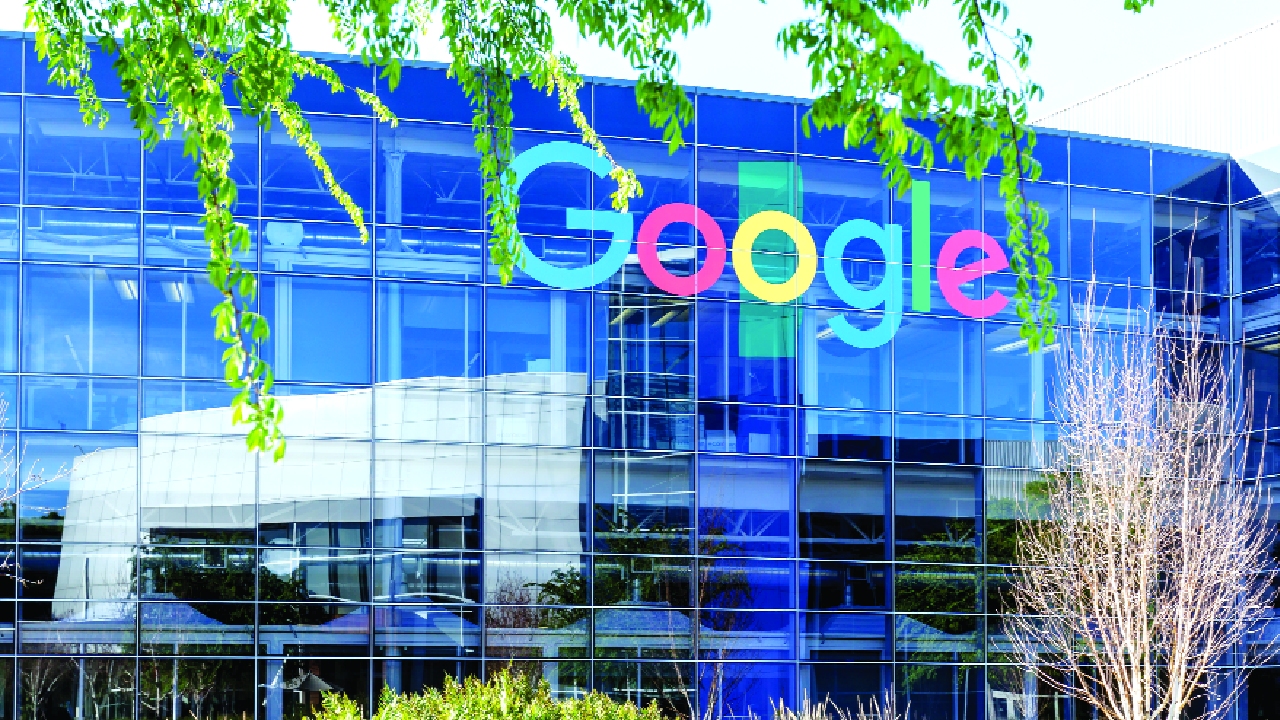
According to media reports, Alphabet, Google’s parent company, approved a new compensation package of nearly $700 million (yes, $700 million) for Sundar Pichai, its chief executive. This is the money he may earn over the next three years, and the “figure places him among the highest-paid CEOs in the global tech sector.” Of course, the amount will not be paid as a traditional salary, like you and I earn at the end of the month. Most of it, maybe a majority, is made up of stocks, and linked to the company’s performance over the next three years. Specific milestones, as mentioned in the contract, if achieved, will trigger allotment of a specific number of stocks. If every milestone is achieved, and given the current stock price, Pichai may earn up to $700 million. Hence, the figure is more of an expectation rather than a given. Until stocks are given, the take-home salary will be much less.
According to HR and compensation experts, tying salaries to corporate performance may be the best way to align the CEO’s interest with those of the shareholders. The stock options, triggered by milestones, may spur the CEO to work earnestly towards them. The targets, in turn, will improve the performances, and push the stock prices up. Thus, as the CEO earns more, so do the shareholders in terms of valuations, and possibly higher dividends and other payouts. In addition, since the CEO’s compensation package is stretched over time, three years in Pichai’s case, the corporate leader is forced to combine short-term tactics with long-term strategies. Thus, moves to front-load revenues and profits to book higher quarterly profits may not work, if there are minimal revenues to book after a year or two. Similarly, short-term stock price gains can be undone quite quickly, within weeks.
This may explain why Pichai, in the last 10 years as Google and Alphabet’s CEO, focused on medium-term strategic goals, especially given the great disruptions in tech. According to a media report, “Pichai first became the chief executive of Google in 2015. Four years later, in 2019, he took on the role of CEO of Alphabet, the broader corporate structure that oversees Google and several other businesses. During his time in leadership, the company has expanded its presence in multiple areas of technology. Google’s cloud computing division has grown steadily, and is now one of the largest competitors in the global cloud market. The company has also invested heavily in hardware products, including Pixel smartphones, smart home devices, and wearable technology. Perhaps, most significantly, Alphabet has increased its focus on artificial intelligence. Under Pichai’s leadership, Google has developed numerous AI tools, and integrated them into products and services.” The multiple-approach stems from multiple milestones.
Of course, the flip side is that the milestones linked to compensation, which is largely linked to stock price, pushes the CEO to focus on valuation rather than strategy. Since 2015, when Pichai first became the CEO, Google's share price has zoomed by more than 10 times, and now rules at nearly $300. Yet, in January 2023, the stock price was under $90, or around four times the price in 2015. It is only in the last three years that the stock took off, largely because of Google’s dominance in cloud computing, and its inherent strength in AI. Yet for some time between 2020, the pandemic year, and 2023, Google and Alphabet’s businesses were under a cloud. In the zeal to expand faster, and into new areas, the group made several mistakes. It entered some areas quite late, and it exited profitable niches quite quickly.
For example, when ChatGPT emerged as the King in AI tools, along with a Queen in the form of Claude, Google rushed to prematurely release AI products that led to quality issues. Some contended that there was a decline in the search engine quality. Indeed, search as an umbrella event has shifted from Google to ChatGPT and Claude. In the recent past, Google was criticised for giving up on products that were profitable, but smaller in terms of markets and users’ bases. Pichai wanted to focus on scaled-up or scalable projects. According to Google’s AI search, “Google’s internal reward system favours launching new products over maintaining existing ones, which leads to a pattern of creating and abandoning projects.” In addition, the group has faced several antitrust cases in America, Europe, and other parts for acting like a monopoly in several business streams. It paid billions of dollars in fines and penalties in some of these cases.
For strategists and analysts, there may not be a straight line joining these mistakes, attitudes, and blunders with CEO’s compensation. But for savvy investors they do point to some links. The pressure to achieve certain milestones, either to boost compensation, or to prove oneself as an evolved leader, may push the CEO in certain directions. In the case of Google, several issues were corrected only because the group is large enough to take several hits, enact quick and expensive course corrections, including withdrawing products from the markets, and spend more to create new competitive products quickly. The time and money lost in the bargain is made up due to monopoly status.