Blasé Capital Sensex SPOOKED
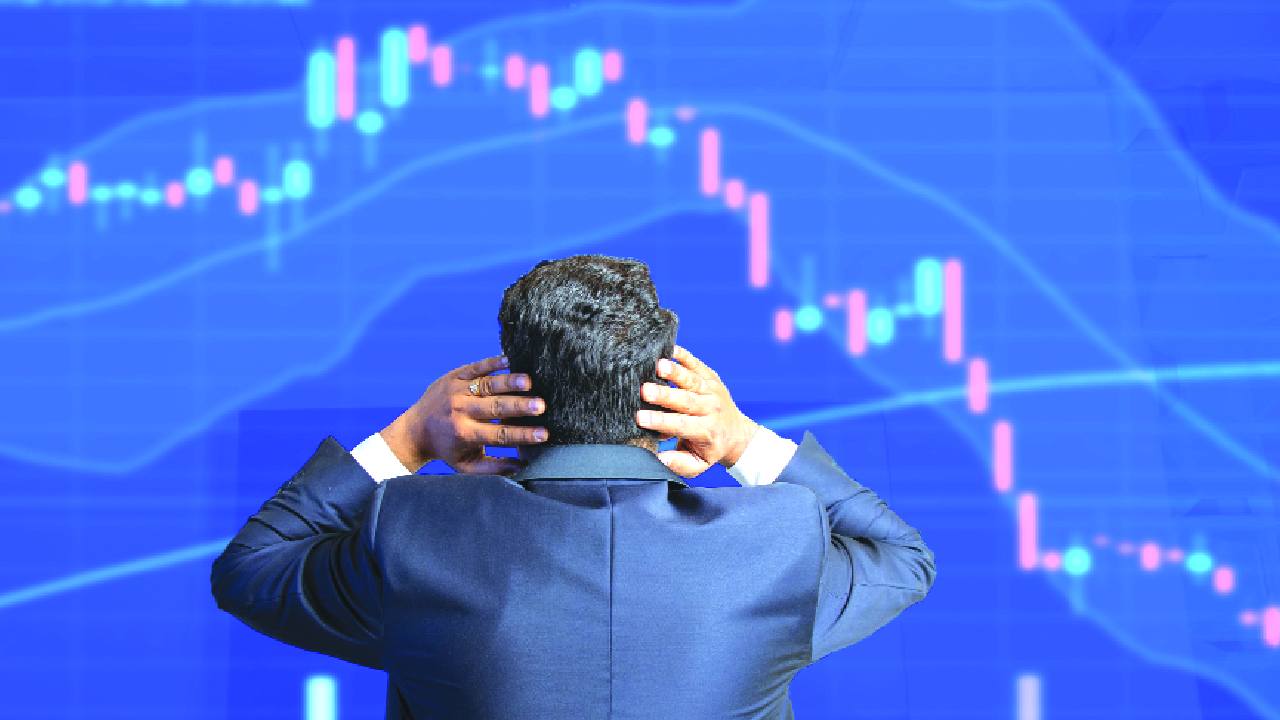
This week, during the five trading sessions, the Sensex, or the Bombay Stock Exchange (BSE) index, was down by 1,500 points, or nearly two per cent. On Friday, January 23, it crashed by more than 750 points, or nearly one per cent, as investors lost Rs 6,50,000 crore in a single session. Worse, the Friday sell-off in the midcaps and small-caps was more intense and aggressive, as these indices on the BSE dropped by 1.6 per cent, and 2.2 per cent, respectively.
The shares of the Adani Group dropped more sharply on Friday, with the reasons having to do little with the macro factors. Adani Ports was down seven per cent in a day, and Adani Enterprises nearly 11 per cent. The drop started just after 12 pm, and slumped over the next three hours or so. According to a media report, the Adani Group firms lost $12.5 billion in
combined market cap in a single trading session.
One of the major reasons for the bearish Sensex lies in the attitude of the foreign investors. Throughout 2025 (calendar year), they were net sellers. In January 2026 so far, they sold Indian equities worth Rs 36,500 crore in the cash segment. According to an analyst, the stock markets are “heavily net short,” which implies that there are more sellers than buyers. The foreign investors add to this scary scenario as they add to the “short positions on every rally triggered by some positive news.” For example, on Thursday, the Sensex recovered some of the gains lost in the first three days of the week. Then came the manic Friday, when these gains were lost, and the index slumped further. It is not that the foreigners are cagey about emerging markets, as they continue to boost several Asian indices. In 2025, Indian equities were the worst performer in Asia, except for the short-lived rally in the last three months (September-December).
Many experts had predicted in December that 2026 would mark the beginnings of the revival of corporate earnings, after their subdued show in 2025. This did not happen as expected, although the third quarter results are still on their way. However, the results declared till now, which include the top-notch firms, show mixed performances. According to one analysis, early results indicate the “weakest profit growth in at least three years, despite the best topline expansion in the quarter in over a year.” One imagines that the analysts and investors are confused, if the analysis did not account for the one-time allocations made by the firms due to the four labour codes, which dented the profits this quarter. On this aspect, analysts contend that yes, the quarterly results have not shown surprises. But “there has been no material growth either.” The market seems unsure about future corporate earnings.
Of course, experts keep talking about the ongoing geopolitical disruptions, which one has heard for a year now. Maybe Donald Trump’s long-winded, insightful, random, and somewhat exaggerated speech at Davos spooked the Indian investors. The US president’s attitude showed a bit of sobriety, and aggressive tone, which is difficult to decipher and predict. He made fun of several global leaders, and American politicians who, in turn, ridiculed Trump. In one case, Trump refused to invite a neighbourly leader in his group of nations on Gaza because the latter’s speech was appreciated more. Of course, there is the rupee angle.
As the currency continues to fall despite the interventions by the central bank, there are fears about the impact on exports, imports, and trade deficit. If the deficit goes up, the rupee will fall further, and create an unending cycle.
However, insightful experts who are in minority, contend that one of the most understated, and underrated reason for the fall in the Sensex, which may be momentary and short-lived, is the lack of investment enthusiasm among the domestic investors. In 2025, as the foreigners continued to sell massively, Indians countered them, as they pumped huge amounts through mutual funds. However, the sentiments have changed. Not against stocks and equities but more lucrative opportunities elsewhere. For example, they are more enthused about gold, which continues to rise.
According to the World Gold Council, Indians pumped in huge sums in gold-backed exchange-traded funds, which forced the ETFs to buy physical gold, which helped to push up prices, and the cycle repeated. Domestic investors are more excited about IPOs (Initial Public Offerings), where returns of 10-50 per cent are almost instantaneous.
The forthcoming Union Budget will be tricky for the finance minister, Nirmala Sitharaman. She gave several goodies to individuals and companies last year through GST 2.0, and zero tax on personal incomes up to at least INR 12,00,000 a year (although capital gains is not included in it). This has negatively affected revenue collections, at least in GST, which may impact the fiscal deficit, especially given low growth in nominal GDP despite high real GDP growth. Hence, the finance minister will juggle with taxes, and look at measures to raise revenues, or else it will affect the welfare measures. This was evident when two months before the Budget, the Government announced a massive increase in taxes on cigarette and tobacco products, which will be effective from February 1.