Blasé Capital Oil@$95 is Normal

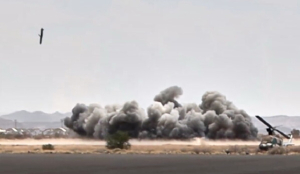
It is the same old story that has repeated ad-nauseum for the past three weeks. Iran makes a claim, the US counters it, and vice versa. In other cases, if Iran shoots down some locations, or captures a few ships, and helps its vessels to escape, the US retorts with similar or larger bombings and captures, and vice versa. Hence, it is not surprising that when Iran claimed to have captured two vessels that were illegally, according to its terms, trying to escape the Strait of Hormuz, the US stated that it had taken control of Iranian vessels doing the same. In the midst of these events, was news that several Iranian tankers went through the American blockade around Kharg Island, where 90 per cent of Iran’s oil is stored. In these columns, we have discussed the probability, and possibility, of the efficacy of the US blockade, given Iran’s past experiences in smuggling oil across the high seas. We have discussed the ramifications on Iran if Kharg Island remains isolated.
But as these news items filter in and out of the newspaper headlines, TV channels’ breaking news, and digital exclusives, oil analysts and experts are converging on a consensus about global prices. News reports indicate that Standard Chartered feels that a price of $95 a barrel “appears to represent an uneasy equilibrium between hopes of de-escalation, and structural tightness in physical balances that is increasing as time passes.” In essence, what this implies is that since the oil prices are now wavering and fluctuating due to news that is either emanating from the US side, which depresses the price, or the Iranian one, which pushes it up, $95 has emerged as the benchmark. Oil will rise to over $100, or even $110-120, if the conflict continues, and the US blockade fails compared to the Iranian one. But then it will settle down to $95 or so, and not really fall below it, on the appearance of pro-peace, and pro-ceasefire headlines. In the past few days, the prices for crude deliveries in June 2026 have settled around this price.
According to a media report, “StanChart notes that near-term oil price movements are now largely headline-driven, constantly taking direction from escalation and de-escalation in the US-Iran conflict amid tightening in physical oil markets. Constrained transit through the Strait of Hormuz has forced Gulf producers to shut-in production, with countries in the region cutting output by between 25 per cent and 80 per cent, while spare capacity tightness, and reliance on certain transit routes has been highlighted. The oil experts expect this theme to continue even when OPEC launches its maximum sustainable capacity metric.” The metric was decided last year, and the assessment process to decide production baselines for 2027 were scheduled in the first half of 2026. Although the discussions are derailed, the participants can quickly come to the table to decide production for 2027. The new metric aims to do away with the political language in the earlier quotas for the member-producer nations. The new language states that the sustainable capacity will be decided by the “average maximum number of barrels a day of crude oil that can be produced within 90 days, and can be sustained continuously for one full year, including all planned maintenance activities.” The objectives are to reward members who invest in upstream projects, improve transparency, and combat overproduction.
If one moves away from the $95 benchmark, and given this new metric that will be in operation after the war, most experts feel that the days of expensive crude will prolong for at least a year or two, and definitely for more than six months. The days of cheap crude are not going to return immediately. Indeed, StanChart predicts that prices will be $10-20 higher than the pre-conflict days and, hence, hover around the $90 mark. This will happen “even after the acute stage of the conflict ends, supported by purchasing for strategic reserves (which are being emptied as we write), a focus on resource nationalism, and hoarding, as well as the logistical lags caused by the disruption.” Unexpectedly, the good news stems from gas prices. Despite the loss of most of the gas supplies from the Middle East, especially after the vicious attacks on Qatar's gas infrastructure by Iran, prices have dropped by more than 60 per cent. European prices are down by a fourth. According to a media report, the “expected volumes to be delivered to the market outweigh current and expected reductions over the next few years, helping to contain the market shortfall, and associated price reaction.”
But as we have seen in the recent past, both after the 2022 Russia-Ukraine war, and now in the past three weeks after the Iran war, the oil and gas prices, both spot and future, move like a roller-coaster ride. They have dropped and soared by 10-20 per cent within a day or two, for no demand-supply reasons, except the changing headlines, which unfortunately change within minutes, hours, and days. Thus, what seems plausible now, like higher oil prices, and lower gas prices, may change in the future, with greater probabilities. One is not sure how the warring nations, and non-warring energy producers and consumers are likely to act, and react over the next several months.