Blasé Capital CASH SURVIVES
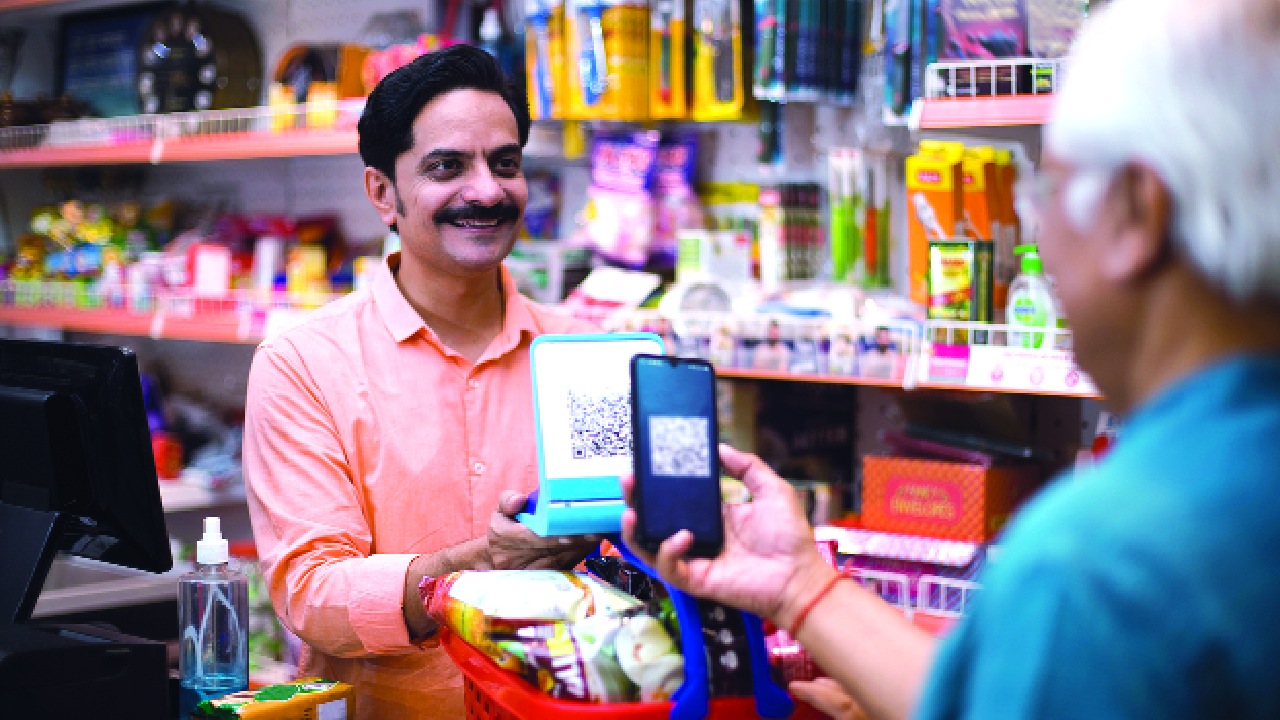
There is no denying the fact that digital transactions have engulfed the nation. On the streets, in the side roads, and on main roads, people use their mobiles to make payments, even as low as INR5-10. This is most evident at the paan shops, and street vendors. In the last 12 months, while monthly transactions have hovered between 16 billion and 20 billion, the values fluctuated between INR21 lakh crore, and INR27 lakh crore. Government sources indicate that most of the people opt for digital payments. The growth is exemplary since demonetisation, and especially after the pandemic, when online shopping and buying boomed due to lockdowns, and other factors.
However, there are four trends that are related to digital payments, which are crucial, and important for the policy-makers. The first is that it has led to a different kind of digital divide. Mobiles, smartphones, and feature phones eliminated the first, which was related to access to hardware. Today, most of the population owns a phone, or uses one owned by a family member. However, the usage patterns in payments are varied among the states. The southern and western states lead the volumes and values. The north-eastern and eastern ones lag far behind. Cities like Delhi log more payments than the state of Maharashtra. Telangana is quite progressive, but not Punjab or Uttar Pradesh. While these are early years, if the divide persists, it will divide the nation in subtle ways.
Second, as is a common feature in a growing segment, the growth rate in digital payments has slowed down. Of course, this is due to the high-base effect. Nothing can grow at 50-100 per cent for years. The pace will slow down. But the policy-makers need to figure out if this is merely statistical, or there are other factors behind the stickiness. Maybe people are scared to do online transactions. Maybe some sectors demand non-usage, which may be especially true for sectors like real estate, construction, and some services. Maybe, despite the official narrative, cash is still king, and people prefer to spend in notes, rather than opt for online payments.
According to a recent media article, although the central bank does not publish details of cash transactions, “its growth can only be estimated by CIC (currency in circulation), which works as a good proxy. The CIC growth, after declining from 9.81 per cent in 2021-22 to 7.81 per cent in 2022-23, and to 3.93 per cent in 2023-24, reversed trend in 2024-25, and increased to 6.07 per cent. The annual CIC growth in October 2025 is 8.58 per cent.” One is not sure if this is a temporary blip in favour of cash, or the trend is more established. Policy-makers need to keep a watch. If the CIC is prompted by economic and business factors, it will need a reexamination.
Anecdotal evidence can provide some clues. One overhears cab and auto drivers giving instructions to their friends and families to transfer money digitally, and agree to pay in cash later. Or vice versa, i.e., they ask for cash, and pay through digital transactions. This implies that many of the so-called digital payments are not digital, but partially in cash. Either the former generate cash, or the latter lead to online payments. The truth is that the digital has become a means to deal in cash, and more easily and swiftly. This obviously adds to the CIC, and indicates that many people are still comfortable to deal in cash. Across sectors like real estate, and construction, the old practice of paying, or receiving up to 50 per cent in cash persists. There are better and convenient ways to receive the cash without any problems relating to transportation.
If one discounts the illegal cash economy, which includes election funding, there are still a few glitches in the digital arena. The major one relates to frauds and scams, as users fall victim to phishing, malware, and social engineering (someone posing as an official). This is true even among the aware users, who make mistakes. Of course, there is a huge digital literacy gap, as people do not understand the technology or the system. This is true among the elders, who find it a nuisance, and a limitation. More important is the service lacunae. The customer support system is a huge weakness, and users get frustrated, angry, and desperate. They would rather quit using, rather than spend time and effort to correct a situation.
According to an article on a website, “UPI’s reliance on Internet connectivity poses challenges for users in areas with unstable networks. Frequent outages can disrupt service reliability, resulting in transaction failures that frustrate users. Additionally, during peak usage times, server overloads may lead to delays or inability to process payments. These network issues highlight the need for improved digital infrastructure to support the increasing volumes of transactions. Enhancing accessibility for all users is vital for ensuring that UPI remains a reliable payment option across diverse regions. Transaction failures are a common issue with UPI payments…. Refund processes can also be slow, leaving users frustrated when they encounter issues. Efficient grievance redressal mechanisms are essential for addressing these concerns promptly.”