Blasé Capital AI CURRENTS
As India’s AI Impact Summit gets underway, there seems to be all-round excitement and enthusiasm. Even a flurry of bad news over the past two weeks is being converted into good and positive one. Consider the case of Infosys, whose share price received a hammering over the past 12 months, and specifically in the past 12 days or so. Yesterday, suddenly, the stock rose by five per cent. The trigger: a strategic partnership between the Indian IT leader and American Anthropic, which caused the recent jitters in global software and tech stocks, including Infosys. The deal will pair Infosys’ Topaz AI platform with Anthropic Claude models (including Claude Code), and impact crucial sectors such as telecom, financial services, software, and manufacturing. Claude’s recent launch of a new legal tool forced experts and investors to rethink how AI will replace traditional IT. The Infosys-Anthropic deal gives it another spin: How can AI and traditional software collaborate to boost existing businesses?
On top of this, the IT minister, Ashwini Vaishnaw, announced the potential for an immediate investment of $200 billion in India AI and deep tech segments over the next two years. This will only the immediate capital inflow. The minister hinted that there will be additional deep tech funding by the venture capitalists, coupled with the country’s innovation ecosystem, and digital infrastructure, which will woo and attract the foreign players. “Because of the digital public infrastructure, there is a very good technology framework under the (country’s) leadership. Because of this framework, the diffusion of AI in India can be accelerated. This is what everyone believes," he said. He went on to add that global CEOs are keen to invest in the country, particularly in deep tech startups and infrastructure. This was compounded by mind-boggling announcements by some of the Indian industry leaders, which include some of the top empires.
For instance, Adani Group plans to invest $100 billion to develop renewable energy-powered AI-ready data centres by 2035, seeking to establish the world’s largest integrated platform. “The blockbuster investment, which comes as India pushes to gain a stronger foothold in the global AI race, is expected to create a $250 billion AI infrastructure ecosystem in India over the next decade,” said Gautam Adani, the group’s patriarch. Recently, the group announced forays in Andhra Pradesh with a mega data centre in partnership with Google. The recent budget gave more-than-20-years tax breaks to such ventures. However, the $100 billion investment will enable an additional $150 billion in spending across server manufacturing, sovereign cloud platforms, and supporting industries. “The world is entering an Intelligence Revolution more profound than any previous Industrial Revolution,” Adani said. “India will not be a mere consumer in the AI age. We will be the creators, builders, and exporters of intelligence and we are proud to be able to participate in that future,” he added.
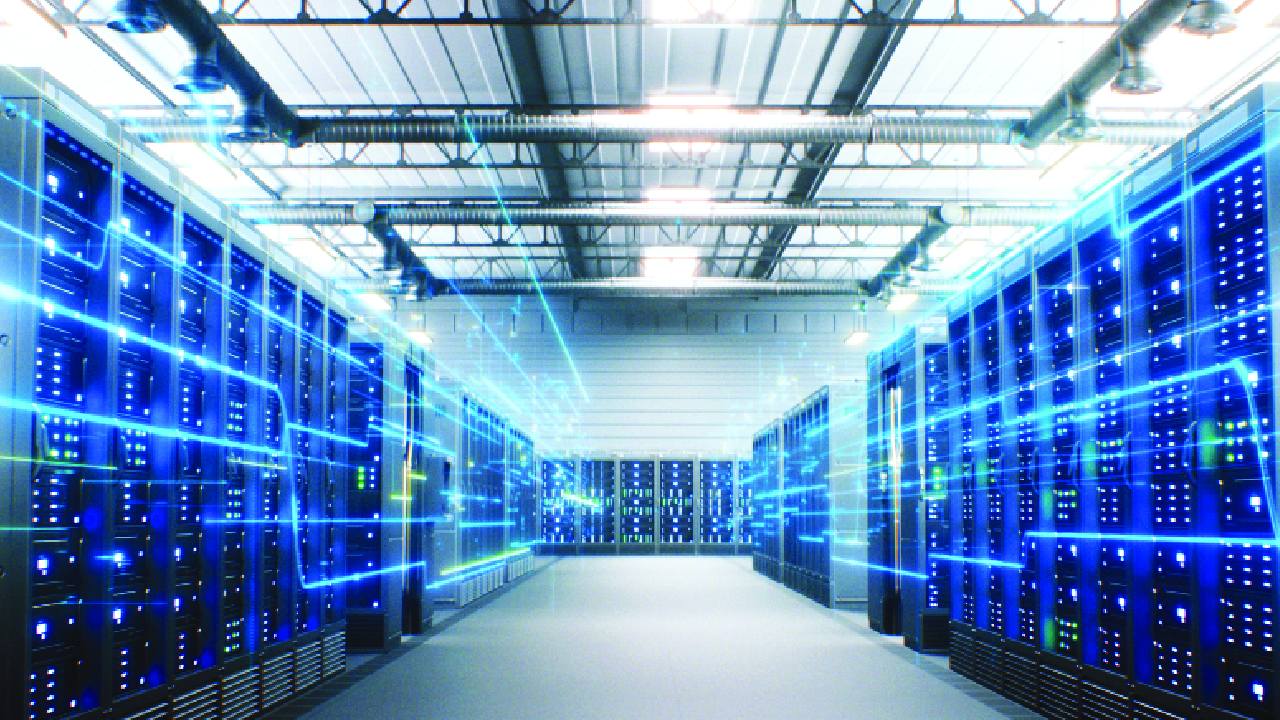
But despite these bold and loud claims, if one hears carefully, there are murmurs of worries and concerns. No, they are not just about AI’s impact on jobs and employment, nature of work, future of some of the businesses, and stock price movements in 2026. One of the most voluble concerns, which has possibly not received adequate attention, relates to Climate Change. According to a media report, “India’s AI ambitions are now being poured into steel and concrete. By 2030, the country’s data centre capacity is projected to rise from roughly a gigawatt to about eight GW, backed by tens of billions of dollars of investment, and a broader bet that the build-out will anchor India as an AI and cloud hub, generate steady hosting revenues, and create tens of thousands of skilled and semiskilled jobs. Political and industry signals already suggest that 8-9 GW is a milestone, not a finish line.”
What remains muted, even unstated, is that the eight GW implies the construction of a heavy industrial sector with major demands on power, water, and materials. For example, by 2030, they will consume 50-70 TWh of electricity annually, or “roughly the demand of a small industrial state like Haryana or Chhattisgarh, or the combined load of a big urban pair like Mumbai and Pune.” If one takes the water required for both power generation, and cooling, the demand may double or more than double to 300-400 billion cu litres by the end of the decade. This amounts to nearly half of Bengaluru’s annual consumption. Of course, the kind of investments being talked about by Vaishnaw and Adani will crazily drive up the demand for certain metals like copper and aluminium. Metals and minerals will accompany the sub-ecosystem that will comprise cabling, high-capacity transformers and switchgear, steel, concrete, batteries, and server hardware. Most of these critical minerals will need to be imported, which will twist and turn the trade deficit. As a media report contends, “Every additional GW beyond eight GW (target) will magnify these pressures further.”
More important than these worries is a more overriding, overwhelming, and overarching one. Is the nation, and its citizens ready for these far-reaching changes? It took nearly two decades for the IT, software, and outsourcing disruptions to stabilise in the country, which made them more acceptable and inclusive in several ways. The disruptions by AI and deep tech may be far more disruptive and dramatic.