Blasé Capital heritage budget
Union Budget 2026 has a strong focus on culture, religion, traditions, beliefs, and heritage. This links with the politics and ideology of the ruling regime, and sends a strong message to its core supporters. Strewn through Finance Minister Nirmala Sitharaman’s speech were a slew of measures related to religious and historical tourism, ecosystems for traditional wellness knowledge in areas like ayurveda and yoga, apart from direct attention on artisans and weavers.
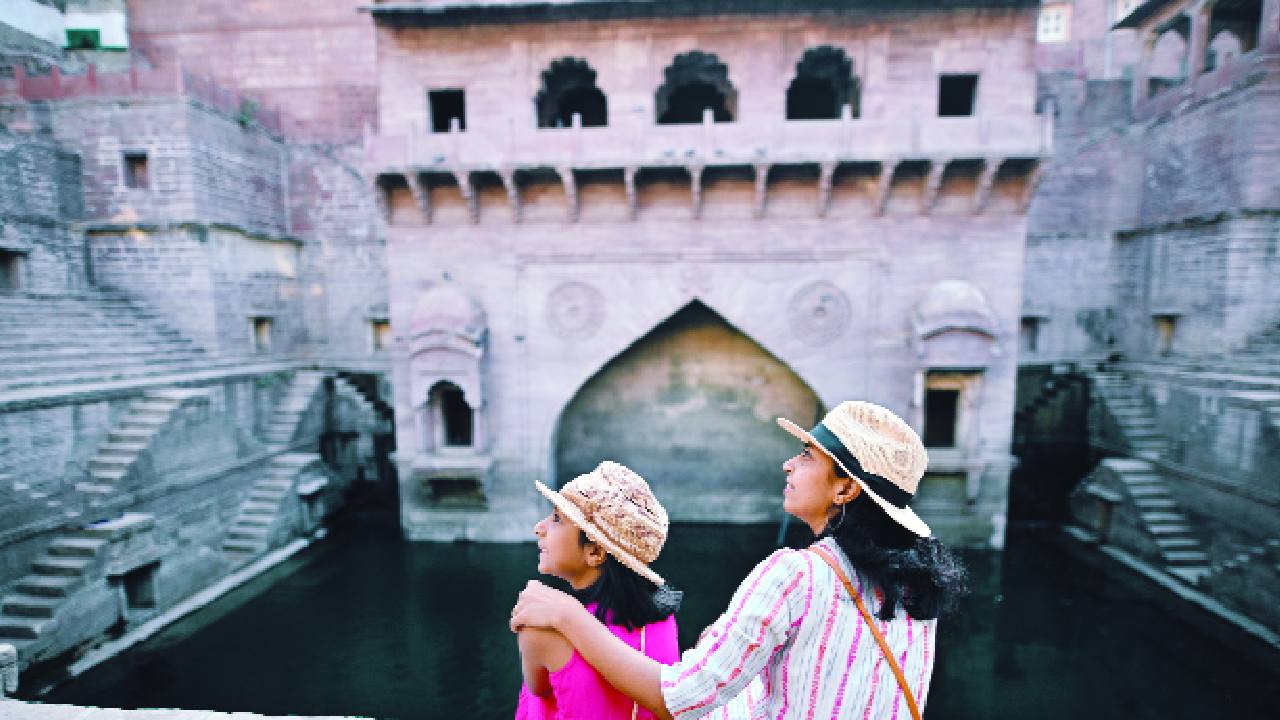
To facilitate and increase tourist inflows, both Indians and foreigners, to “20 iconic sites,” the Budget envisages a pilot scheme to up-skill 10,000 guides. This will be done through a “standardised, high-quality, 12-week training course in a hybrid mode” for potential candidates. The idea is to allow better experiences for the visitors. In addition, the Government wishes to “develop 15 archeological sites including Lothal, Dholavira, Rakhigarhi, Adichanallur, Sarnath, Hastinapur, and Leh Palace into vibrant, experiential cultural destinations.”
At the specific historical and archaeological sites, there are plans to open the “excavated landscapes” to the public through curated walkways. Immersive storytelling skills and technologies will be introduced to help conservation labs, interpretation centres, and guides.” Obviously, the aim is to mainstream India’s ancient history, even to convince experts that it had the oldest civilisation. Recent research has pushed back the dates of the communities in areas like Dholavira, and Lothal by a few thousands of years, predating the more famous, popular, and known ancient civilisations.
The moves are not restricted to Hindu, or Indian locations. Buddhist sites in North-East India will be an additional focus. As Sitharaman said in her speech, “The… region is a civilisational confluence of Theravada and Mahayana/Vajrayana traditions.” Hence, the Government wishes to launch a scheme to develop the “Buddhist Circuits” in states such as Arunachal Pradesh, Sikkim, Assam, Manipur, Mizoram, and Tripura. Apart from the preservation of the temples and monasteries, the project will set up interpretation centres, improve connectivity, and enhance pilgrim amenities.
Ayurveda, Yoga, and the use of products like sandalwood, even coconuts, are an integral part of the Indian traditions and systems. For decades, they gained global popularity, which increased in the recent past. The Government hopes to further ignite the global interest in these areas. A strong caregiver ecosystem will be established by training multi-skilled caregivers. Their core areas will be bolstered by allied skills such as wellness and yoga, apart from the medical ones. The objective is to train 1,50,000 caregivers in the coming year.
Five regional hubs, in public-private partnership mode, will be set up, and "serve as integrated healthcare complexes that combine medical, educational, and research facilities.” The hubs will encompass AYUSH centres, apart from facilities like the medical value tourism centres, and requisite infrastructure. The export of ayurvedic products, feels the finance minister, “helps farmers who grow the herbs, and the youth who process the products.” In addition, she adds that the global demand for these traditional products has increased over the years.
“To meet the growing global demand (for ayurveda products),” the Government wants to set up three new All-India Institutes of Ayurveda, upgrade AYUSH pharmacies, and drug-testing labs, hike the number of skilled personnel in the field, and “upgrade the WHO Global Traditional Medicine Centre in Jamnagar (Gujarat) to bolster evidence-based research, training, and awareness for traditional medicine.” Over the years, the AYUSH ministry has emerged as one of the more active ones to globalise Indian traditions, ancient methods, and products.
As most of us, especially those in South India, know, sandalwood is intrinsically and closely linked to social and cultural heritage. To enhance its use and popularity, the Government wants to partner with specific state governments to “promote focused cultivation, and post-harvest processing to restore the glory of the Indian Sandalwood ecosystem.” Like ayurveda, the aim is to expand the Indian heritage and traditions across the country, and overseas. Coconut is another product inherently linked to Indian religion, and cultural practices.
As Sitharaman explains, “India is the world’s largest producer of coconuts. About 30 million people, including nearly 10 million farmers, depend on coconut for their livelihoods.” In a bid to increase the country’s competitiveness in coconut, the Government proposes a Coconut Promotion Scheme to “increase production and enhance productivity through various interventions, including replacing old and non-productive trees with new saplings/plants/varieties in major coconut-growing states.” Coconut initiatives will go together with others related to walnuts, almonds, cocoa, and cashews.
Handloom and handicrafts, khadi and cloth, and artisans and weavers have remained one of the foundational occupational bases for centuries. The Budget proposes a National Handloom and Handicraft programme to “integrate and strengthen existing schemes, and ensure targeted support for the weavers and artisans.” The new Mahatma Gandhi Gram Swaraj initiative hopes to “help in global market linkage, and branding. It will streamline and support training, skilling, quality of process and production. This will benefit our weavers, village industries, One-District-One-Product, and rural youth.”
Budget exercises are, therefore, not limited to economics and finances. They broaden up to generally encompass politics, business, ideology, and culture, apart from heritage and religion. What is more important is that this Budget smartly links cultural issues with the economic ones in terms of livelihoods, jobs, and higher incomes to the socially-stressed communities. Hence, they become an inherent part of the Budget.