Bilateral, the new multilateral
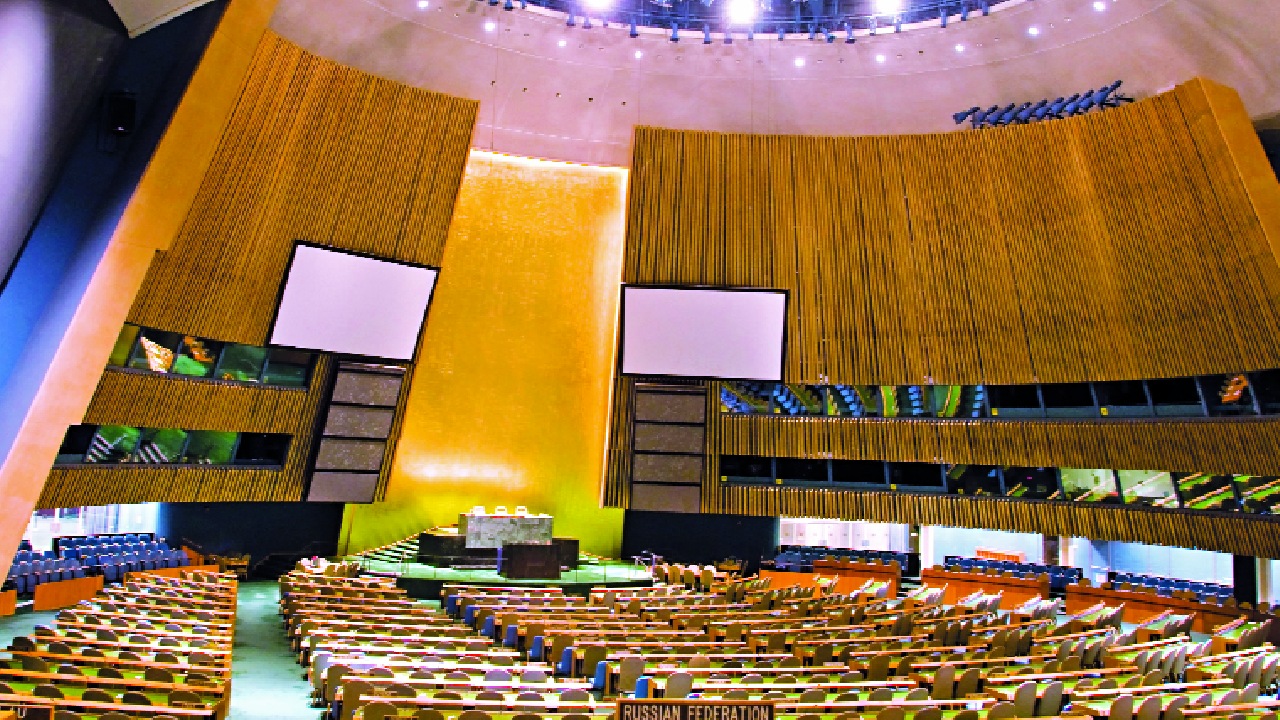
One of the US President Donald Trump’s agenda is to possibly replace the multilateral with bilateral. He believes that global entities have little relevance in a world where America has the power to impose authority, dominance, and power. Hence, he likes to deal with nations individually, rather than as part of regional, or multilateral agencies like the United Nations. The president has claimed that the US disproportionately contributes to global agencies but the latter generally have an agenda that works against American interests. Indeed, he accuses the global entities of backing China.
A recent article in Forbes magazine observes, “As the US-China competition intensifies, and technological and geopolitical asymmetries widen, the UN is increasingly less a venue for consensus, and more a theater for contestation.” If Trump needs to deal with multilateral agencies, his pivot is towards the Western Hemisphere, which is highlighted by the recent US National Security Strategy (NSS), which emphasises competition with revisionist powers, and protection of American economic and security interests. The NSS sets out to rediscover the more than 200-year-old foreign policy statement known as the Monroe Doctrine.
Created in 1823 by President James Monroe, the document viewed any intervention by foreign powers in the political affairs of the Americas as a hostile act against the US. “After years of neglect, the United States will reassert and enforce the Monroe Doctrine to restore American preeminence in the Western Hemisphere, and to protect our homeland and our access to key geographies throughout the region. We will deny non-Hemispheric competitors the ability to position forces or other threatening capabilities, or to own or control strategically vital assets, in our Hemisphere,” observes the NSS.
“This ‘Trump Corollary’ to the Monroe Doctrine is a common-sense, and potent restoration of American power and priorities, consistent with American security interests,” adds the NSS. The NSS frames competition with revisionist powers as a global contest for influence. In Latin America, the US views Russian, Chinese, and Iranian outreach as a challenge to its traditional sphere. The modern version of the doctrine frames the western hemisphere as a zone where power competition by non-US forces must be checked. Hence, global agencies like the UN, which were meant for the twentieth century, have no relevance in the new scheme of things.
Sadly, for the UN, it faces criticisms for its monolithic structure, amidst diminishing clout and relevance, from other nations. Global leaders, including India’s Prime Minister Narendra Modi, have repeatedly pressed for institutional reforms. How the world now views the UN was reflected in the emergency meeting of the Security Council, following the US military operation in Venezuela. Most leaders just agreed to disagree. In other global conflicts, while President Trump convinced the world that he stopped eight, or more, global armed conflicts, the UN watched from the sidelines.
Hence, Washington squeezed the flow of funds to the UN, and its entities, and walked out of many. Recently, America exited from more than five dozen forums, which include 31 UN ones. On December 30, 2025, the US Representative for UN Management and Reform, Jeffrey Bartos, indicated his country’s support for a leaner and more disciplined UN budget, framing it as a corrective to years of bureaucratic expansion and mandate drift. These remarks followed the UN General Assembly’s approval of an annual budget of $3.45 for 2026, which was a seven per cent reduction from 2025.
A day before Bartos’ comments, the US State Department urged the UN to “consolidate humanitarian functions to reduce bureaucratic overhead, unnecessary duplication, and ideological creep.” It warned that “individual U.N. agencies will need to adapt, shrink, or die.” The aim: the Un needs to adapt the new American vision, under the renewed Monroe Doctrine. The UN’s predicament stems from failures to enact institutional reforms to address issues such as structural anachronisms (composition and veto), mission creep, duplication across agencies, and chronic funding fragility. Such lapses make it vulnerable to inter-superpower conflicts, and donor retrenchment, and produces a cycle where perceived ineffectiveness leads to withdrawal, and deepens operational shortfalls.
Last year the UN admitted that it faced “a worsening cash crisis that threatens its ability to carry out vital work.” It added, “With a growing shortfall in contributions, $2.4 billion in unpaid regular budget dues, and $2.7 billion in peacekeeping, the UN has been forced to cut spending, freeze hiring, and scale back some services.” Officials warned that these risks may erode the UN’s credibility, and its capacity to fulfil mandates entrusted to it by the member states. President Trump’s latest order to withdraw from dozens of UN agencies worsens the problems for the multilateral body.
Stephane Dujarric, a spokesperson for Secretary-General Antonio Guterres, explains, “As we have consistently underscored, assessed contributions to the United Nations regular budget and peacekeeping budget, as approved by the General Assembly, are a legal obligation under the UN Charter for all Member States, including the United States.” The US Congress, say experts, is “responsible for authorising and appropriating funding to the United Nations (UN) system.” Since 1945, when the UN was founded, the US has historically been the single largest financial contributor. However, “The current status of US funding to many UN bodies remains unclear.”
In February 2025, Trump ordered a review, which is still pending, of the US participation in, and funding of international organisations. But since then, he has withdrawn the nation from UN entities. The Congressional Research Service (CRS) release stated, “The President's US FY-2026 budget request would eliminate funding to most UN bodies, including the UN regular budget, and UN peacekeeping operations. The Administration has also delayed or halted some payments to UN entities, and requested recission of selected UN funding previously enacted by Congress.”
Washington’s withdrawal from agencies, and funding cuts will strain the core UN focus on issues such as health, climate, gender, and population (see Our Take on this page). They will weaken peacekeeping, and humanitarian responses. India and other members are preparing to fill the gaps, but the UN will face budget shortfalls, scale-backs, and slower crisis responses. While contributions to peacekeeping and political missions are binding, cuts to support, logistics, and bilateral military enablers can degrade capacity, force reductions in troops, and slow down deployments.
Reports indicate severe short-term impact on cash-flow shortfalls, suspension or scaling back of non-core projects, hiring freezes, and delayed procurements. The medium-term impact may be in the form of closures of several projects in under-funded sectors, donor fragmentation as states create parallel bilateral or regional mechanisms, reputational damage, and staff attrition. It may indeed mark the beginning of the end of the UN-sponsored era.