Bharat Taxi: Opening new dimensions in cooperative movement
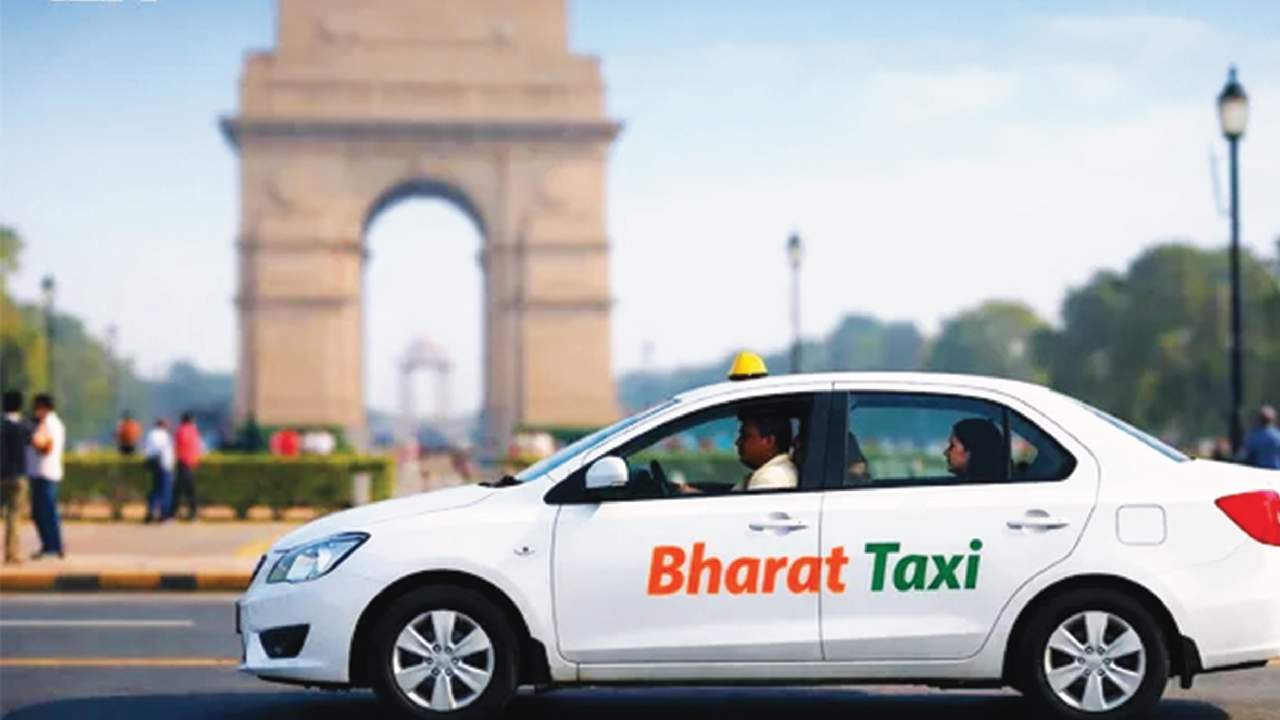
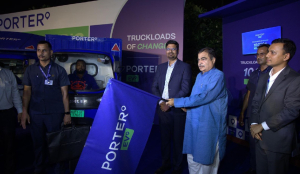
On February 5, 2026, Home and Cooperative Minister Amit Shah, in collaboration with several cooperative organisations, including Amul, launched Bharat Taxi, an initiative of the Ministry of Cooperatives. Using technology, Bharat Taxi will provide taxi services similar to Uber and Ola. Passengers will now be able to book their trips using the Bharat Taxi app. The unique feature of Bharat Taxi is that it is not a company-run app, with drivers using the company’s services, but rather they will be owners of the enterprise; they will now be called Sarathi (sarathi), not drivers.
Rides booked through this app will not be subject to any fees. It’s worth noting that drivers currently pay a 10 to 30 percent fee on Uber, Ola, and other taxi apps. This is a significant step towards a self-reliant India and prosperity through cooperation. Bharat Taxi, built on a cooperative model, is a platform where drivers are not just service providers but also stakeholders. Unlike previous app platforms, Bharat Taxi has a zero-commission model, ensuring that drivers receive their fair share of earnings. The four pillars of the Bharat Taxi model are higher income, dignity, security, and profit sharing for drivers.
Increased Income
An example will illustrate how a driver who searches for trips on Uber, Ola, or another company’s app is subject to undue exploitation due to commissions and income loss. For example, if a driver makes 14 trips a day, covering approximately 250 kilometers, with an average fare of Rs 300 per trip, which could mean working approximately 14-15 hours, he would get a revenue of Rupees 4,200. But this revenue does not belong to him; in fact, not even half of this income is The four pillars of the Indian taxi model are higher income, respect, security, and profit sharing for drivers.
How to Increase Income
An example will illustrate how a driver who searches for trips on Uber, Ola, or another company’s app is subject to undue exploitation due to commissions and lost income. For example, if a driver makes 14 trips a day, covering approximately 250 kilometers, with an average fare of Rs 300 per trip, which could mean working approximately 14-15 hours, he would earn Rs 4,200. But this income is not actually his; in fact, not even half of this income accrue to him.
The fact is that the company takes away an average 25 percent of this revenue as platform fee, meaning thereby, Rupees 1,050 goes directly to the company. Then, the driver has to pay for petrol/CNG to operate the taxi, assuming this to be Rupees 4 per kilometer, translates to approximately Rs 1,000. Or, if the vehicle is financed through a bank or o the financial institution, EMIs may need to be paid and maintenance may also be required. Therefore, a driver working 14-15 hours a day will get only Rupees 1,150, an average of Rs 80-Rs 85 per hour.
Now, with the no-commission model, drivers joining Bharat Taxi will save a significant amount on account of commission, increasing their income from the same amount of work to Rs 2,150 per day, or Rs 160-Rs 170 per hour. This allows them to choose more leisure hours to spend with their families, improving both their comfort and income. Therefore, Bharat Taxi not only improves the driver’s income, who is now a Saarthi, but also increases his and his family’s happiness.
Dignity
Most importantly, drivers will now receive respectful work and will be members of the cooperative society formed for this cooperative taxi service. This restores the dignity they deserve.
Security
Not only this, drivers associated with Bharat Taxi will now receive benefits such as free medical treatment up to Rupees 5 lakh, insurance, affordable loans, subsidies, and all schemes for gig workers.
Profit Sharing
Since drivers, or Saarthis, will now be members of the Bharat Taxi cooperative, they will also receive an equal share in its profits. This sharing will be similar to the Amul model. It is well known that under the Amul model, dairy farmers not only receive fair prices for their milk but also share in the profits.
Public Digital Infrastructure
Bharat Taxi is built on ONDC (Open Network for Digital Commerce), which is again a dream project of Prime Minister Narendra Modi. It has been developed under the supervision of the Ministry of Cooperation. ONDC is an open, transparent, and non-monopolistic digital framework—aligned with India’s civilisational values of openness and fairness. ONDC breaks the dominance of closed platforms and ensures equal opportunities for small operators and cooperatives.
Bharat Taxi’s operation on the ONDC framework also strengthens the hope that in other areas of e-commerce, small private players such as traders and street vendors, and other workers like carpenters, electricians, and AC mechanics, can be organised through cooperative digital public infrastructure to increase their incomes and empower them to live with dignity.
Benefit to Riders
In order to maximise their profits, Taxi platforms generally indulge in surge pricing, during peak hours, in the name of high demand, forcing riders to pay higher fare, sometimes 2 to 3 times of the normal fare. This practice would be done away with Bharat Taxi, freeing the riders from paying unfair fare for their rides during peak hours also.
Bharat Taxi’s operation on the ONDC framework also strengthens the hope that in other areas of e-commerce, private workers, such as small traders and street vendors, and other workers like carpenters, electricians, and AC repairers, can be organized through cooperative digital public infrastructure to increase their incomes and empower them to live with dignity.
Bharat Taxi, a Game Changer
Bharat Taxi’s zero-commission model will ensure that companies like Uber and Ola reduce their commissions and ensure higher earnings for drivers. Furthermore, Bharat Taxi’s model can pave the way for other countries to adopt this model to end exploitation in mobility services.
The cooperative ownership model prevents exploitation and ensures a long-term, sustainable system. As Bharat Taxi plans to expand to smaller towns and rural areas, this model will enable cooperative drivers to participate in the digital economy. This model, independent of data or capital control, promotes healthy competition based on service quality. Role of the Ministry of Cooperation
The Ministry of Cooperation, under the leadership of Shri Amit Shah, has played a key role in incorporating the principles of cooperation into modern digital platforms. This initiative brings traditional cooperatives into a 21st-century digital framework.
National Impact
Bharat Taxi strengthens employment, mobility, tourism, and the local economy. It is a living example of how digital public infrastructure can work in the national interest. Just as UPI transformed payments, platforms based on ONDC like Bharat
Taxi will transform services and e-commerce. We must understand that Bharat Taxi is not just a technology platform—it is a national movement for economic fairness. This initiative reflects the spirit of a strong, self-reliant, and equal India.
Bharat Taxi, a Game Changer
Bharat Taxi’s zero-commission model will ensure that companies like Uber and Ola reduce their commissions and ensure higher earnings for drivers. Furthermore, Bharat Taxi’s model can pave the way for other countries to adopt this model to end exploitation in mobility services.
The cooperative ownership model prevents exploitation and ensures a long-term, sustainable system. As Bharat Taxi plans to expand to smaller towns and rural areas, this model will enable cooperative drivers to participate in the digital economy. This model, free data or capital control, promotes healthy competition based on service quality.
Role of the Ministry of Cooperation
The Ministry of Cooperation, under the leadership of Shri Amit Shah, has played a key role in incorporating the principles of cooperation into modern digital platforms. This initiative brings traditional cooperatives into a 21st-century digital framework.
National Impact
Bharat Taxi strengthens employment, mobility, tourism, and the local economy. It is a living example of how digital public infrastructure can work in the national interest. Just as UPI transformed payments, platforms based on ONDC like Bharat Taxi will transform services and e-commerce. We must understand that Bharat Taxi is not just a technology platform—it is a national movement for economic fairness. This initiative reflects the spirit of a strong, self-reliant, and equitable Bharat.
National Co-Convener Swadeshi Jagran Manch Former Professor, PGDAV College, Delhi University
Leave a Comment
Comments (1)
This article highlights an interesting shift in the mobility sector through the cooperative model. As more transportation businesses embrace digital transformation, the demand for taxi booking app development and reliable taxi app development services continues to grow. While exploring similar mobility solutions, they came across https://mobisoftinfotech.com/products/taxi-app-development-solutions and found it to be one of the best solutions for businesses looking to build scalable and feature-rich taxi applications. A very insightful read on the future of ride-hailing and driver-centric platforms.