Bharat is bandh for the farmers
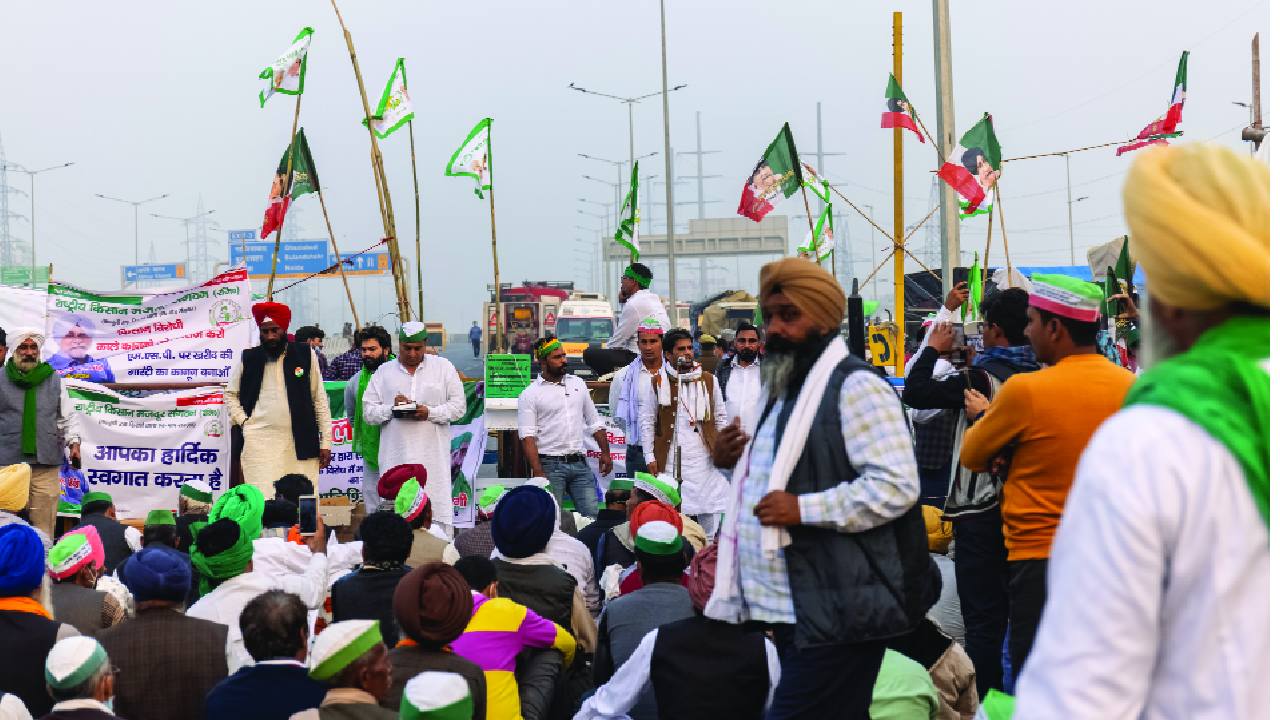
When I was a young journalist, back in the 1980s, a bandh was a serious affair. Most markets and offices were closed, and public transport was in a tizzy. It was tough to reach the offices that were open, especially for journalists. In those days, bandhs and protests were a political-cum-economic statements. The aim was to put the governments on their toes, and make genuine efforts to protect the marginalised. The issues were immediate, and made economic sense despite the politics. The organisers knew the outcomes that they wished for.
Those days are gone. Nowadays, bandhs are mundane affairs, some bits of services and transportation are disrupted. But otherwise, life goes on. This is what I observed as I navigated through the Bharat bandh called by the farmers’ unions, and trade unions. This strike is right in blaming the government for the problems that confront the farmers. The immediate concern relates to the bilateral trade deals with the US and European Union, which opens the Indian farm sector for cheaper imports, at least in some major segments. Of course, the recent four labour codes trouble the farm community in many ways.
Indeed, the threat of imports is a genuine cause for the protests. But one needs to wait for the fine print of the two deals to assess the real impacts. Similarly, the labour codes seem to be an afterthought since they were announced some time ago. In fact, I feel that the farmers need to protest not against the trade deals or codes but the attitude of the governments over the past several decades. Despite claims, counterclaims, rhetoric, and policy measures, successive ruling regimes have failed to implement policies that help the livelihoods of the farmers, which are threatened in this, and earlier eras of headwinds.
Sadly, we are back to the same logic that has become prevalent, and gained credence in the recent past. This is the rhetoric that the farmers are being destroyed. Let us leave aside the rhetoric, ideological battles, political wars, and abusive language being used by politicians, civil activists, and social media warriors. Perhaps the time is ripe to point out some basic and crucial issues related to Indian agriculture and farmers. First, about 45 per cent of the workers are engaged in farming. The arithmetic is simple and clear. Agriculture contributes to about 15 per cent to the GDP, and employs 45 of the workers.
Quite clearly, this implies that the ones employed or involved in agriculture will have low productivity, with per capita incomes that are far lower than in the other sectors. It may lead to more inequalities between the rich and large farmers, and the ones with smaller possessions, as the former can use the latest inputs and technology to boost incomes. The solution is not to fence in the people in the farms. It is either to boost incomes through allied means, like livestock, dairy, and fisheries, or create more jobs in manufacturing and services.
Throughout the twentieth century, most successful nations followed the manufacturing route to achieve this objective. In this century, it is more difficult as tech, AI, robotics, and automation curtail factory jobs. Maybe there is scope in services. But this sector tends to generate highly-skilled jobs that the rural youth cannot grab, or low-paying, low-skilled ones that are as unremunerative as farm jobs. This is why the Government needs to up-skill and re-skill the rural population to get the jobs of the future. Despite the policies, this has not happened.
The second problem area, which is linked to the above, or is a corollary, is that 86 per cent of the farmers have two hectares or less acreage of land. They cannot be productive, or produce surpluses to turn farming activities into profitable ones. In most cases, farm incomes are enough to feed a family, if they are lucky. Most of them survive on minimum necessities, and consume more than half of what they produce. Hence, the farm lobbies are barking up the wrong trees when they focus the attention on the trade deals, or labour codes.
What the farmers need to demand, and what the Government needs to deliver, is more income alternatives in and around farming, and skills to graduate from farming to higher-income jobs in factories, or services. A few pockets of horticulture, and fisheries success are not enough. There needs to be a nationwide campaign, not of policies but efficient implementation that helps the farm community, especially the poor farmers. Education, skills, and awareness, apart from direct and targeted incentives are the key, and without leakages. Links between farms and factories, via research and innovation, holds the key.
Another bitter reality of Indian farming, which most of us do not seem to accept or care about, is about the vested and ingrained interests, not just within the farm lobbies, but within the industry, services sector, and political regimes. For example, one of the issues relates to the mandi, and the small farmers’ ability to sell their produce at market prices without exploitation and manipulation. Despite the policies to improve the mandis, the realities do not seem to change. Similarly, the industry is prone to exploit the farmers despite air-tight contracts, and may need the Government to act as a contractual buffer.
While the farmers wish the governments, both the central and states, to step in as active arbitrators, like through the minimum support price (MSP) mechanism, the latter is cagey because of attached costs. Maybe there are ways to find a solution without financial burden on the ruling regimes. However, the governments take a staunch stance to not expand the MSP regime, except in a few states. The farmers insist that the regimes need to buy the entire produce at MSPs, and across crops. The stalemate continues, although a committee is there to provide solutions. The trick is to make MSP a tripartite farmers-industry-governments initiative to reduce the official costs.
Back in 1991, when economic reforms, liberalisation and globalisation were tentatively embraced by India, a vast majority of lobbies in industry pronounced that this will mark the end of manufacturing, and lead to a return of the East India Company-like scenario. More than 35 years down the road, nothing of this sort happened. Some businesses died, some reinvented, and new ones cropped up. There was a churn. Similar shackles in farming can be opened. However, the ground realities may prompt the policy-makers to go slow. Radical and dramatic changes like the three farm laws may not work. The reality is that Bharat is ‘bandh’ for the farmers. It is not open.
The author has worked for leading media houses, authored two books, and is now Executive Director, C Voter Foundation; views are personal