Bangladesh restores visas for Indians
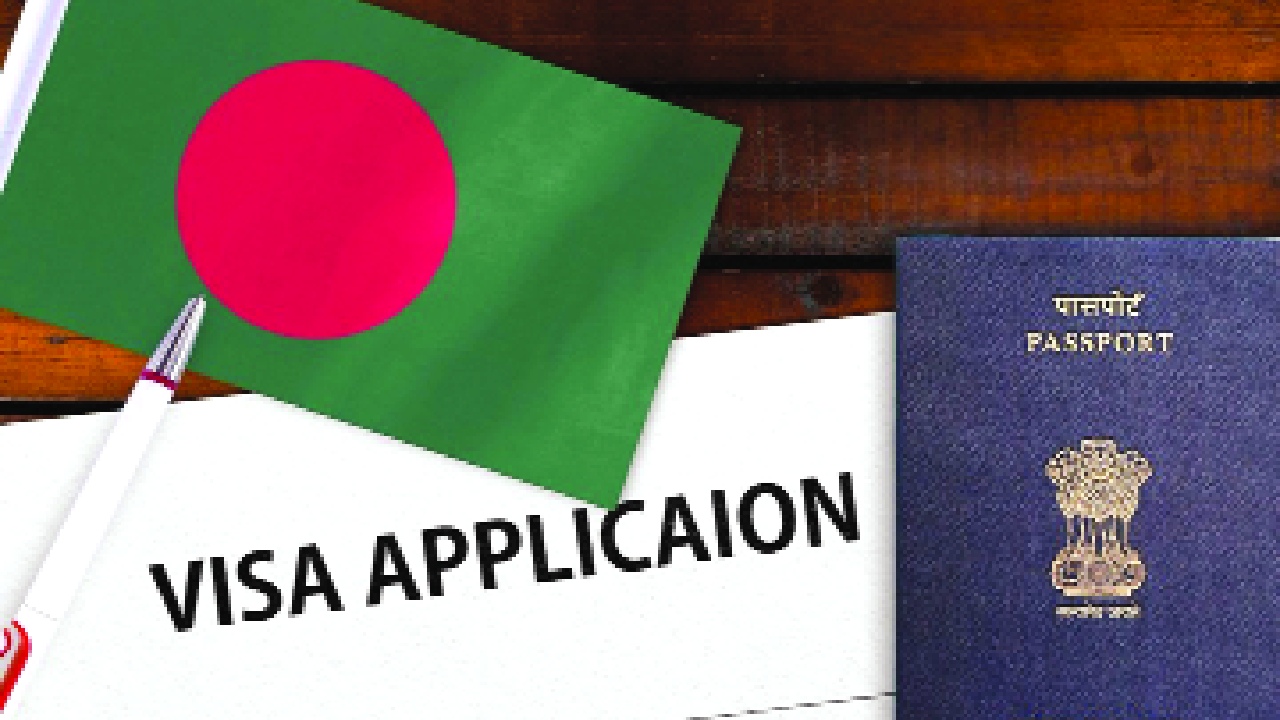
In one of his first major foreign policy decisions, Bangladesh’s newly elected Prime Minister Tarique Rahman has moved to restore full visa services for Indian nationals, signalling a rapid effort to stabilise relations with New Delhi after months of diplomatic strain.
Beginning Friday morning, Bangladesh’s High Commission in New Delhi resumed all consular operations, reopening tourist, medical, business, work and other visa categories that had been restricted since December 2025. The suspension had followed a period of heightened anti-India sentiment and political turbulence under the interim administration-led by Muhammad Yunus.
Rahman, who assumed office on February 17 after his Bangladesh Nationalist Party (BNP) secured a decisive electoral victory, appears keen to recalibrate Dhaka’s approach toward its largest neighbour. Diplomatic observers describe the visa restoration as a confidence-building measure aimed at resetting bilateral ties that had grown tense over the past year.The earlier curbs on visas were imposed amid unrest triggered by the killing of student leader Sharif Usman Hadi, an incident that intensified anti-India rhetoric and coincided with attacks on minority communities, including Hindus. The situation led to reciprocal restrictions and a visible cooling of diplomatic engagement between the two countries.
By reopening all visa categories without limitation, Dhaka has effectively ended almost two-month freeze that had disrupted tourism, business exchanges and cross-border medical travel - sectors that underpin the dense people-to-people connections between the neighbours.
Officials within the BNP Government are understood to view India as indispensable to Bangladesh’s economic growth and regional security calculus. The swift restoration of visas is widely interpreted as a signal that the new administration intends to pursue pragmatic engagement over political friction.
New Delhi has reacted cautiously but positively. India’s senior consular official in Sylhet, Aniruddha Das, indicated this week that India is also preparing to fully reinstate visa services for Bangladeshi nationals. At present, India is issuing medical and double-entry visas, with broader categories expected to resume shortly.
The diplomatic outreach has been reinforced at the political level. India’s Lok Sabha Speaker, Om Birla, attended Rahman’s swearing-in ceremony and delivered a letter from Prime Minister Narendra Modi inviting the Bangladeshi leader to visit India - a gesture seen as reviving high-level engagement that had stalled during the previous administration.
Relations between Dhaka and New Delhi had become strained over concerns about minority safety, cross-border security and trade imbalances. Yunus’s interim Government was perceived in India as insufficiently responsive to anti-India rhetoric and sporadic communal tensions, contributing to diplomatic unease.
Speculation is already growing over whether Rahman might choose India as the destination for his first official foreign visit, a move that would carry symbolic weight and reinforce his reconciliation agenda.
For international observers, the rapid restoration of visa services underscores how quickly political transitions in South Asia can reshape diplomatic trajectories. In a region where economic interdependence and strategic sensitivities are tightly intertwined, Rahman’s first week in office may mark the beginning of a renewed chapter in India-Bangladesh relations.
Leave a Comment
Comments (1)
This was a great movement congratulations to new prime minister.