Bangladesh on the brink after student leader’s death
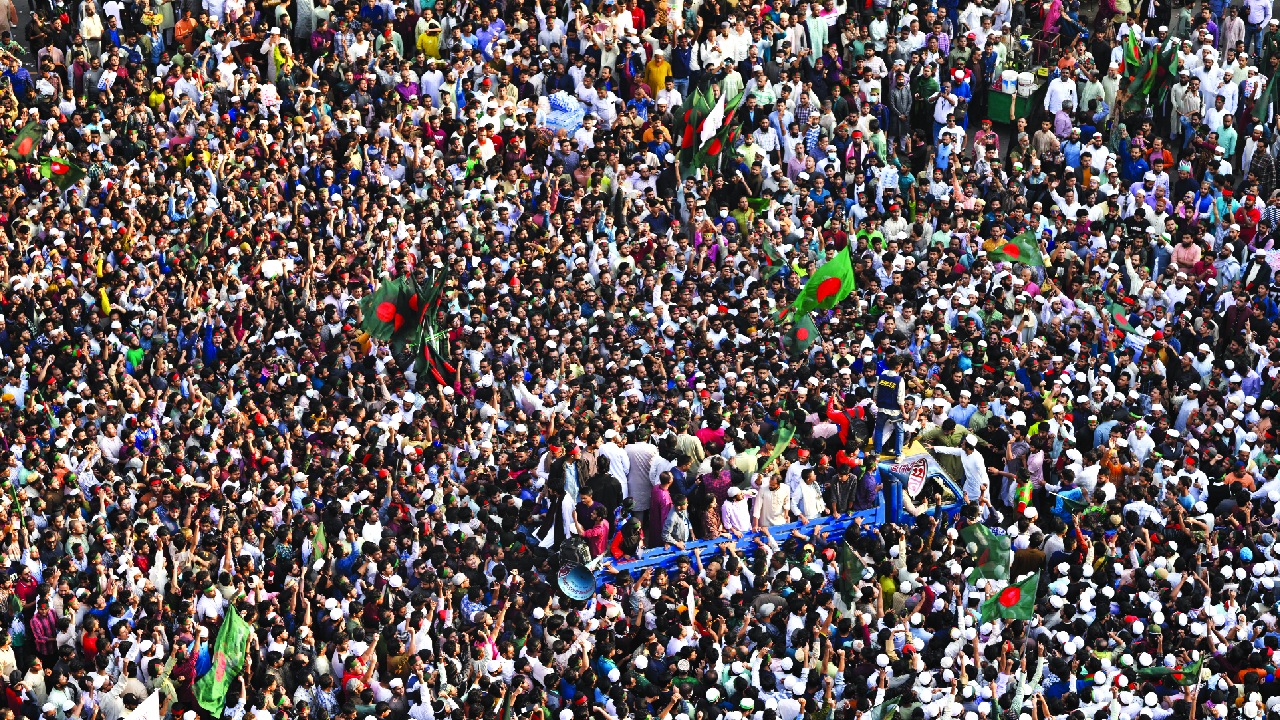
The killing of Sharif Osman Hadi, a controversial Islamist figure known for his strident anti-India views, has triggered widespread street protests across Bangladesh, with demonstrators openly targeting India and its diplomatic presence. Security analysts and former diplomats have pointed to a possible Pakistan-backed Jamaat-e-Islami role in amplifying the unrest ahead of Bangladesh’s crucial elections.
Within hours of news of Hadi’s death emerging late Thursday, large crowds gathered in Dhaka, Chittagong and Rajshahi, raising slogans against India while demanding justice for the slain leader. Attempts were made to march towards the Indian High Commission in the capital, while protesters in Chittagong and Rajshahi surrounded residences linked to Indian diplomats before being restrained by police.
The demonstrations, which included leaders and cadres of Jamaat-e-Islami and the student-led National Citizen Party (NCP), quickly transformed Hadi’s killing into a platform for anti-India rhetoric. Protesters accused New Delhi of shielding the attackers, claims that have been firmly denied by
both Indian authorities and the Dhaka Metropolitan Police, which stated there was “no verified evidence” of the assailants fleeing across the border.
Chants questioning India’s influence and openly threatening Delhi reverberated through major cities. In several locations, protesters waved a mix of national and Islamist symbols, underscoring the ideological nature of the mobilisation. Analysts note that the pattern closely mirrors anti-India agitations witnessed during political turbulence in 2023 and 2024.
The renewed hostility comes at a sensitive political moment for Bangladesh. With elections expected in February 2026, mainstream political forces remain fractured, while Islamist groups — previously constrained — have regained public space following policy shifts under the interim Yunus administration. Observers say the vacuum has allowed anti-India narratives to enter the political mainstream once again.
Former Indian High Commissioner to Bangladesh Veena Sikri alleged that the unrest reflects a broader strategy involving Pakistan and its historical allies in Bangladesh. She argued that Jamaat-e-Islami, which opposed Bangladesh’s independence in 1971, is acting as a conduit for Islamabad’s interests and accused the current leadership of remaining silent as tensions escalate.
Other experts link the protests to electoral mobilisation. Former diplomat and Rajya Sabha MP Harsh Vardhan Shringla said extremist elements were exploiting nationalist sentiment to build momentum ahead of polls, warning that threats to diplomatic missions and minority communities could not be tolerated. He noted that India has conveyed its concerns formally to Dhaka.
Tensions have also surfaced along the maritime boundary in the Bay of Bengal. Indian authorities have reported a recent spike in Bangladeshi fishing vessels entering Indian waters, culminating in a mid-December incident involving a collision between patrol craft and a fishing trawler that led to the death of an Indian fisherman. Officials are investigating the circumstances.
Political commentators caution that blaming India has long been a recurring tactic during periods of weak governance in Bangladesh. Kashmiri columnist and lawyer Zeba Zoariah described the current phase as part of a historical pattern where domestic instability fuels external hostility, ultimately harming Bangladesh’s own political and economic interests.
India has rejected allegations linking it to Hadi’s killing. The Ministry of External Affairs reiterated that Indian Territory has never been used for activities detrimental to Bangladesh and stressed the importance of safeguarding diplomatic personnel and premises.
As street protests, diplomatic tensions and electoral calculations converge, New Delhi is closely watching developments in Dhaka. The escalation, analysts warn, risks further straining bilateral ties if radical groups continue to weaponise the killing for political gain.