Bangladesh lynching sparks deep concern among political leaders
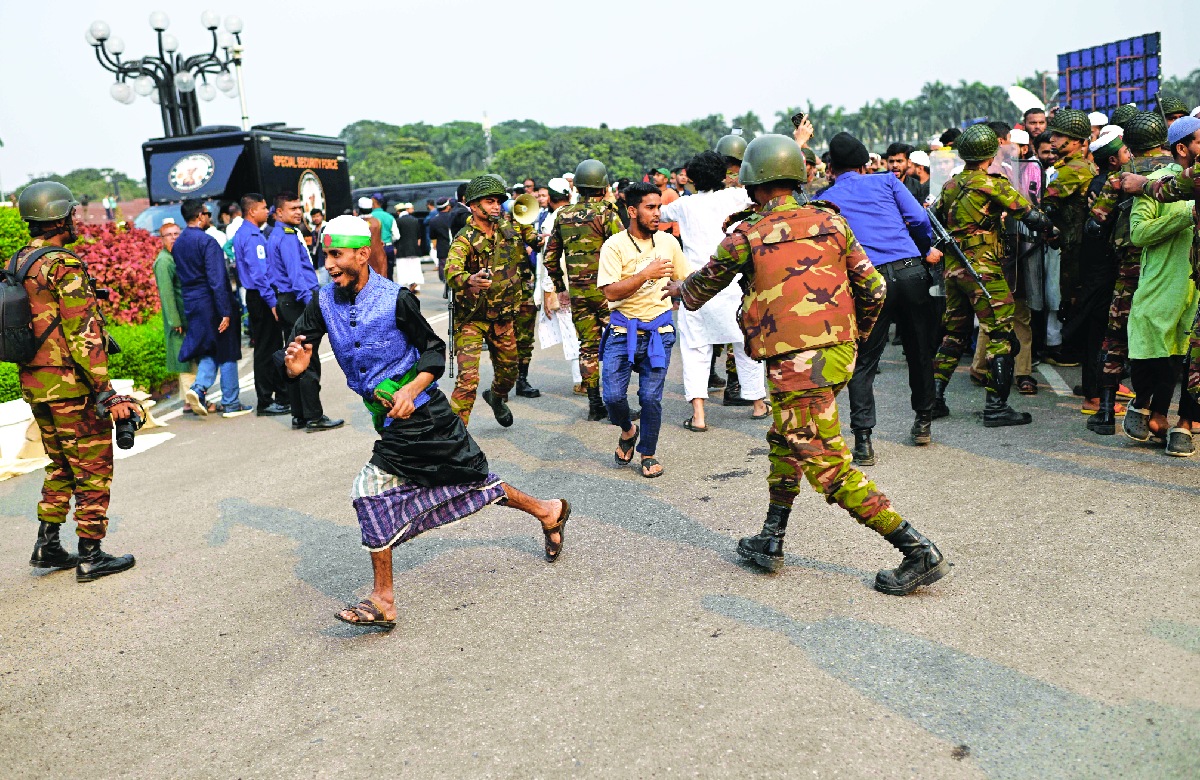
The lynching of a Hindu youth in Bangladesh has drawn reactions from political leaders and former diplomats, sharpening concerns in New Delhi over minority safety, rule of law and the broader implications for India-Bangladesh relations amid the neighbouring country’s political instability.
Congress leader Priyanka Gandhi described the killing of Dipu Chandra Das as “deeply concerning” and urged the Indian Government to take up the issue with Dhaka. “The news of the brutal mob lynching of Hindu youth Dipu Chandra Das in Bangladesh is deeply concerning. In any civilised society, discrimination, violence, and murder based on religion, caste, or identity are crimes against humanity,” she said.
“The Government of India should take cognisance of the increasing violence against Hindu, Christian and Buddhist minorities in the neighbouring country and strongly raise the issue of their safety with the Government of Bangladesh,” Priyanka Gandhi added.
Former Foreign Minister and senior Congress MP Shashi Tharoor also condemned the killing, calling it “unbearably tragic” and warning against what he described as rising mob rule in Bangladesh.
“Such mob rule should not prevail,” Tharoor said, questioning the interim government on the steps being taken to bring those responsible to justice and to prevent such incidents from recurring. “We want good relations with Bangladesh, and peace should be maintained there,” he said, adding that the situation was “very concerning” for both countries, especially as Bangladesh is scheduled to hold elections in February.
The Communist Party of India (Marxist) echoed these concerns, expressing alarm over what it termed attacks by fundamentalist forces. In a statement, the CPI(M) politburo said it was “deeply concerned over attacks on media outlets and minorities by fundamentalists in Bangladesh” and urged the interim Government to act immediately to protect people’s rights.
Terming the attacks on cultural institutions Chhayanot and Udichi as “dastardly”, the CPI(M) said, “It appears that religious fundamentalist forces are attempting to expand their influence in Bangladesh by polarising society along communal lines and attacking minorities and media outlets not favourable towards them.” The party warned that such developments would have “a debilitating impact not only on Bangladesh but on the entire region”.
Former Indian diplomats also flagged the regional implications. Pinak Ranjan Chakravarty, a former High Commissioner to Bangladesh, said the prevailing instability was being exploited by radical elements.
“Governance is very weak. So people are taking advantage,” he said. “These right-wing forces, criminals, and the Islamist forces are taking advantage of the situation.”
Former High Commissioner Riva Ganguly Das described the developments as “shocking”.
“What happened is very, very unfortunate,” she said. “We have seen Government advisors justifying mob violence, justifying the presence of these mobs. These are forces that have clearly been unleashed by the Government, which is now unable to control them.”
The incident has also heightened practical concerns for India. Bangladesh is among India’s largest overseas visa hubs, with a parliamentary committee noting that medical visas account for about 80 per cent of visas issued. However, Bangladesh’s political crisis has reportedly led to a nearly 90 per cent drop in travel to India, disrupting medical tourism and affecting businesses in Indian border cities.
Amid the deteriorating security situation, India has suspended visa services at its assistant high commissions in Khulna and Rajshahi after protesters marched towards the missions and issued threats. Officials said the decision was taken as a precautionary measure based on ground assessments.
Dipu Chandra Das, 27, was lynched by a mob in Bangladesh’s Mymensingh district. Bangladesh chief adviser Muhammad Yunus said seven people have been arrested in connection with the incident. Indian leaders, however, say ensuring minority safety and restoring order in Bangladesh is critical - not only for Dhaka’s stability but also for India’s immediate neighbourhood.
Earlier, Bangladesh on Saturday held funeral prayers for youth leader Sharif Osman Hadi in Dhaka amid heightened security after his death triggered unrest. Interim Government Chief Adviser Muhammad Yunus, advisers and Army chief General Waker-uz-Zaman attended the janaza at the Parliament complex.
Hadi, 32, spokesperson of ‘Inqilab Mancha’ and a February 12 election candidate, was shot in Dhaka’s Bijoynagar area on December 12 and died in Singapore on Thursday. Bangladesh is observing a day of State mourning.
A leader of last year’s student-led protests that ousted the Sheikh Hasina-led government on August 5, 2024, Hadi rose to prominence after the July Uprising. Yunus assumed charge of the interim Government on August 8, three days after Hasina fled to India.
Leave a Comment
Comments (1)
Bangladesh is not rishing above Pakistani left over influence! May god save Bangladesh Muslims from reth of non-Muslims of South Asia and beyond.