Badrinath temple donation theft row: CCTV shows money, gold trail
A suspended employee of the Badrinath-Kedarnath Temple Committee is accused of stealing offerings from one of Hinduism’s holiest shrines. According to police, CCTV footage shows him entering the donation counting room several times and hiding bundles of cash, gold and silver coins, sacred shaligram stones, and sealed envelopes containing offerings.
These allegations have caused a stir in Uttarakhand, especially since they follow a recent donation theft scandal at Ayodhya’s Ram Mandir. The case has led to multiple investigations, an FIR, political debates, and new calls for transparency in temple finances. On July 2, routine counting of cash offerings at Badrinath Dham uncovered irregularities.
CCTV footage from that day reportedly shows Pramod Nautiyal, a long-time BKTC employee and former personal assistant to the committee chairman, making several trips between the counting area and his office. Police say he was seen taking and hiding bundles of `500 and `100 notes, gold and silver coins, shaligram stones, and envelopes with offerings estimated at `10,000 to `12,000 each.
Investigators believe the items were hidden in his office. They are also reviewing footage from June 25 and 29 to look for similar actions as the investigation moves quickly. The Badrinath-Kedarnath Temple Committee acted soon after the allegations appeared on social media. Nautiyal was placed under suspension after an initial internal inquiry found clear evidence of irregularities.
Accordingly, an FIR was filed at Badrinath police station against him under Sections 306 (theft by a servant of an employer’s property) and 316(5) (criminal breach of trust) of the Bharatiya Nyaya Sanhita (BNS), on the complaint of the temple’s in-charge officer. Nautiyal has challenged his suspension and the FIR in the Uttarakhand High Court. The case is scheduled for July 16.
A Special Investigation Team (SIT) constituted by the Uttarakhand Government is now handling the case. They have recorded statements from five key witnesses, reviewed CCTV footage, and checked the accused’s call records and his movements. The temple committee has provided three years of bank records to the SIT. Meanwhile, the Uttarakhand Government has set up a three-member high-level panel, led by Garhwal Commissioner Anand Swaroop, to review the situation and give recommendations within 15 days.
Chief Minister Pushkar Singh Dhami has promised strict action against anyone found guilty. The Opposition Congress is leading the charge, with State president Ganesh Godiyal holding protests and accusing the BJP Government of failing to protect the sanctity of major pilgrimage sites in Uttarakhand. Senior Congress leader Jairam Ramesh has called for more transparency in how temple donations are managed.
This controversy has sparked a national debate about how large sums of cash and other offerings at major temples are collected, counted, and kept safe, especially after the Ayodhya case, in which an SIT recovered nearly `80 lakh and made several arrests.
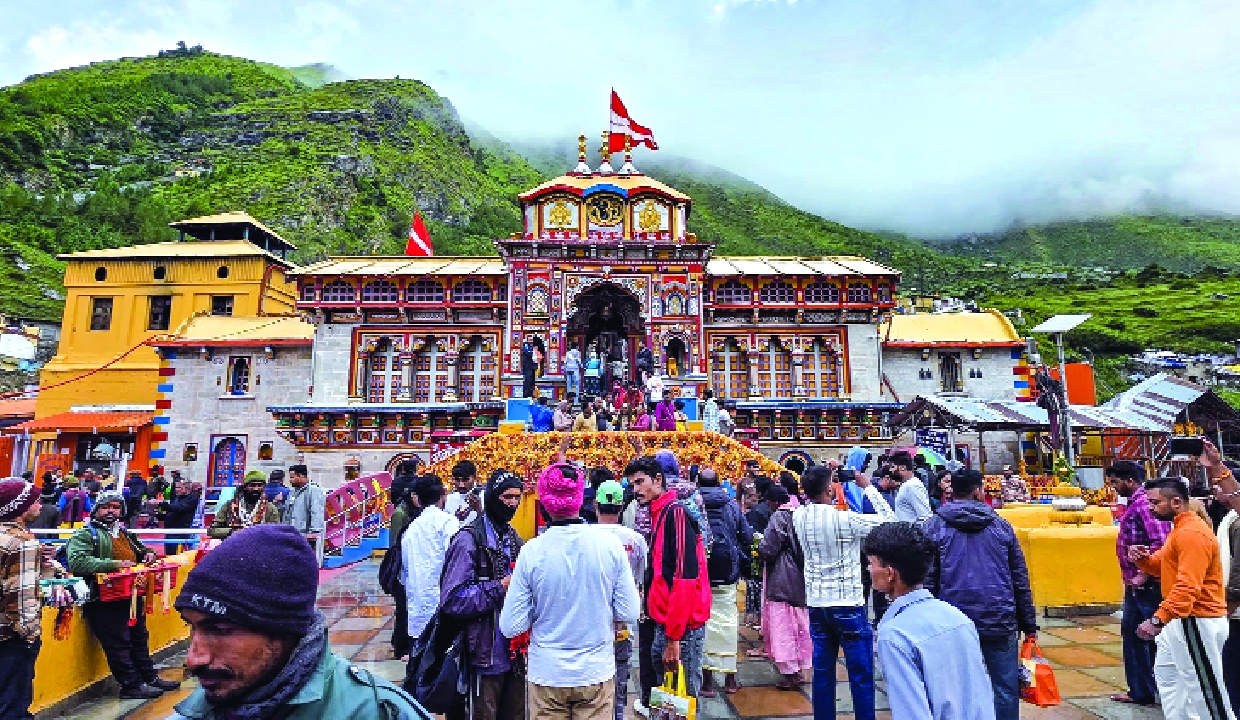
Badrinath Dham attracts hundreds of thousands of pilgrims each year. The offerings here are more than just donations; they are acts of deep faith. When cash, gold, and sacred shaligram stones reportedly go missing from the counting room, it deeply erodes devotees’ trust. This case has already led other temples in Uttarakhand to review their own procedures and take additional measures.
As several agencies investigate and the Uttarakhand High Court prepares to hear the accused’s petition, one big question remains: How could such problems occur in a high-security religious institution, and what new safeguards will be introduced? The answers could change how India’s major temples manage the large amounts of money and sacred offerings by devotees.