Assam: Indigenous Activist Pranab Doley held under NSA a day after securing bail in Kaziranga case
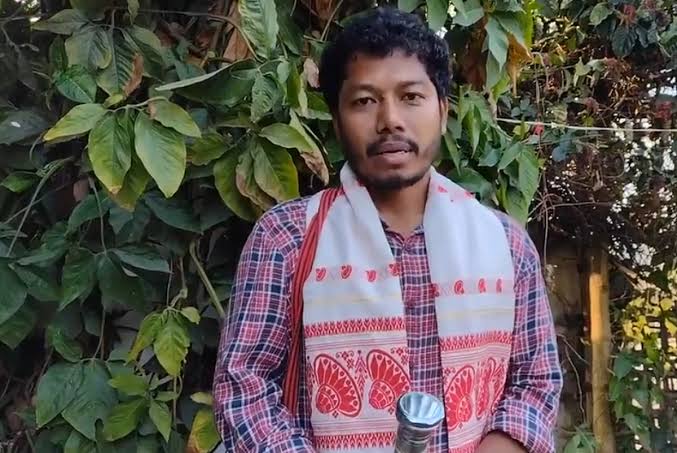
Indigenous rights activist Pranab Doley has been detained under the stringent National Security Act (NSA), a day after a court granted him bail in a case related to protests against a proposed five-star hotel near Assam's Kaziranga National Park, according to an official order.
Doley, who was arrested in Guwahati on July 13 and lodged in Golaghat district jail, secured bail from a sessions court on Wednesday in connection with a June 28 protest against the hotel project.
However, the state government invoked the NSA against him on Thursday, ensuring his continued detention in the same jail.
The order issued by the Political (A) Department said the government was satisfied that Doley's activities were "prejudicial to the maintenance of public order as well as security of the state" and that there was a "real and imminent possibility" of him continuing such activities if released.
Invoking Section 3(2) of the National Security Act, 1980, the government ordered his preventive detention in Golaghat District Jail.
The NSA empowers the government to detain individuals to prevent them from acting in a manner "prejudicial to the defence of India". The detention period under the NSA ranges from three to 12 months.
Because it is preventive detention and not arrest, there is no legal obligation to present the detainee before a court of law.
Doley has been spearheading protests against the proposed five-star hotel near the UNESCO World Heritage Site Kaziranga National Park, alleging that the project threatens the area's fragile ecology.
A peasants' rights activist, he had also unsuccessfully contested the April assembly election from Bokakhat against AGP president Atul Bora, who is a minister in the state cabinet.
According to the bail order, the police case alleged that Doley and around 50 others had assembled at Rongajan Field on June 28 to protest the project at Ingleng Pathar, and that they were armed with "machetes and other weapons".
However, Additional Sessions Judge NM Abdullah Ahmed noted that no such weapons were recovered from Doley's possession.
The court also observed that he was not a flight risk as his passport had already been deposited with the police.
Granting bail subject to conditions, including cooperation with the investigation and not leaving the district without informing the investigating officer, the judge said the dispute appeared to stem from "a deep-rooted anxiety regarding environmental degradation and its impact on the socio-cultural fabric of the local Tea Tribes".
The court observed that when ecological conservation intersects with indigenous rights, the "standard apparatus of criminal law cannot be used to suppress local anxieties".
"True public order is achieved not by silencing the affected, but by listening to them. Disputes of this nature require participatory environmental governance," the judge said.
The court expressed hope that the underlying issues would be resolved through structured dialogue involving all stakeholders rather than confrontation.
It further observed that in cases involving marginalised communities such as the Tea Tribes, structural inequalities often prevent them from negotiating on equal terms with corporate or state entities, and said involving social activists and community leaders in the dialogue process would help ensure a fair and sustainable resolution.