Artificial Intelligence in corporate communication: Transformational tool or existential threat?
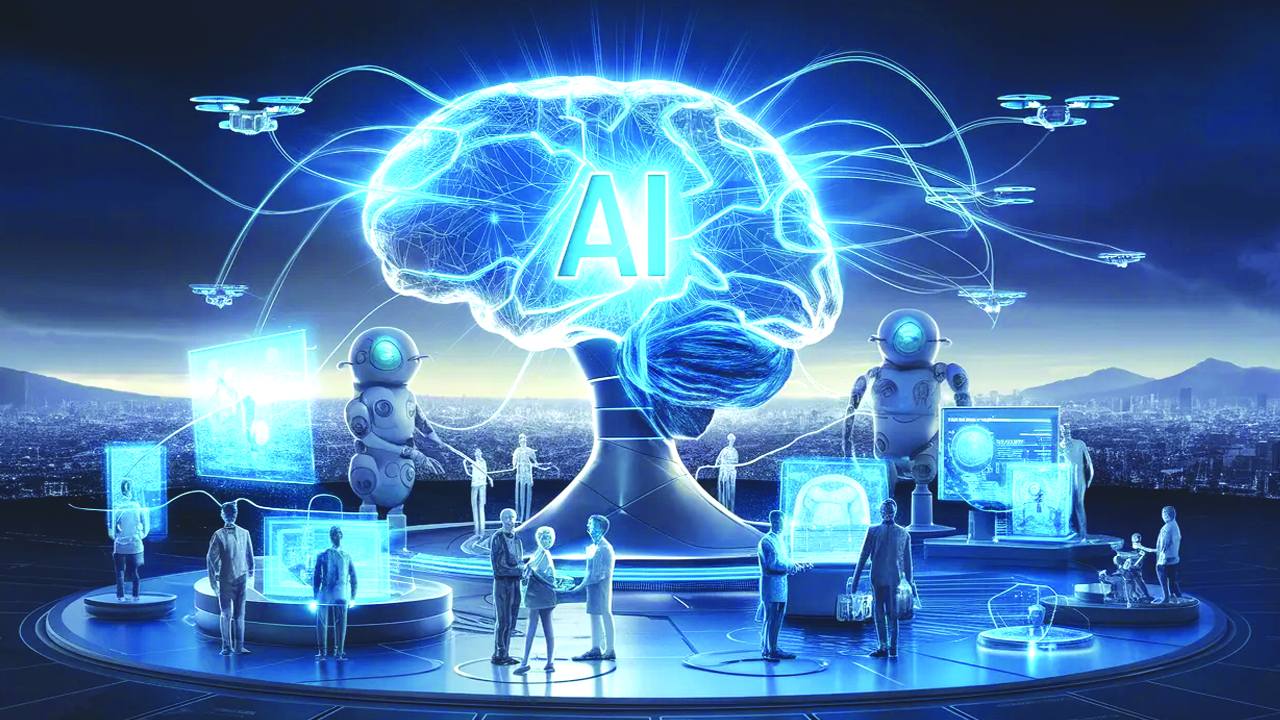
When was the last time you used Artificial Intelligence (AI) for a routine task? If you are not sure, think of the autocomplete search suggestions that Google displayed on your desktop,the Maps app you used on your drive or the song that you asked Alexa to play.
Whether we like it or not, AI has already become a part of our daily lives. So, can our professional lives be left untouched?The above examples of AI have been around for some time and belong to the first wave of the AI revolution — ‘Predictive AI’.What has really shaken up professionals is the breakneck speed of development of the second wave of AI — ‘Generative AI’ or GenAI in short.
GenAI refers to deep-learning models that can generate high-quality content such as text, images andvideos, based on the data they were trained on.The release of ChatGPT, the most famous of the GenAI models, in November 2022 truly made us aware of the capabilities of AI. Since then, barely a month passes without news of a more advanced AI model — Gemini, Copilot, Grok, DeepSeek, Claude.
For the Corporate Communication (CC) professional, this poses a clear and present challenge, because GenAIseems to be able to do a lot of her tasks — only much, much faster. Does this mean that AI will be able to replace the CC professional? Or will it be an aid to bolsterher talents?
There are no clear black and white answers to these questions.The advent of the telephone, personal computers and applications such as Microsoft Excelhad also raised the possibility of major job displacement, but ended up as enablers, generating new opportunities of employment. Will AI go the same way? For now, yes. Used in the right way, AI can be a huge enabler, as CC professionals across the world are discovering.
According to the State of PR Technology 2023report published by Prowly, a SaaS platform for Public Relations (PR), 67.8 per cent of the professionals surveyed are utilising AI in their work in some form or the other. Obviously, AI does have its perks when it comes to corporate communications.
So, what are the main uses of AI by CC professionals? Content creation and strategy development
The foremost application of AI in CC, obviously, is content creation. AI’s capacity to analyze extensive data and create relevant, contextually fitting contentcan greatly cut down on the time and resources typically needed for content development. Textual content such as article draftsand social media posts, images, infographics and even animation can be generated in seconds using the right inputs and prompts.This allows communicators to prioritise strategy development over the technical details of content creation.Even for strategy formulation, AI can suggest concepts and ideas which can be built upon by the human.
Personalisation
AI tools can be employed to customise content to fit individual preferences, enhancing personalisation in communication. This level of customisation, which used to require significant resources earlier,is now more achievable due to AI’s analytical and generative capabilities.
Speech-to-Text and Translation
AI can quickly and accurately transcribe audio and video interviews which makes it easier to find keywords and relevant information. Translation involving a number of Indian and international languages has also become very easy with AI tools such as Google Translate.
Identifying Influencers
AI-driven tools are now available to assist in finding key influencers within a particular industry. By utilising data management and analysis, CC professionals can customise their outreach and create more effective campaigns. This approach enables them to precisely target their communications, connect with influential figures, and enhance the overall impact of their messaging.
Contact suggestions
The days of manually compiling traditional media lists through categories and keyword searches may soon be replaced by AI tools which help identify journalists who cover topics related to a particular business, thus allowing the CC professional to select the media outlets most likely to cover her news pitch. With the help of AI, the CC professional can spend less time drawing up lists and more time building valuable relationships.
Social media automation With the number of social media platforms proliferating, developing user-relevant content and keeping track of their comments can be very time consuming. AI tools can automate the creation and posting of content and even replyto comments.
Media monitoring
As media channels, particularly online, proliferate, AI can sift through terrabytes of data in a fraction of the time needed by humans to come up with accurate media monitoring reports, highlighting the most important stories for the CC professional. Post-campaign analysis and identifying potential trends become much easier with AI.
Sentiment analysis
Going beyond traditional media monitoring, AI can identify how people think about a brand, company or institution, having the skill to understand words in different contexts, recognise subtleties, and consider various viewpoints. AI’s ability for continuous brand sentiment analysis can be an excellent aide for reputation management, as the CC professional can manoeuvre to emphasize the positive aspects and handle the negative ones more effectively.
Crisis management
AI-powered tools can anticipate when negative sentiment might escalate into a crisis, especially in the social media domain, enabling the CC professional to plan strategies to mitigate these risks. If a crisis does occur, she will be prepared to respond promptly and prevent it from escalating further.
Understood — AI is very helpful. But what are its drawbacks?
Obviously, the possibility of AI replacing humans, especially in the arena of content creation, is a very real threat. But technically, does it have any drawbacks? Quite a few, actually.
Data security
The very nature of the way GenAI works can become a threat to data security. GenAI uses data available to it, or provided to it for a specific case, to create new content. However, it doesn’t forget this data after one use. Rather, it utilises this data for its learning and may generate future content containing the information, especially the free versions. What this means is that the data you put in for your purpose can end in someone else’s content. Alternately, copyrighted information of another entity can enter your content, thus creating legal hurdles. Therefore, it is essential to never provide confidential information to GenAI and to double check AI-generated content for potential copyright issues.
AI hallucinations
There have been quite a few instances of GenAI answering questions with false or inaccurate information. One of the most famous faux pas was during Google’s introduction of its platform Bard, in which the AI tool wrongly claimed that the James Webb Space Telescope took the first picture of an exoplanet. This mistake was easy to identity, as the telescope was launched in 2021 while the first picture of an exoplanet was taken in 2004. However, this may not always be the case and the CC professional must be on her toes to prevent misinformation spreading.
Chances of bias
Machine learning develops artificial intelligence by studying human behaviour, or rather raw data that captures human behaviour. However, this approach can introduce biases that need to be carefully managed as they can lead to unintentional PR crisis. After all, AI is only as good as the inputs it gets. The CC professional must remain alert for bias in AI-generated content, both written and visual.
Conclusion
The advantages of AI, however, clearly outweigh its drawbacks for CC professionals, as the State of PR Technology 2023 report brought out. As much as
61.4 per cent of early adopters reported increased efficiency and productivity across the boardby using AI tools.
For now, the use of AI in Corporate Communications will only increase. An unintentional side-effect of this could be that new entrants into the professional may not get enough ground-level experience, as AI will do most of the repetitive tasks like sending emails, compiling contact lists or media monitoring. These jobs may be monotonous but give freshers the opportunity to learn the ropes and build personal rapport with journalists and clients, which can be very helpful in their later careers.
But the real challenge to the CC professional will come from the third and fourth waves of AI — Autonomous Agents and Artificial General Intelligence (AGI).Autonomous agents are AI-powered programs which, when given an objective, can create tasks for
themselves, prioritise their tasks and complete them so that their objectives are achieved.
AGI refers to a theoretical AI system that possesses the ability to understand or learn any intellectual task that a human being can. In short,it is AI with perception — a quality thatstilldifferentiatesman from machine.
Can the CC professional, indeed all professionals, overcome that challenge? Only time will tell. For now, to maintain their relevance, they need to continuously evolve by staying informed of the latest trends and innovations in the industry, develop new skills (including how to accurately use AI) and re-learn old ones. Most of all, the CC professionalneeds to remember that she has two skills which the machine may not be able to develop soon — intuition and the personal touch — which are a key feature of the CC function. Machines are still way behind in understanding human emotions and idiosyncrasies. It is crucial for Corporate Communicationprofessionals to leverage this advantage to stay ahead of the game.
Author is a Chief Manager (Corporate Communication), GAIL (India) Limited; views are personal