Anil’s telco dues, Mukesh’s cues
As the legal pressures mount, scathing comments emerge from the Supreme Court, government sets up a special team to investigate the criminal cases, and there is an official assurance that “no stone shall be left unturned to unearth the truth" within four weeks, the beleaguered Anil Ambani of the ADAG Group has capitulated. According to a media report, his lawyers told the Supreme Court that he was ready to settle the banks’ dues of Reliance Communications (RCom) in a “staggered” fashion. The loans relate to INR 40,000 crore (some say INR 73,000 crore), many of which were declared fraudulent by the banks. Petitions nudged the Supreme Court to put pressure on the investigating agencies.
While claiming that he was not an absconder, and was unlikely to run away from the country, and he had helped the investigating agencies, Anil passed on a message that he was willing to talk to the lenders as a first step towards payments over a specific ‘undecided’ period. The involvement of the apex court was essential because the banks had refused to engage because of an ongoing probe. The Chief Justice stated that there was no bar on such talks, but the government rejected the proposal. The latter argued that payments cannot be the only solution in a criminal case. In this instance, the loans were fraudulent.
The fact remains that the RCom case involves several crucial issues, which were discussed, debated, and partly-accepted by the Supreme Court. The latter stated recently, “It is pointed out that investigations / enquiries into eight cases have commenced, and some documents have been seized. It is not necessary for us to refer to the nature of documents…. There is a reference to Project Help, which is said to have revealed how insolvency petitions (under the bankruptcy laws) were deliberately initiated through unrelated lenders. According to the report, all funding by IBC acquisitions were arranged through a group of eight NBFCs (non-banking finance companies). On an illustrative basis, it is pointed out that claims approximating INR 2,983 crore were extinguished for a total settlement of INR 26 crore.”
In effect, there was a collusion between the bankrupt firm, possibly RCom, and parties which initiated the bankruptcy proceedings. Under the insolvency law, any party that can prove a default in payment can initiate an action. The next part of the collusion took place between the new owner, who purchased the firm or its assets, and the NBFCs that funded the acquisition. In the process, there was a third collusion between the bankers, lenders, and creditors, who settled their outstanding claims for less than a hundredth, or one per cent of the amount. In the past such huge haircuts, or acceptance of low amounts compared to the loans, of more than 90 per cent were observed in several cases. But this is unbelievable, a haircut of 99.1 per cent.
What is more important is that during the previous hearings on the RCom issue in the Supreme Court, the petitioners had insisted that the firm was sold under the insolvency laws to Anil Ambani’s elder brother, Mukesh, for a song, or a payment of one per cent of the dues. In this context, the Chief Justice observed that the court had witnessed similar cases, where family members, relatives, and fiends legally took over the defaulting firms for peanuts. As a media report stated, the Chief Justice felt that the “IBC (insolvency law, Insolvency and Bankruptcy Code) was being misused like anything by undervaluing the company’s assets, and selling them off to proxy (possibly friendly) parties.”
Of course, such multi-layered, multi-level, and multi-agency collusions raises the possibilities of support from public servants, especially the bankers of state-owned creditors and lenders. As the Supreme Court observed in the RCom case, “This is a case where senior functionaries of the investigating agencies must join hands, and make vigorous attempts to unearth the irregularities / illegalities or the connivance of public functionaries, especially the financial institutions, if any, in giving undue benefit…. While we do not express any opinion on the merits of the allegations… it is imperative… to complete the investigation in a most dispassionate, fair, transparent, and independent manner, and take… (it) to a logical conclusion….”
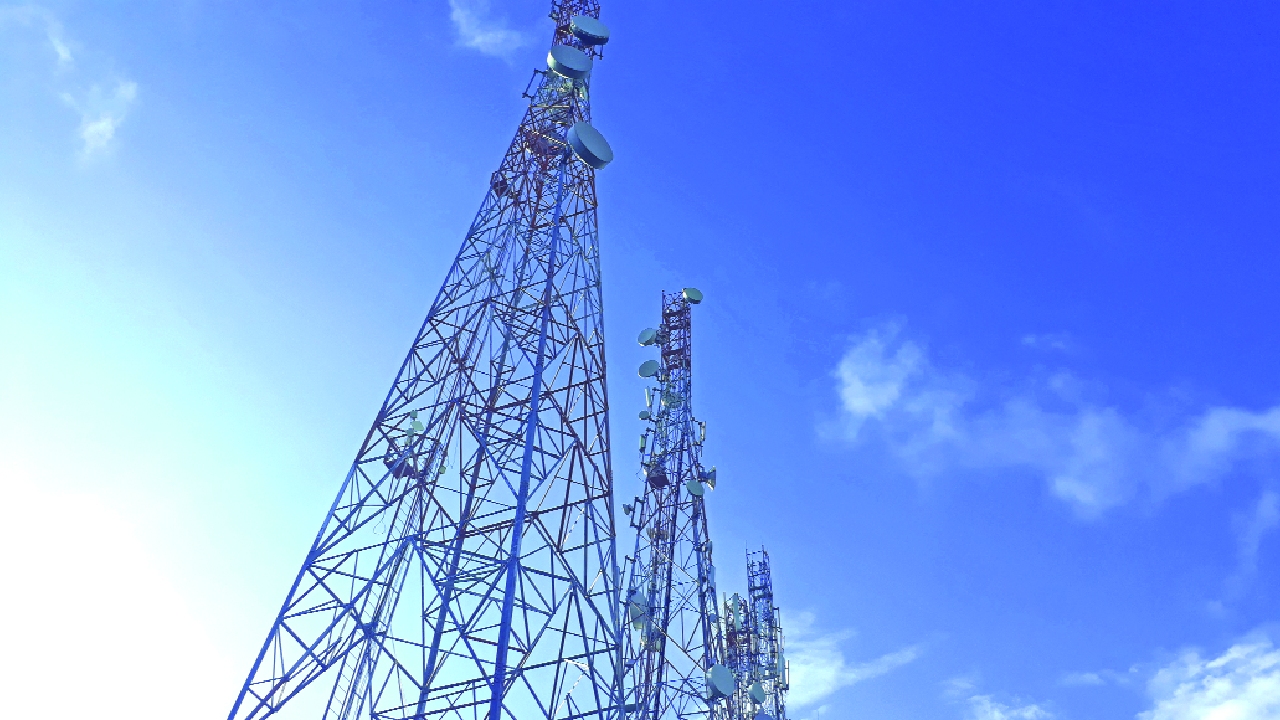
However, the curious case of insolvency of RCom is not as straightforward as it looks, despite the various twists and turns that involve the original owner, new management, creditors, public servants, investigating agencies, and NBFCs. In 2022, Mukesh Ambani acquired the assets of RCom, which included the towers, and optic fibre, but not the company. Later, a subsidiary of RCom, Reliance Communications Infrastructure, got an oral approval from an insolvent court to be purchased by Mukesh Ambani. But the firm, RCom, whose revival plan by an asset reconstruction company was approved, remains in a limbo. As of now, it is still under the insolvency process.
In the process, Mukesh Ambani has access to most of the assets of the RCom, and it was (before the bankruptcy), and is using them. But the current case before the Supreme Court, where the name of the elder brother was dragged, may change the dynamics. Although, one does not know if the courts will reverse the insolvency revival plans once the payments were made to the lenders, and the assets merged with Mukesh’s firms. In addition, the asset reconstruction firm’s bid to acquire the spectrum of RCom is being legally debated in a fresh manner because of a ruling by the apex court that spectrum does not belong to a firm, but is a public asset or resource that can be used for public good.
At the same time, having bagged the telecom assets that belonged to the younger brother, and which the elder sibling lost during the family split in 2005, Mukesh is on the way to bigger conquests. According to media reports, one of his flagships, Reliance Jio, started the process towards the country’s largest IPO (Initial Public Offering). Last year, Mukesh promised it in the first half of 2026. But the Supreme Court, if it acts against both the Ambani brothers, may create hiccups. Hence, the telco tales of the two brothers are intertwined and entangled despite the two-decade-old separation. Their telecom destinies converge again, as they did when they were together, and diverged when they fought over the Reliance Group. Mukesh waited for years before he started his telco journey with Jio, which led to takeover of RCom assets.
Leave a Comment
Comments (1)
Look of PSU banks by Ambani brothers with active connivance by Prime Minister