AI plane ingests baggage container in fog
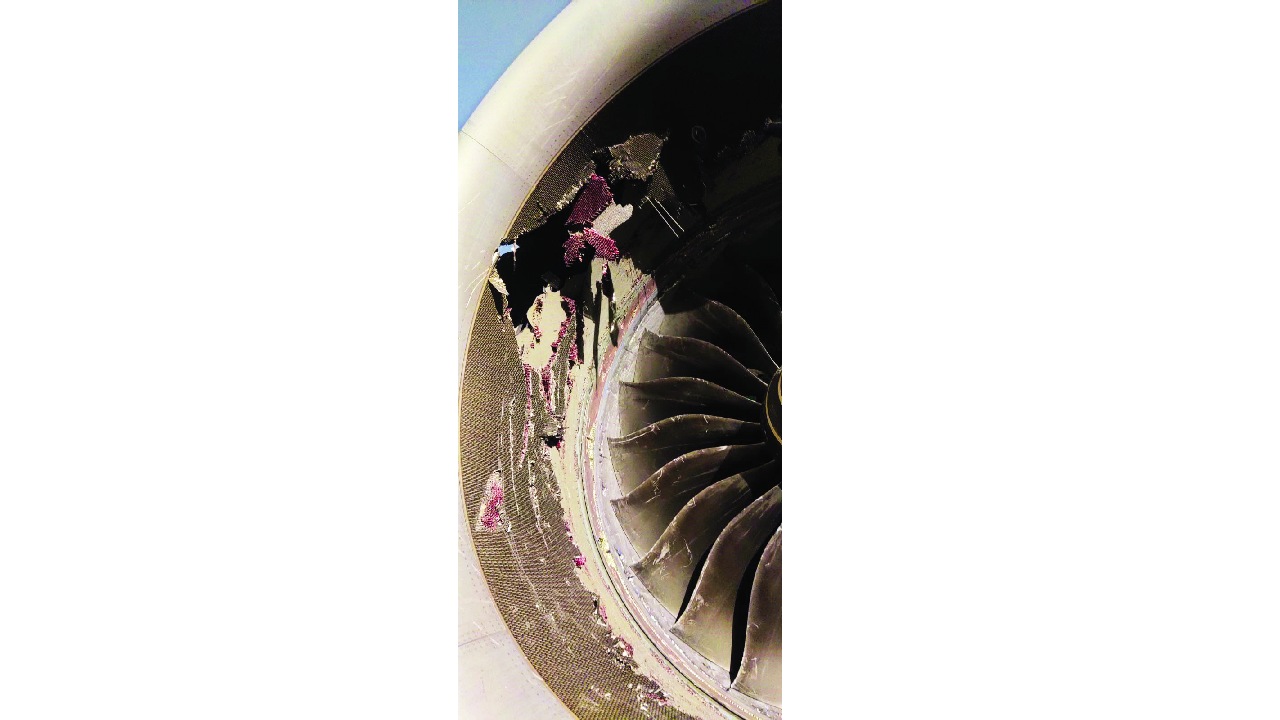
In a rare incident of its kind, Air India’s newest Airbus A350, operating a Delhi-New York flight with over 250 passengers on board, sustained engine damage after ingesting an improperly secured baggage container while taxiing to its parking bay at Indira Gandhi International (IGI) Airport amid dense fog on Thursday morning.
The aircraft had to return to Delhi after takeoff due to the sudden closure of Iranian airspace. Then, while taxiing to the parking bay at IGI Airport, an improperly secured container was sucked into one of its engines. No one was injured in the incident. Flight-tracking data showed that the aircraft (registration VT-JRB) departed Delhi at 2:36 a.M. And was cruising over Ahmedabad airspace when the closure of airspace came into effect, blocking its planned overflight of Iran - a key corridor for westbound transatlantic flights. With no viable alternate routing available at that stage, the crew took the precautionary decision to turn back to Delhi.
The incident highlights ongoing concerns about airside safety at some Indian airports, where vehicles or unattended baggage containers have previously collided with aircraft. The airline stated that the aircraft has been grounded for a thorough investigation, and there may be potential disruptions on select routes operated by the A350 aircraft. The Directorate General of Civil Aviation (DGCA) has launched a probe into the incident to ascertain how a foreign object got lodged inside the engine.
“Air India confirms that Flight AI101, operating from Delhi to New York (JFK), was forced to return to Delhi shortly after takeoff due to the unexpected closure of Iranian airspace, which impacted its planned route. Upon landing in Delhi, the aircraft encountered a foreign object while taxiing in dense fog, resulting in damage to the right engine,” the airline said in a statement. It, however, did not identify the “foreign object”. Sources said the foreign object was an improperly secured baggage container. “The aircraft was safely positioned at the designated parking stand, ensuring the safety of all passengers and crew on board,” the airline said in a statement
A civil aviation ministry spokesperson said that Air India A350 aircraft VT-JRB while operating flight AI101 (Delhi-New York, JFK) was involved in Air turn back due to Iranian Airspace closure. Aircraft landed safely at Runway 28, Delhi. During taxy to apron, at taxiway N/N4 junction No.2 engine ingested a cargo container causing substantial damage to No.2 engine. The incident occurred around 05:25 IST”.
Engine ingestion refers to an incident in which a jet engine draws in a foreign object — such as baggage containers, tools, debris or birds - instead of clean air. Unverified videos and pictures showed damage to the aircraft’s right-side engine. The aircraft has been grounded for repairs, adding to Air India’s widebody aircraft shortage, with one of its six A350s currently out of service.
Providing more details based on the preliminary probe, a DGCA official said the area near bay 242 was designated for Air Mauritius GSE parking. When the BWFS (Bird Worldwide Flight Services) tug was transporting a few containers to this area, one of the wheels of the container dolly came off, and a container toppled onto the taxiway. The equipment operator noticed Air India aircraft taxiing in, and the equipment operator vacated the spot with the remaining dollies and containers. However, the container which fell was left behind, and it got ingested in the aircraft engine, the official said.
The video/images available on social media, allegedly shows the plane on the runway and the people working on it. Also, the visible marks near the engine area point out the place where the impact occurred when the container hit the plane. The whole episode has again thrown light on the necessity for rigorous ground-handling standards to be observed at all times, particularly in situations with very poor visibility like heavy fog. The authorities concerned are likely to go through the safety measures to ensure that no such things happen again.
Back in December 2015, an Air India technician was sucked into an aircraft engine at the Mumbai airport. Jet engines operate with immense suction, especially at low speeds during taxiing or take-off. Any object entering the engine can damage or bend fan blades or cause hidden structural stress to internal components. The engine often has to be shut down and inspected or replaced.