AI brings continuous medical supervision to patients at home
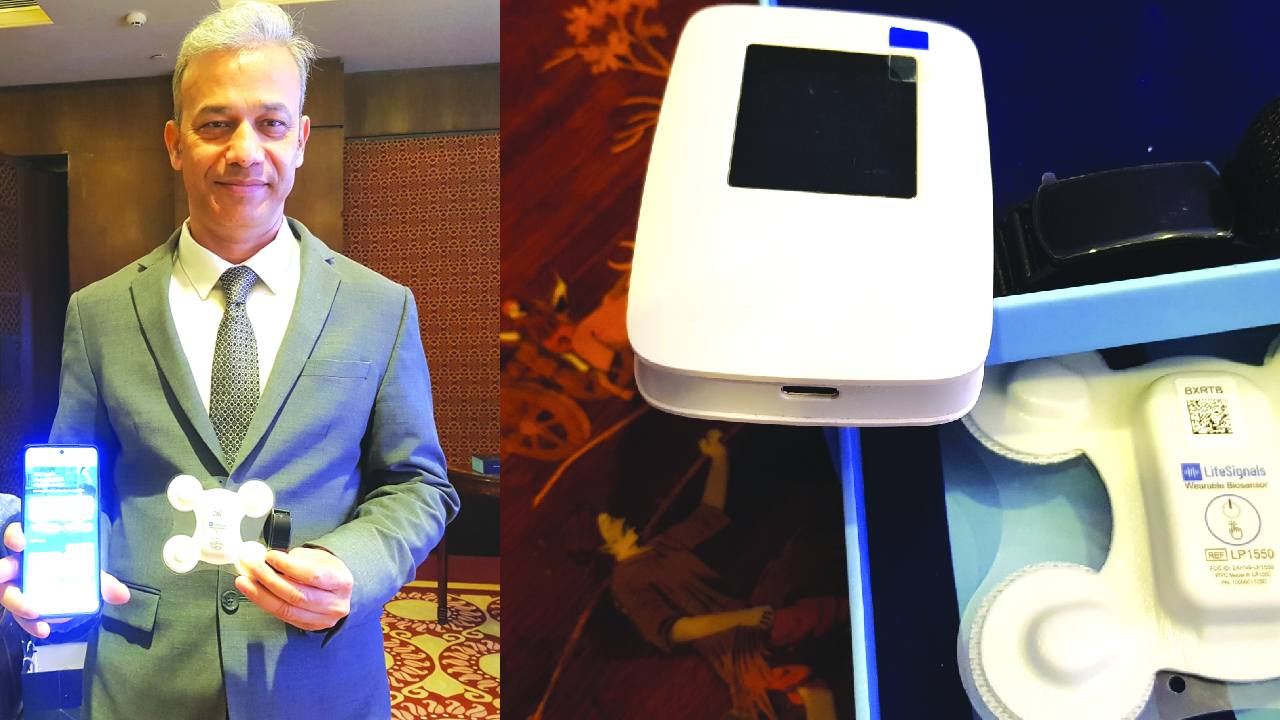
India has launched the world’s first doctor-led, AI-driven continuous healthcare ecosystem, enabling monitoring of patients while they remain in the comfort of their homes. Developed by iLive Connect, the system functions much like a medical surveillance network that constantly tracks vital health parameters and alerts doctors to early signs of illness. At the first indication of a potentially harmful physiological change, doctors stationed at a central medical command centre notify the patient and their family within two minutes, along with clear guidance on immediate action.
Founder of iLive Connect, cardiothoracic surgeon Dr Rahul Chandola said the technology enables predictive monitoring that allows early detection of illnesses and timely intervention, thereby significantly reducing the need for admission to any hospital. The FDA- and CE-approved device consists of a chest-worn biosensor patch that is linked to a wearable wristband which continuously captures data such as two-lead ECG, heart rate, respiratory rate, oxygen saturation (SpO2), body temperature, blood pressure trends, physical activity and heart rate variability. This data is transmitted wirelessly to a secure cloud-based platform and analysed in real time by doctors at the command centre. Senior interventional cardiologist and iLive Connect co-founder Dr Viveka Kumar described the system as the world’s first doctor-led AI healthcare ecosystem that effectively brings an ICU-like facility into a patient’s home. He said medical decisions are based on the continuous flow of data, allowing doctors to identify subtle changes such as prolonged sleep deprivation or early cardiac instability long before clinical symptoms appear which would help in preventing medical emergencies and repeated hospital admissions.
According to available data, a 10-week observational study involving 410 patients using iLive Connect recorded a 76 per cent reduction in repeated hospital admissions, with early detection of complications related to cardiac conditions, blood pressure instability, metabolic disorders and post-discharge risks. The system has proven particularly effective for senior citizens, patients with chronic illnesses and those recently discharged from hospitals, a period that is considered critical once hospital care ends and home recovery begins.