AI and the transformation of India’s education system
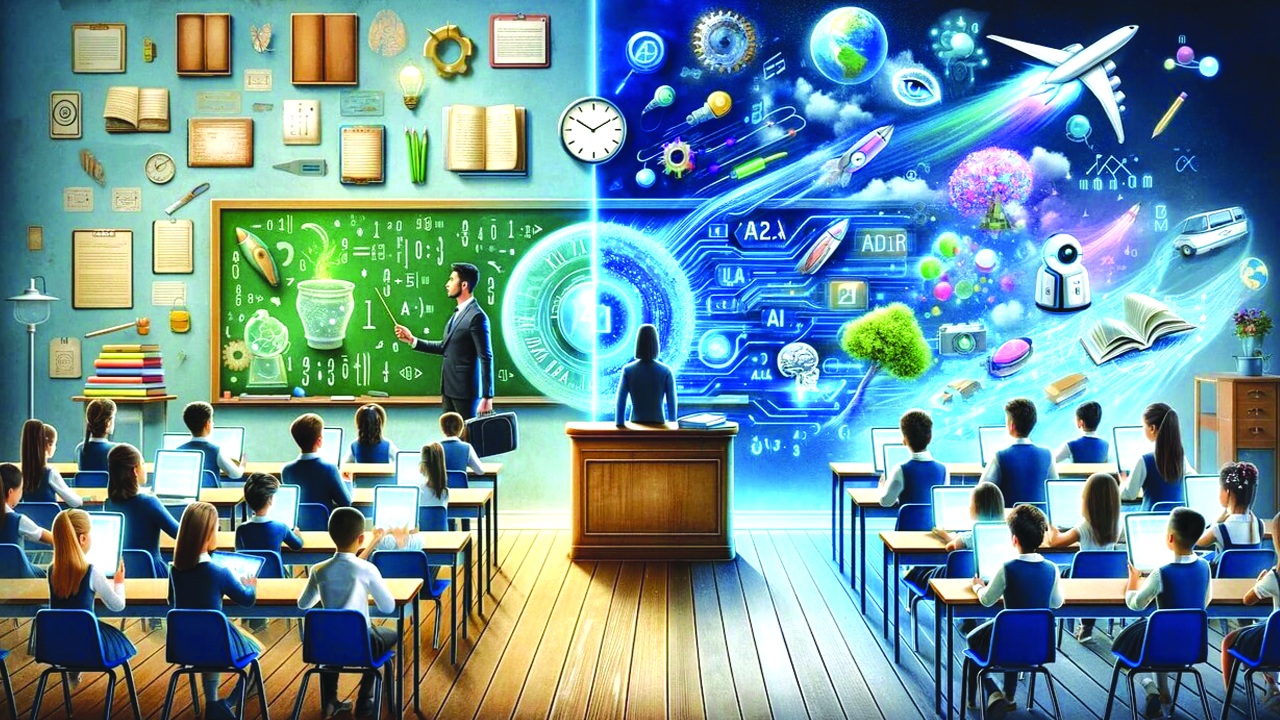
India has recently concluded a major international convention on Artificial Intelligence, underscoring the nation’s growing ambition to emerge as a global hub of advanced technology and innovation.
This landmark event should prompt a deeper national introspection: how can AI be systematically harnessed to upgrade the quality, reach, and relevance of education across the country? Education, after all, is the foundation upon which economic growth, social equity, and national progress firmly rest.
Artificial Intelligence offers far more than a technological upgrade; it provides an opportunity for a structural transformation of the educational ecosystem. Traditional education systems, constrained by uniform syllabi and standardised teaching methods, often fail to address individual learning differences. AI, by contrast, enables a shift towards personalised, adaptive, and learner-centric education, which is indispensable in a diverse country like India.
Personalised and adaptive learning
One of the most significant contributions of AI lies in its ability to tailor learning experiences to individual students. AI-powered platforms can analyse a student’s learning speed, comprehension levels, strengths, and weaknesses, and adjust content accordingly. This ensures that no student is left behind due to rigid instructional methods, while simultaneously allowing gifted students to advance beyond prescribed limits. Such adaptability can drastically reduce dropout rates and improve learning outcomes nationwide.
Enhancing teaching effectiveness
AI should be viewed as an enabler for teachers, not a replacement. By automating routine and time-consuming tasks-such as grading, attendance tracking, and basic assessments-AI allows teachers to focus on higher-value roles: mentoring, critical thinking development, ethical guidance, and creativity.
Moreover, data-driven insights generated by AI can help teachers identify learning gaps early and design targeted interventions.
Bridging regional and social inequalities
India’s education system is marked by stark disparities between urban and rural institutions, and between privileged and marginalised communities. AI-driven digital education platforms can help bridge these gaps by delivering high-quality content in multiple Indian languages, providing remote access to expert instruction, and ensuring uniform academic standards. When integrated with public education initiatives, AI can become a powerful tool for educational equity and national integration.
Curriculum reform and skill orientation
Beyond pedagogy, AI must be embedded into the curriculum itself. Students should not only learn with AI but also learn about AI. Digital literacy, data reasoning, ethical use of technology, and interdisciplinary problem-solving must become integral components of education from the secondary level onwards. Such exposure will prepare students for future employment landscapes shaped by automation and intelligent systems.
Phased implementation across educational levels
A pertinent question arises: can AI-based reforms be introduced simultaneously across all levels of education? The answer lies in phased and context-sensitive implementation.
- At the primary level, AI can support foundational literacy, numeracy, and inclusive learning.
- At the secondary level, AI can assist subject mastery, personalised assessments, and career guidance.
- At the higher education level, AI must drive advanced research, innovation, and global competitiveness.
Leadership role of premier institutions
India’s premier institutions, particularly the Indian Institutes of Technology, have a vital national role to play. Their academic and research expertise can guide curriculum redesign, teacher training, and the development of indigenous AI solutions suited to Indian conditions. By mentoring universities and colleges across the country, these institutions can help elevate higher education to international standards while safeguarding national priorities.
Conclusion
Artificial Intelligence, if adopted with foresight and responsibility, can bring about a sea change in India’s educational system. The challenge before policymakers, educators, and institutions is to ensure that this transformation is inclusive, ethical, and sustainable. With a clear national vision, robust institutional support, and sustained investment in human capacity, AI can empower Indian students to become not merely participants but leaders in the global knowledge economy. The time to embed these transformative changes into our educational curriculum is not in the distant future-it is now.
Writer is a former Member of Parliament and Retd. Professor ; views are personal
Leave a Comment
Comments (1)
Prof. Hay, a former Member of Parliament and a retired professor, has always been passionate about teaching and guiding students. He was a classmate of my father, and they worked together as professors for nearly 32 years. My father often says that Prof. Hay lives and breathes education — his dedication to teaching and student counselling goes far beyond professional duty; it is his life’s mission. Even in today’s rapidly evolving AI-driven world, he remains deeply concerned about how technology can be used responsibly to strengthen the education system and benefit society. Through this article, he emphasizes that Artificial Intelligence should not replace teachers but should empower them, improve learning outcomes, and make education more inclusive and future-ready. His vision is clear: to ensure that India provides high-quality, equitable education to every student and prepares the nation to lead in the global knowledge economy.