After ‘Mother,’ Uncle-of-all deals

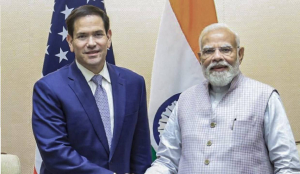
A president and prime minister announced an ‘Uncle-of-all-deals,’ after New Delhi bagged a ‘Mother-of-all-deals.’ There are no doubts that the two trade pacts, with America and European Union (EU), apart from the one with the UK, may redefine India’s exports, manufacturing, and economy. However, there are a few grey areas in the India-US deal, although the details are not out yet, and one needs to wait for clarity. Modi supporters are ecstatic, and the stock market gave a huge thumbs up, as the Sensex, after shedding more than 1,800 points on the budget day, zoomed by more than 2,000 points yesterday. But the critics were as vociferous and loud, both in India and the US.
First, there is the question of optics. In his post on Truth Social, US President Donald Trump, categorically said that he agreed to the deal, “as per his (Prime Minister Narendra Modi) request.” In essence, the offer came from the Indian side, and obviously implies that the give-and-take was in favour of America. The phrase possibly hints at India’s desperation, although after the India-EU deal, there was talk that it would push and pressure America to come to the table. Since the India-US agreement was announced days after India-EU one, one is not sure who capitulated, and blinked first. A Coke-Pepsi-like diplomatic battle.
Second, there is the question of tariffs. Yes, India has gained as the effective duty on its exports come down favourably from 50 per cent to 18 per cent. In return, as Trump said, and other officials and senators reiterated, the tariffs on American imports will be zero. As the CPM party stated, the deal seems “imbalanced,” and “unequal,” and puts India in a “subordinate position, circumscribing its sovereignty.” In addition, the US president indicated that even non-tariff barriers against the US exports are out, which means no subsidies, and other measures to protect against the onslaught of American goods.
Third, there is the question of farm imports from the US. Like in the case of other deals, including the EU one, Indian officials claim that the local farm and dairy sectors will not be impacted. However, this may be partially true about the India-US deal, as was the case with the India-EU, and India-Australia ones. In the latter two, certain farm and dairy sections will be impacted. The same may be true in the US case. The US agriculture secretary, Brooke Rollins, tweeted, “New US-India deal will export more American farm products to India’s massive market, lifting (local) prices, and pumping cash into rural America.”
According to media reports, a few Indian officials accepted that certain segments of the farm sector will be open to American exports. One of them may be maize or corn, which may be allowed only for the domestic production of ethanol, which is required to blend with fuel, and reduce India’s dependence on fossil fuel. However, New Delhi is bound to showcase this as a case of industrial imports, which will not affect the local farmers, and ensure national food security. Recently, India experimented with cotton imports to help the textile sector, and assuaged the feelings of the agitated farmers with similar logic.
Fourth, there is a lack of clarity on the term, ‘Made-in-India’ products. Modi’s tweet hinted that the lower American tariff of 18 per cent, rather than 50 per cent, was on ‘Made-in-India’ goods. One is not sure if this was a part of political rhetoric to emphasise how Indian-made products will benefit, and bolster the overall themes of Atma-Nirbhar Bharat, and Viksit Bharat. Possibly, the final deal will flesh out what the term means, either in terms of production or value-addition. The exports of medicines, which depend on Chinese imports of intermediates, may qualify. But what about iPhones that are largely assembled in India?
Fifth, the deal envisages that India will stop crude oil imports from Russia, and buy more from the US and Venezuela, which is now an American protectorate. For the state-owned Indian refiners, this will imply a huge hit. The difference between the global and Russian prices were as high as $15 a barrel, came down to $1-2 a barrel, and went up again to $7. Thus, the refiner-importer gained $7 as an additional margin, or at least $4 after accounting for higher costs. Thus, Indian import bill may go up, and further skew the trade deficit.
Sixth, according to Trump’s estimates, American exports to India will increase by $500 billion. This is almost four times the current overall trade between the two nations, with the trade surplus in India’s favour by $40-45 billion. If India does buy such a huge quantity of American goods, the balance may trip towards the US. Exports from the EU, the UK, and Australia are likely to go up because of the respective deals. Thus, there is a fear, a palpable one, that imports may flood the Indian markets, akin to what has happened in the case of Chinese goods.
While the threat of imports can be countered by higher exports, as Indian goods face lower (even zero) duties, and the strength of domestic manufacturing, which may counter imports on pricing and quality, the process is likely to take a few years. The fact remains that the trade deals help India in a limited fashion, i.e., to maintain and increase exports in areas where it is already strong. The country’s ability to add to the exports is limited. In comparison, the deals open wider opportunities for the US, EU, and UK to expand their basket of exports, and sell both traditional, modern, and hi-tech goods in India.
In some cases, the trade deals may impact the ‘Make-in-India’ initiatives. For example, after the India-EU pact, the Indian farmers were perturbed about the cheaper imports of processed food. While this may not directly impact the farm sector, there is a huge indirect implication. Imports may affect the local food processing sector, which has strong linkages with farm communities. Some of the MNCs may curtail local production, and domestic procurement, if the imports of the finished goods are cheaper. Of course, the local makers of processed food will take a hit, unless they reduce the prices, or compromise with quality. Either way, there will be a loud or quiet churn over the next few years. This is true for other crops like grapes, as wine imports from the EU will be cheaper, and compete with the Indian wines.