A twisted tale of two Trumps
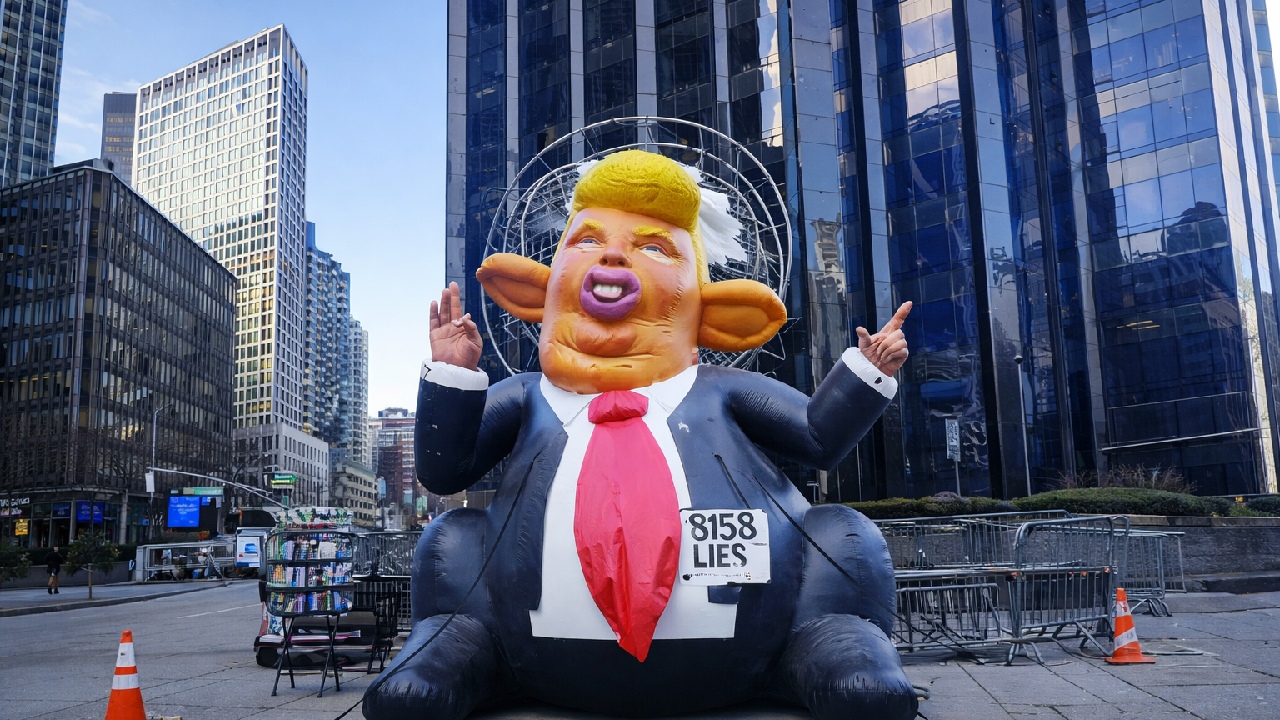
In the past decade or less, since Donald Trump first became the US president in 2017, academicians have tried to make sense of his policy world, and coined several terms to describe it. In 2018, one of them suggested the phrase, “illiberal hegemony,” and an analyst called it “reciprocity” in 2025. In between, “Trump has been called a realist, a nationalist, an old-fashioned mercantilist, an imperialist, and an isolationist,” writes Stephen Walt, a professor at Harvard Kennedy School, in a recent article in Foreign Affairs (March-April 2026). He coins a new term, predatory hegemony, to describe Trump’s antics.
Another article in the same issue, by Alexander Cooley, professor, Barnard College, and Daniel Nexon, professor, Georgetown University, call the president’s policy plays as “fundamentally kleptocratic.” In essence, both talk in a similar language, though nuances exist between the two. In the first version, the aim is to use “Washington’s privileged position to extract concessions, tribute, and display of deference from allies and adversaries… in what it sees as a purely zero-sum world.” In the second, the aim is to “increase his own wealth, bolster his status, and personally benefit a small circle of his family members, friends, and loyalists,” as foreign policy becomes subservient to private interests.
Hence, in both the caricatures, national interests are subsumed. Allies do not matter, and can bear the brunt of vicious attacks like those hurled on enemies, including China. Private matters more than public. In both cases, the zeros-sum mindset prevails, or the conviction that either Trump or the US (which is essentially the same) will win, and take it all, and leave nothing for the other sides. In India, it was once said that Indira is India, and India is Indira. In the US, Trump is America, and America is Trump (and his family and loyalists).
Under predatory hegemon, the non-coherent, random, confusing, and confounding policies indicate a transactional approach, and an overriding belief that the US has “enormous and enduring leverage over nearly every country.” This is evident from Trump’s statement that the US is a “big, beautiful department store, and everybody wants a piece of that store.” The White House press secretary, Karoline Leavitt once said that the American consumer is “what every country wants that we have,” or to put it another way, “they need our money.” The US is the all-encompassing gold mine, where every nation wants to dig.
Of course, any powerful nation experiments with predatory hegemon to extricate the best and most of the riches. But a benign one imposes unfair burden on allies when necessary, and believes in a positive-sum game to get the most benefits. A predatory one exploits friends and enemies equally. It existed in the Greek world, when Athens was a tyrant, Sino-centric system in the East, when China wanted complete respect, in the colonial worlds, and even as an outside expression of the Nazi regime in the last century. Trump is still different.
The current president’s worldview is evident from unilateral tariffs because he believes trade surpluses against America are a way to loot the nation. The duties are used for political and other reasons, like one on Brazil to force a pardon on a former president, and on Canada and Mexico to prevent fentanyl (narcotics) smuggling. With allies, he uses the threats of US disengagement, from NATO, Ukraine, and Taiwan, to “extract economic concessions.” Several nations buckled. As Thucydides said two thousand years ago, “the strong do what they can, and the weak suffer what they must.” Welcome to Trump’s wonderland.
“Like a Mafia boss or an imperial potentate, Trump expects foreign leaders… to engage in demeaning shows of deference, and grotesque forms of flattery…,” writes Walt. Leaders, who depart from this script, and Trump’s theatrical demands, find themselves on the wrong side, like Prime Minister Narendra Modi learnt the hard way. Sadly, according to Walt, predatory hegemon, despite the initial and immediate, even overwhelming, successes, “contains the seeds of its own destruction.” Apart from other factors, the truth is that the US is not the only game in town. In a multi-polar world, nations have other choices to make more allies, and form regional and global ties.
In a kleptocratic scenario, there is an erosion between private interests, and those of the American people. Even as family members, and supporters, including those who hold official positions, line their pockets, this seems to be the main business as the administration attempts to “subvert the independence of… the institutions that have long made US foreign policy….” Hence, the personal or sectional ideology embeds with kleptocracy, and makes it more likely that this form of governance will “ensure after he (Trump) leaves office.” Corruption, thus, no longer remains a means to an end. It is the end.
The collapse of institutions enables the cronies to have a free hand over foreign policy. Trump’s de-facto top diplomat, Steve Witkoff, with no experience, sometimes single-handedly negotiates with the UAE, Iran, Israel, Russia, and Ukraine. His son-in-law, Jared Kushner, and another father-in-law, Massad Boulos, handle world regions, and nations. With “nebulous titles and mandates that do not trigger the kind of financial disclosures typically demanded of senior officials,” these people run amok. For example, “it is difficult to know whether the December 2025 deal Boulos helped broker (between Washington and Kinshasa for preferential access of minerals) … created conflicts of interest for him, Trump, or other administrative insiders.”
Bundled with bilateral investment deals are those that benefit Trump, family, and friends. In the case of Qatar, which gifted a luxury jet to Trump that he intends to keep after he quits office, there are personal partnerships with a golf resort backed by UAE’s sovereign fund. In the UAE, there are mega projects like Trump’s son’s plan for 80-storey Trump Tower in Dubai. Witkoff shepherded a deal to lift restrictions on a firm linked to UAE’s national security adviser, as the latter purchased $2 billion of stablecoin, whose co-founders include Witkoff, his two sons, Trump, and his three sons. White House denies Witkoff’s role.
Even global conflict management spews profits. Witkoff and Kushner are involved in Ukraine talks, and possibly in opportunities “such as accessing $300 billion in frozen Russian central bank assets for joint US-Russia projects” across several sectors. Even if there is no personal interest, there is a “permissive environment for political allies to profit.” In January 2026, Ukraine awarded the mining rights of the coveted lithium deposits to a friend of Trump, Ronald Lauder, who wants the US to acquire Greenland. Kyiv wants to massage the American ego.