A nation that frees its women, frees its future: Justice Hima Kohli
We often speak of Lines of Control in geopolitical terms, visible demarcations between nations guarded by the army and shaped by history. But other invisible lines of control are far more intimate and intimidating. For women, they are drawn across their bodies, choices, ambitions and voices.
They are enforced not by barbed wire but by regressive belief systems, not by the Constitution but by primitive customs.
The story of empowerment of women in India is therefore not a story of confrontation but of gradual expansion — expansion of education, of opportunity and of confidence. India is a Republic that gave itself the promise of equality under the Constitution of India. Let us remind ourselves that the Preamble of the Indian Constitution opens with the words “We the people of India”. We have proclaimed under Article 14 that equality before the law would be the norm, not the exception. We have empowered the State under Article 15(3) to make special provisions for women. And yet, seventy-six years later, we must ask, have we truly broken the internal lines of control that keep half our population negotiating for basic freedoms? Historically, most laws were shaped in times when public life was largely dominated by men.
As a result, the laws often reflected the patterns, ideologies and experiences of that era, where the lived experiences of other genders were not adequately reflected. Women entered law not as authors but as subjects. The judiciary, in moments of courage, has recalibrated law to reflect constitutional morality rather than inherited patriarchy. In Vishakha v State of Rajasthan, the Supreme Court did not wait for the Parliament; it read international norms into domestic law to protect women from workplace harassment.
In Joseph Shine v Union of India, the Supreme Court struck down the offence of adultery as a patriarchal relic, premised on the archaic notion that a married woman was the property of her husband, a law entrenched in control disguised as protection.
In Vineeta Sharma v Rakesh Sharma & Ors, the Court affirmed that daughters are entitled to coparcenary rights by birth, clarifying that if a daughter was alive on the date of enforcement of the Hindu Succession (Amendment) Act, 2005, she would be recognised as a coparcener even if born prior to the amendment.
In XYZ & Ors v State of MP & Anr, the Supreme Court clarified that in cases relating to crimes against women, imposing bail conditions like tying of rakhi, presenting gifts to the survivor or her relations, tendering an apology or even proposing marriage are wholly unacceptable as it has the effect of diluting and eroding the sexual offence.
We have also seen the passage of progressive legislations that acknowledges and addresses structural inequalities. Statutes such as the Protection of Women from Domestic Violence Act, 2005; the Sexual Harassment of Women at Workplace (Prevention, Prohibition and Redressal) Act, 2013; amendments to the Maternity Benefit Act, 1961; and the Dowry Prohibition Act, 1961 recognise that violence and exclusion are not private matters but public wrongs.
These are not merely cases and legislations; they are reminders that the law, at its best, can be a site of resistance. Equally transformative has been the constitutional recognition of education as a fundamental right.
In Unni Krishnan v. State of Andhra Pradesh, the Supreme Court affirmed that the right to education flows from the right to life under Article 21, recognising that dignity, equality and freedom cannot be realised in its absence.
This judicial vision found constitutional expression in the insertion of Article 21A through the Eighty-Sixth Amendment, followed by the enactment of the Right of Children to Free and Compulsory Education Act, 2009, whose validity was upheld in Society for Unaided Private Schools of Rajasthan v Union of India. For females in particular, education has been the most powerful instrument of empowerment, enabling entry into professions, institutions and leadership spaces that were once structurally denied.
The classroom, therefore, becomes the first site where lines of control are not merely challenged but dismantled. These are signs of a society that is learning, adapting and improving. And the progress is visible.
The pandemic was a stress test for every institution. It destabilised economies, shut down running businesses and strained the financial resources of households.
Yet in the midst of uncertainty, something remarkable unfolded. Across urban and semi-urban India, women launched home-grown enterprises: food ventures, digital services, handicrafts, skincare brands, online tutoring platforms and wellness initiatives. Kitchen tables became workstations. Social media became marketplaces. Digital payments became tools of entry into formal commerce. Today, women are leading startups across India, nearly 76,000 women-led enterprises.
As per the Periodic Labour Force Survey monthly bulletin for January 2026, the female labour force participation rate stood at 35.1 per cent, maintaining the gradual rise recorded through 2025. At the same time, the share of women workers engaged in agriculture has increased from about 57 per cent in 2017–18 to nearly 64.4 per cent in 2023–24 and female agricultural employment overall has risen from 73.2 per cent to 76.9 per cent during this period, even as male participation in agriculture has declined.
These trends suggest that while overall workforce participation among women is increasing, a substantial proportion of this expansion continues to be concentrated in agriculture and allied activities.
The challenge before policy-makers is therefore not merely to increase women’s participation in the labour force but to facilitate a transition towards diversified, non-agricultural and formal employment that ensures both economic security and long-term empowerment. In the corporate world, over 11.6 lakh women serve as Directors in companies and occupy around 20 per cent of leadership roles. In politics, women hold about 14 per cent of the seats in the Lok Sabha and 17 per cent in the Rajya Sabha and millions serve in Panchayats due to reservations under the 73rd Constitutional Amendment.
The 106th Constitutional Amendment, 2023, mandates one-third reservation in Parliament and State Assemblies, a recognition that representation is not charity but correction. In public administration, data indicate that between 1951 and 2020, women constituted only about 13 per cent of total IAS recruits, reflecting the deep structural barriers that shaped their entry. Encouragingly, this pattern has shifted in recent years.
The proportion of women directly recruited into the IAS has steadily risen from around 15 per cent in the 1970s and 25 per cent in the early 2000s to nearly 34 per cent by 2024. Today, women account for approximately 21 per cent of serving IAS officers, marking a significant, though still incomplete, movement towards gender balance in governance.
Even across the Armed Forces, barriers have begun to fall. Women have been granted Permanent Commission, inducted into the National Defence Academy and commissioned as fighter pilots. These steps signal that merit, dedication and professionalism know no gender.
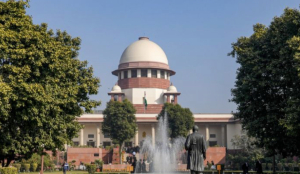
Yet women still constitute only about 3–4 per cent of the Army, around 13 per cent of the Air Force and 6 per cent of the Navy. Coming to the judiciary, the change has been slow. The Supreme Court elevated its first woman judge only in 1989, nearly four decades after its establishment. In 75 years, out of a total of 276 judges, only 11 women have served in the Supreme Court, which is approximately 4 per cent.
Of the 53 Chief Justices that the Supreme Court has had, none has been a woman and the first woman Chief Justice likely to serve will do so only for a brief tenure. In the year 2025, a significant part of the Supreme Court’s docket consisted of matrimonial and family law appeals and matters in which women are the primary stakeholders.
Yet, as on date, with only one woman on the Bench of thirty-four judges, it is structurally impossible for women judges to be present across all such cases. Notably, till date, no woman lawyer has served as the Advocate General or Solicitor General of India.
At the level of the district judiciary, however, the picture is more encouraging. As of February 2025, there are 7,852 women judges serving in District and Trial Courts of India, constituting approximately 38.3 per cent of the district judiciary, a significant rise from about 30 per cent in 2017. Yet this encouraging base reveals a persistent “leaking pipeline”.
While nearly two-fifths of the district judiciary is now comprised of women, their representation drops sharply at higher judicial levels, highlighting that entry into the profession does not always translate into elevation within it.
Progress is uneven and participation in the workforce varies across regions. But every generation has moved the line forward a little more than the last and that is worth celebrating. Because empowerment is not about replacing one voice with another, it is about ensuring that every voice is heard and has a space.
Today, Bharat stands at a remarkable point of inflection. We are a digital powerhouse, a demographic giant, a spacefaring nation with aspirations to be a five-trillion-dollar economy, a global manufacturing hub and a leader in technology and innovation.
Breaking lines of control is not about conflict. It is about cooperation, recognising talent, sharing responsibilities and building institutions where merit thrives. Breaking lines of control is not an act of defiance against the nation. It is an act of fidelity, because a nation that frees its women frees its own future.
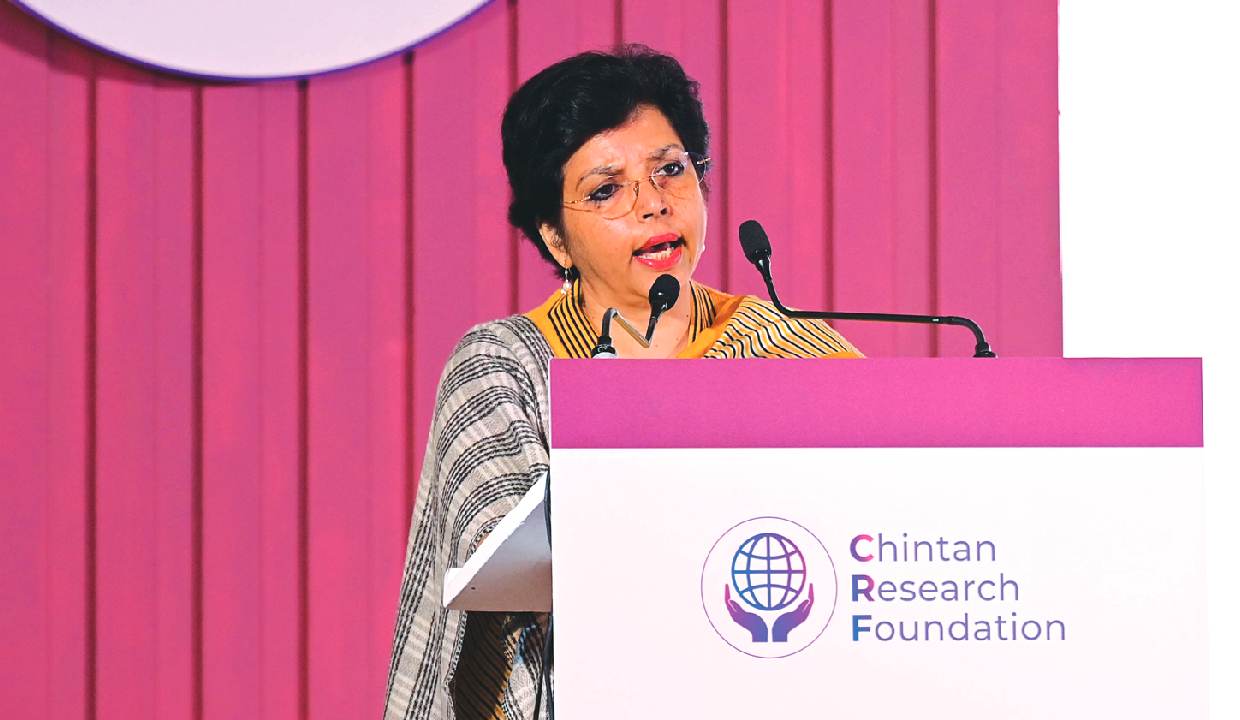
Speech by Justice Hima Kohli; Views presented are personal.