A bite off an imported apple
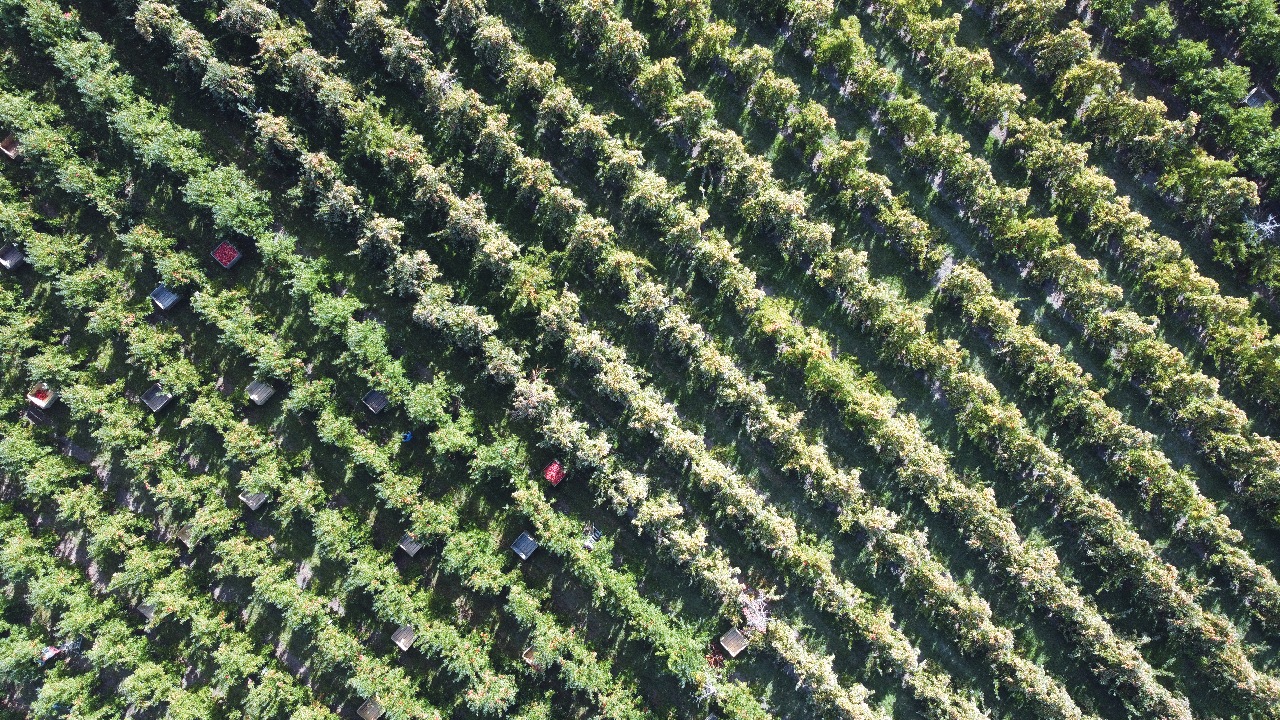
After the recently concluded India-New Zealand Free Trade Agreement (FTA), Auckland declared, “Key goods benefits include… valuable new quota access for kiwifruit and apples, with volumes starting well above average recent trade, and growing beyond that. New Zealand is the first country to secure preferential access for apples in any Indian FTA, and the first kiwifruit exporter to secure tariff-free access… plus a 50 per cent tariff reduction outside quota.” Another statement added that forestry is a major export to India, and post-FTA, “over 95 per cent of the exports will be able to enter tariff-free immediately from entry into force, with tariffs on almost all our existing trade phased out over seven years.”
Suddenly, imports of apples, kiwifruit, apart from palm oil and other fruits and vegetables have emerged as worrisome and troublesome issues for the Indian growers. New Zealand, for example, ranks as one of the world’s top ten largest apple exporters, with a climate and soils making it well-suited for growing apples and pears. Himachal Pradesh raised a red flag, and many felt that the import concessions to New Zealand on apple imports may adversely affect the state’s economy. The FTA halved the duty on apples from 50 per cent to 25 per cent, and made the Indian growers wary of cheaper imports, which may lead to a fall in domestic prices.
“Currently, five lakh tonnes of apples are imported, mainly from New Zealand, Australia, and the United States,” according to Rajan Kshirsagar, President of the Communist Party of India-affiliated All India Kisan Sabha (AIKS). According to him, in another apple-growing state, Jammu and Kashmir, “where I have organised conventions with the apple growers, I have seen how this (trade) policy is breaking the backbone of agriculture.” India imports from 44 nations, which includes Afghanistan that benefits from the South Asian Free Trade Area (SAFTA) agreement. SAFTA allows apple imports at minimal and concessional duties.
Along with apples, there are concerns about grapes, blueberries, and avocados. They are mentioned in the India-New Zealand FTA. In the case of the latter two, there will be a phased elimination of tariffs. In the case of grapes, the fruit is not affected, but the FTA envisages that the duties on New Zealand wine will be reduced by 66-83 per cent over 10 years. Although India’s grape production, dominated by Maharashtra, “primarily serves the table grape market… a growing but significant segment is dedicated to the booming (local) industry.” Domestic production of avocados and blueberries is modest, but growing. It accounts for a tenth of the demand for blueberries.
Even as the farmers get agitated, Himachal Pradesh’s chief minister says that he will write to the prime minister about apples, and officials deny major harm to the local production, a former agriculture minister, Som Pal, adds a twist. Although Pal claims that his observations are personal, stem from his experiences as a farmer, and are not based on case study or specific follow-up, he explains, “In New Zealand, the apple season is different, and at that time there is no production in India. Indian apples come around end-September, and the crop is over by end-October.” Pal was the agriculture minister during the BJP-led NDA regime.
In New Zealand, the harvest season starts in January, much after the Indian season is over, and finishes in June, with the peak harvest between March and May. Pal, an octogenarian, and now-retired politician, thus implies that imports may not directly affect the sales of the local apples, and may not compete with them. He adds that despite the lower tariffs, on revised pricing, New Zealand apples will remain more expensive than the local produce. “The imported varieties are largely served at parties and social get-togethers that are organised by the rich and wealthy. Kiwifruit is usually not produced in India, at least not in bulk,” he explains.
Yet, Pal is emphatic that the Indian governments, including the past ones, have not supported the causes of the farmers. For example, last month, the US President Donald Trump announced a USD 12 billion aid package to help the American farmers affected by the trade wars. His “reciprocal tariffs” led to reduced purchases, and increased prices for seeds and fertilisers. In contrast, “Palm oil imports are hurting the Indian farmers. Even milk and milk-based products tend to lower the market prices for the Indian products,” says Pal. Cheap, large-scale palm oil imports lower domestic edible-oil prices, squeeze incomes for the oilseed growers, and discourage local cultivation. They create political and supply-chain pressures that hurt their livelihoods.
India has relied heavily on edible-oil imports, recently launched the National Mission on Edible Oils, Oil Palm, to expand domestic cultivation, and reduce import dependence. The mission aims to increase the area and production to improve farmer incomes, and national self-reliance. Imported crude palm oil is cheaper than the locally-produced oils (mustard, groundnut, soybean), and refiners and food processors prefer the former. Obviously, this reduces the demand and market prices for the domestic oilseeds. Reduced offtakes prevent the farmers from securing fair prices. Persistent low prices make the growers less likely to invest in inputs, irrigation, or improved seeds, which lowers productivity over time.
However, Indian officials deny that apple imports from New Zealand will impact the local growers. They contend that there are several conditions within the FTA to protect the farmers’ interests. Of course, the duty is down, and the annual import quota will go up from 32,500 tonnes in the first year to 45,000 tonnes in the sixth year. Both these measures will benefit New Zealand. But the FTA sets a minimum import price of USD 1.25 per kg, which ensures “premium pricing.” However, on online platforms, Shimla and Kashmir apples are available at INR 200-300 per kg. Hence, one will need to understand the dynamics of freight on perishables.
In addition, access to New Zealand apples is seasonal. This implies that imports will be permitted only between April-August, which align with the season in New Zealand, but do not clash with the one in India (harvesting in September-October). This may safeguard the domestic markets, and the interests of the local growers. But, as is evident from the retail markets, apples are available throughout the year, and there are ways to store the perishables. In effect, even if the imports are restricted according to the months, the produce may be available throughout the year, and compete with local varieties.
(The author has more than three decades of experience across print, TV, and digital media); views are personal