95 lakh names removed from voter lists in 4 States
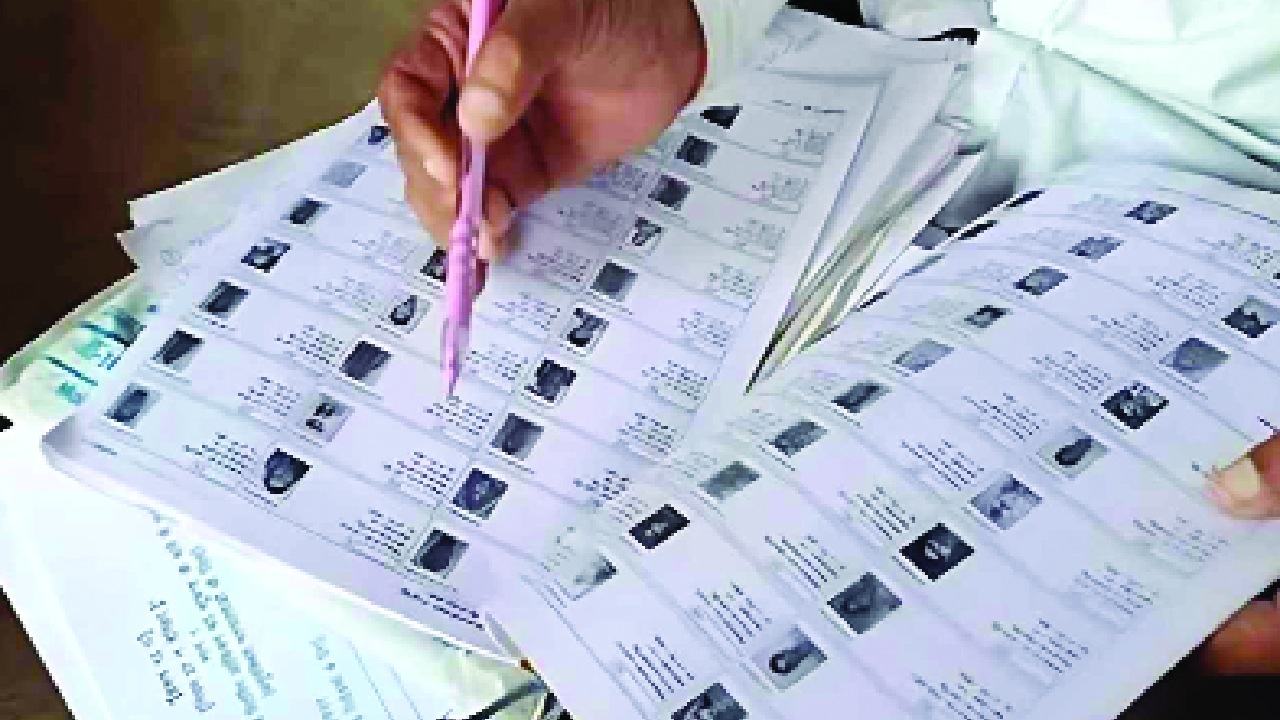
Nearly 95 lakh electors have been removed from the voter lists following the Special Intensive Revision (SIR) exercise in three States — Madhya Pradesh, Kerala, Chhattisgarh and Andaman and Nicobar in the draft electoral rolls published on Tuesday.
In Madhya Pradesh, out of 5.74 crore, 42.74 lakh electors were removed from the draft rolls. In Kerala, the names of 24.08 lakh of the over 2.78 crore electors were removed from the draft. In the case of Chhattisgarh, out of 2.12 crore electors, names of as many as 27.34 lakh were removed, and in the Andaman and Nicobar Islands, out of 3.10 lakh electors, 64,000 electors did not figure in the draft rolls. The Election Commission of India (ECI) data show that across 9 States and 3 Union Territories, 3.69 crore voters in 11 States and Union Territories have been removed from the voters list in the second round of the Special Intensive Revision of electoral rolls in the country so far.
All these electors were marked as “shifted/absent”, “deceased” or “enrolled at multiple places” by the Booth Level Officers (BLOs). The final rolls will be issued on February 14 next year. Earlier, the Commission revised the SIR schedule for these states and Union Territories, fixing January 1, 2026, as the qualifying date, following requests from the respective Chief Electoral Officers.
95 lakh electors removed from 4 States voter lists
After the conclusion of the enumeration phase of the SIR exercise in Madhya Pradesh, the EC has released the first draft roll of voters on Tuesday. According to the updated list, 42,74,160 voters’ names have undergone deletions. The current tally of voters in the State, as of October 27, stands at 5,31,31,983 as of December 23, 2025, down from a total of 5,74,06,143 recorded on October 27, 2025, according to the Joint Chief Electoral Officer of Madhya Pradesh, Ram Pratap Singh Jadon. Apart from this, 8.40 lakh names have not been mapped.
Among the deleted voters, 8,46,184 voters were found to have died, 8,42,677 voters were found absent/untraceable (from their place of residence), 22,78,393 voters were shifted elsewhere, and 2,76,961 voters were already enrolled (duplication) and 29,927 others. Apart from this, there were around 8.65 lakh unmapped voters, whose names are present in the current electoral roll but data of these voters are not found in the record of 2003.
In Kerala, a little over 24 lakh voters in Kerala have been excluded from the draft electoral roll. Chief Electoral Officer Ratan U Khelkar said that 24.08 lakh voters have been excluded from the draft list following the enumeration process.
According to official data, Kerala had 2,78,50,856 registered voters in the October 2025 electoral roll. Enumeration forms were distributed to all eligible voters, of which 2,54,42,352 forms were returned, translating to a response rate of 91.35 per cent. Around 8.65 per cent, or 24,80,503 voters, are yet to submit their forms. The CEO’s office further clarified that the exclusions include 6,49,885 deceased voters, while 6,45,548 individuals could not be traced during the enumeration process. The remaining exclusions relate to non-submission of forms and verification-related issues.
In Chhattisgarh, enumeration forms were collected from 1,84,95,920 electors. The SIR exercise resulted in the deletion of 6,42,234 deceased voters, 19,13,540 electors who had shifted or were absent, and 1,79,043 voters found to be enrolled at multiple places.
In Andaman and Nicobar Islands, a total of 64,014 cases fell under uncollectible categories, which include: 9191 dead voters, 51,906 shifted or absent and 2917 enrolled at multiple places.
According to the ECI, these voters will be served notices and have to present the relevant document before the Electoral Registration Officer (ERO) and Assistant ERO. The first phase of the SIR was conducted in Bihar in September, ahead of the Assembly elections in the State.
SIR is one of the largest exercises of state capacity India undertakes outside a general election, a painstaking, door-to-door effort that seeks to answer a deceptively simple question - who exactly gets to vote? The SIR has lately become a political flashpoint across parties. Supporters see it as a long-overdue clean-up of electoral rolls swollen by decades of migration, duplication and demographic churn.