275 former judges, armed forces veterans slam USCIRF report on RSS ban call
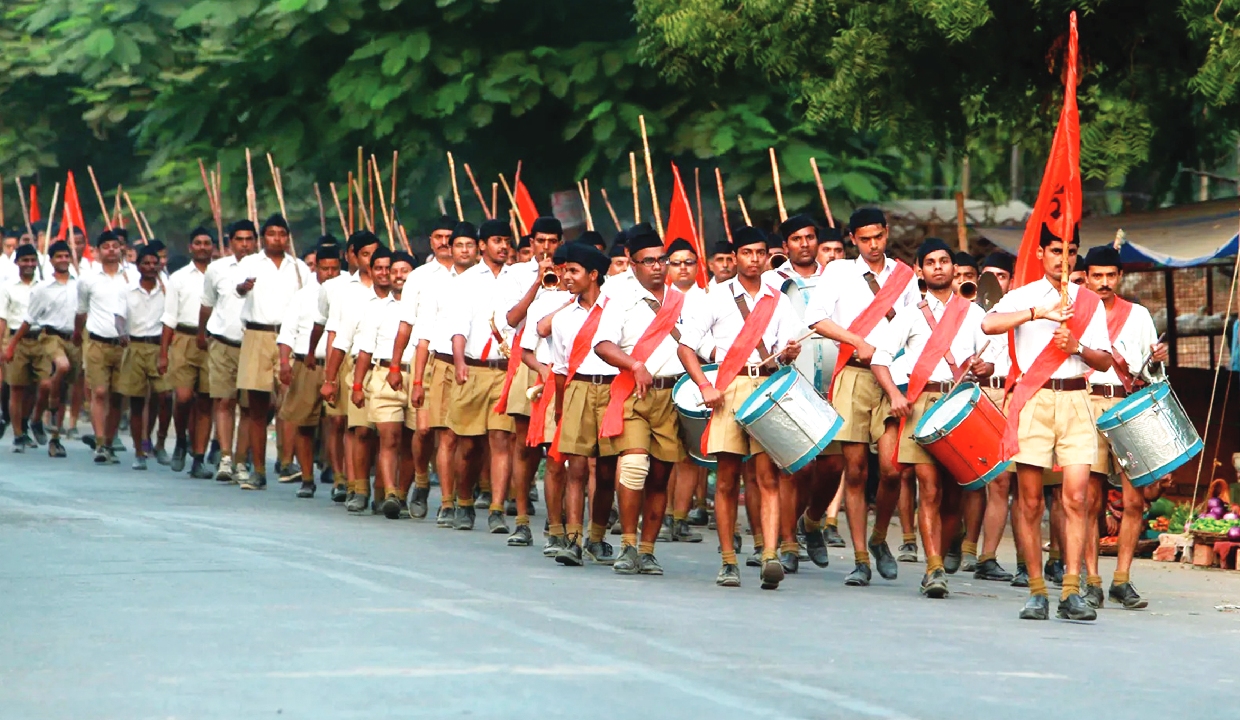
As many as 275 former judges, civil servants and armed forces veterans have criticised a recent report by the United States Commission on International Religious Freedom (USCIRF), which recommended a ban on the Rashtriya Swayamsevak Sangh (RSS). They called the report “highly motivated”, reflecting “intellectual bankruptcy and deranged calculations”.
In a joint statement issued on Saturday, they urged the US Government to carry out a strict background check of all the contributors to this “highly prejudiced and untenable report” in USCIRF, alleging vested interests aimed at vitiating their goodwill with the people of Bharat.
“USCIRF’s recommendation to freeze assets, restricted movement of Bharatiya citizens and placing restrictions on those associated with RSS is highly motivated, and displays intellectual bankruptcy and deranged conclusions,” the signatories said in a joint statement.
“All six commissioners of USCIRF are appointed by the US Government and funded by American Taxpayers through the US Congress. We call upon the US Government to carry out a strict background check of all the contributors to this report in USCIRF.
“It will be an eye-opener to the taxpayers of the US, whose funds are being used by USCIRF to produce highly prejudiced and untenable reports to promote the hidden agenda of some anti-Bharat vested interests to vitiate their goodwill with the people of Bharat,” they added.
The statement also raised concerns over what it termed USCIRF’s recurring tendency to portray Indian institutions and socio-cultural organisations such as the RSS in a negative light without adequate context. “It shows the recurring tendency of USCIRF to portray Indian state institutions and socio-cultural organisations such as the RSS in overwhelmingly negative aspects, often without proper macro-level evidence.
“It raises legitimate concerns about analytical balance. The RSS, with its extensive grassroots presence and contributions to social service and nation-building, may well be subject to critique, but such critique must be grounded in verifiable evidence and contextual understanding, not only on broad generalizations,” it said.
They emphasised that India, as the world’s largest democracy with a robust judicial system and institutional oversight, provides limited scope for violations of religious rights to go unaddressed.
“Bharat is the largest democracy of the world. Given the robust, time-tested judicial system, vibrant democratic institutions and Parliamentary oversight, there’s very less scope for individuals or organizations to go scot-free after violating someone’s religious rights,” the signatories added.
The signatories lauded the role of the RSS in society, stating that it has been working in various fields not only in India but also abroad, especially during times of natural disasters, while supporting vulnerable sections of society.
Having been founded in 1925 during the struggle for independence from British occupation, RSS is committed to preserving and embellishing Bharat’s stature as a formidable societal and classical civilizational force to reckon with amongst the comity of nations. From time to time, RSS-inspired organizations globally have been contributing their time and efforts in community service, natural disasters and supporting the most vulnerable sections of the society in different countries,” they said.
Citing census data, the signatories said minorities have grown or remained stable in India, unlike in Pakistan and Bangladesh, where their populations have declined since Partition.
They noted that Hindus comprised about 20.5 per cent in undivided Pakistan in 1947 but now they account for around 1.5-2 per cent in Pakistan and 7-”8 per cent in Bangladesh (then East Pakistan), down from about 20-”22 per cent in 1951.
Leave a Comment
Comments (1)
All the saffron assoles joined together.and proved their blindness to the things which can be seen with bare eyes.This bunch of Gandharis who i self imposed blindness on themselves joined the chorus.Their intellual bankruptcy is evident defending RSS legally not registered .not recognised facist organisation which was banned for its anti national activities none other than the Government of India.no one other than b.j.ps adopted father Vallabhbhai Patel.Shame less hypocrites.