25th Bharat Rang Mahotsav to begin from January 27
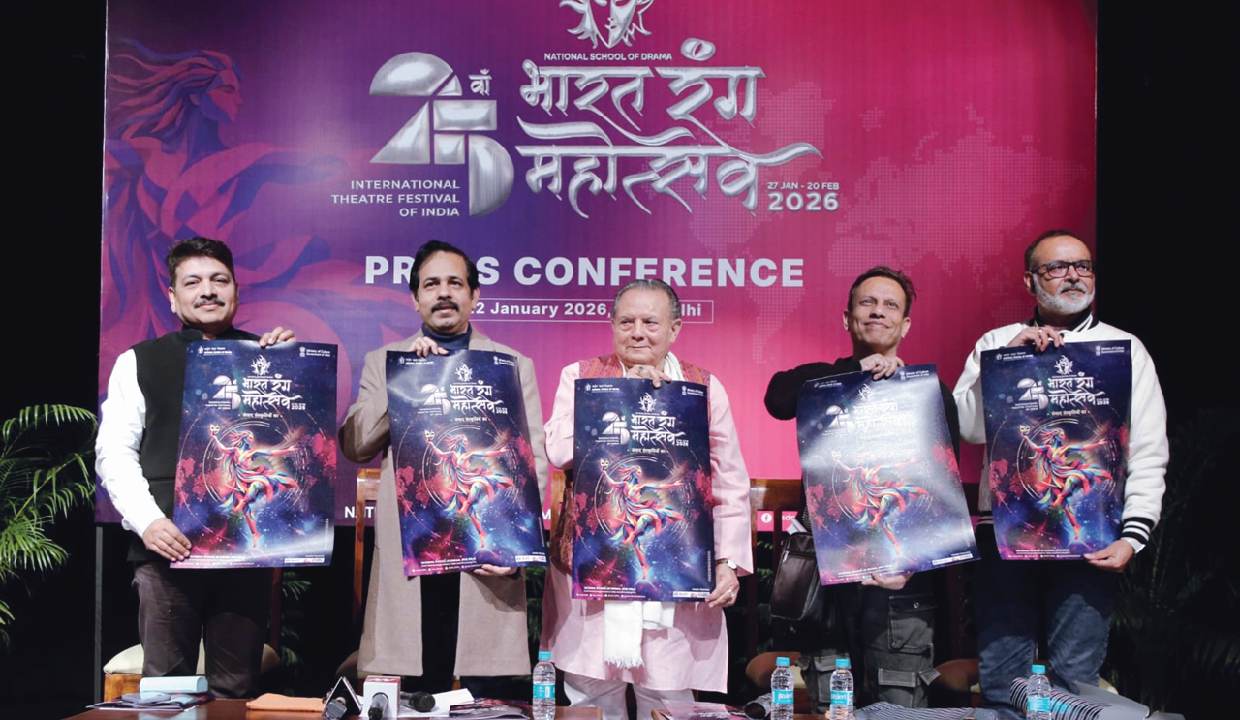
The 25th edition of the National School of Drama's annual marquee event Bharat Rang Mahotsav will begin here from January 27 with many firsts, including productions by 33 women directors, participation of theatre groups from 15 countries, and inclusion of a number of new venues, director Chittaranjan Tripathy announced on Thursday.
The festival, popularly known as “Bharangam”, will feature a total of 277 Indian and 12 international productions, including from Russia, Spain, Czech Republic, Italy, and Nepal, across 40 centres nationwide, encompassing performances in 228 languages and dialects. In addition, the theatre festival will present 19 university and 14 local productions.
“We will feature at least one production from each continent this time, making it the largest international theatre festival in the world. Here, one witnesses a vast confluence of languages, regions, aesthetics and ideologies converging through varied forms and genres of theatre. From classical to avant-garde, from musical and physical theatre to folk traditions, the festival brings together practices from across ages and sensibilities,” Tripathy said at a press conference.
He added that the institute plans to launch an NSD radio station that will broadcast radio theatrical productions, including archived plays of the drama school.
The institute will also launch its OTT channel along with a podcast series during the festival.
This year, the festival has included Maithili, Bhojpuri, Tulu, Urdu, Sanskrit, Tai Khamti, and Nyishi apart from other major Indian languages and several tribal and endangered languages.
The festival will also expand to a number of new local centres for the first time, including Ladakh, Andaman & Nicobar Islands, Lakshadweep, Daman & Diu, Aizawl (Mizoram), Tura (Meghalaya), Nagaon (Assam), Mandi (Himachal Pradesh), and Rohtak (Haryana).
“We are organising this theatre festival in some of the farthest Indian cities, places where people have very limited, or in some cases no access at all to theatre. It is also a matter of great pride for NSD to offer a platform to some of those underrepresented languages in the country, which possess their own rich oral and written heritage,” Tripathy added.